What Does a Project Manager Do? Role, Responsibilities, & Skills

Project managers guide projects from initiation to completion. They balance technical expertise with leadership to drive results with the PM tools project managers use.
Read on to discover what project managers really do and the essential skills and mindset they need. You’ll also see how their role fits into every stage of project management.
Key Takeaways
- It’s up to the project manager to plan, execute, and close projects while aligning deliverables with organizational goals.
- They manage resources, budgets, and timelines to ensure effective allocation and on-time completion.
- PMs lead their team members through challenges, maintain motivation, and resolve conflicts.
- They develop risk mitigation strategies and contingency plans for potential issues.
What Is a Project Manager?
A project manager is the person accountable for a project reaching its objectives. One person owns the plan, the schedule, the budget, and the communication that keeps all three aligned.
That accountability separates the role of a project manager from the specialists on the team. They own their piece of the work. The project manager owns whether the project lands.
Knowing what the role is leaves the question of what it actually does.
What Does a Project Manager Do?
A project manager plans, executes, and closes projects against specific goals and criteria. They lead the team through PMI’s five project management process groups: initiating, planning, executing, monitoring, and closing.
The job balances technical expertise with leadership. Deliverables must meet stakeholder expectations while the team stays together.
Day-to-day, that means developing detailed roadmaps and assembling the team to execute them. It also means monitoring progress against milestones and identifying obstacles before they become problems.
A project manager job description turns that list into a hiring document. An example outline:
- Role summary: the projects in scope, their size, and who the manager reports to.
- Responsibilities: schedule and budget ownership, team coordination, stakeholder reporting, risk escalation.
- Requirements: years of experience, certifications, industry or tooling knowledge.
- Success measures: on-time delivery, budget adherence, stakeholder satisfaction.
What that looks like in practice changes as a project moves through its phases.
What Does a Project Manager Do in Each Project Phase?
In each project phase, a project manager’s priorities shift: initiating, planning, executing, monitoring and controlling, and closing. They move from defining the work, to protecting it, to handing it over.

We’ll take a closer look at each.
Initiating
Initiating establishes the elements that guide the rest of the project. You develop the project charter, run feasibility studies on the proposed work, and identify key stakeholder representatives.
You also engage the project steering committee, assemble your team, and outline the scope. Start by identifying the risks that could affect delivery.
Planning
Planning defines project scope, builds timelines with clear project milestones, and allocates resources. It also develops budgets and sets the risk management strategies.
Planning includes stakeholder management. Their expectations need to align with the deliverables, so open feedback channels early and keep them open.
Executing
Executing turns the plan into results. You oversee team collaboration while balancing autonomy with oversight, allocate resources, absorb changes, and hold quality standards.
Update stakeholder representatives as you track performance metrics and identify risks. Implement corrective action when deviations appear.
Monitoring and Controlling
Monitoring and controlling means establishing baselines for scope, schedule, and cost. You then track performance through regular status meetings and data collection.
When variance analysis shows a deviation, you implement corrective measures. You can also reallocate resources or adjust timelines to return to baseline.
Closing
Closing completes the lifecycle and requires attention to ensure nothing is overlooked. You formally transfer deliverables, release resources, and document lessons learned.
- Conduct a documentation review and archive it for future reference.
- Secure formal stakeholder acceptance of all deliverables.
- Disband the team and mark the achievement.
A disciplined close is what reduces incomplete deliverables, documentation errors, and unresolved stakeholder concerns.
Those phases run in sequence. The same work also groups into areas of responsibility.
What Are the Roles and Responsibilities of a Project Manager?
Project manager roles and responsibilities group into five areas. The first two are planning tasks and projects and resource and budget management. The rest are leading and motivating the project team, project delivery, and performance reporting. The five areas are our own grouping. We’ll take a closer look at each.
Planning Tasks and Projects
Planning tasks and projects means defining the scope, resources, timelines, and likely obstacles before implementation begins. Weak activity and budget plans make clean execution unlikely.
In practical terms, the project management tasks here are to:
- Define clear deliverables and create a work breakdown structure that turns abstract goals into manageable tasks.
- Develop realistic schedules with Gantt charts that show timelines and dependencies.
- Establish risk mitigation strategies by identifying potential issues and creating contingency plans.
Resource and Budget Management
Resource and budget management begins once the plan is in place. You allocate teammates based on their skills and availability, then watch utilization to avoid burnout or idle time.
You also track spend against the planned budget. This is the point where work data and financial data have to meet.
Those two often live in different systems. Productive’s Budgeting connects them. As the team logs billable and non-billable time against services, budget spend and profit margins update in real time.

Track your budgets in real time in Productive.
You can forecast a budget overrun before it occurs, rather than finding it in a month-end report.

We can create budgets, track time against them, and immediately see how projects are performing, without having to pull data from different systems.

Read the full customer story of how StudioVi runs operations with Productive.
Leading and Motivating the Project Team
Leading and motivating the project team means addressing individual needs while fostering a collaborative team. That takes enough emotional intelligence to read team dynamics.
- Implement recognition systems that acknowledge contributions and reinforce their value to the project.
- Establish clear communication channels for feedback, so colleagues feel heard.
- Create professional development opportunities that serve both project goals and individual ambitions.
Your approach should balance strategy with support, keeping focus on project objectives.
Project Delivery
Project delivery moves the work through every step from inception to completion. Each phase carries a different core responsibility and a different definition of done.
Core responsibilities and goals by delivery phase
| Delivery Phase | Core Responsibilities | Phase Goal |
|---|---|---|
| Initiation | Scope definition | Stakeholder approval |
| Planning | Resource allocation | Budget adherence |
| Execution | Task management | On-time deliverables |
| Monitoring | Issue resolution | Quality standards met |
| Closure | Evaluation | Client satisfaction |
The table shows how the goalposts move. Stakeholder approval closes initiation, but says nothing about whether execution lands on time. That is why each phase needs its own check rather than one end-of-project review. Documentation maintained throughout supports accountability and feeds continuous improvement on future projects.
Performance Reporting
Performance reporting is how information reaches every stakeholder. Reports track progress against objectives and key performance indicators, identify risks, and forecast outcomes.
- Create different reports (status, progress, variance) tailored to different stakeholder needs.
- Analyze performance metrics to identify trends and deviations from planned trajectories.
- Transform raw historical data into actionable insights that drive decision-making.
A reporting framework supports transparency and keeps everyone accountable.
Those responsibilities repeat daily, which is what shapes a project manager’s working day.
What Does a Typical Day Look Like for a Project Manager?
A typical day runs from morning status review to end-of-day replanning. It divides into daily activities, key challenges, and decision-making processes. We’ll take a closer look at each.
Typical Daily Activities
Daily activities start with email, team meetings, and a project status review. From there, you move into budget management, schedule development, and stakeholder communication.
Team management runs through the whole day: building motivated teams, tracking progress, and supporting collaboration. End-of-day work covers performance reports and rescheduling unmet objectives.
Team meetings produce decisions that then have to reach the work. Productive’s AI Notetaker records and transcribes the meeting.
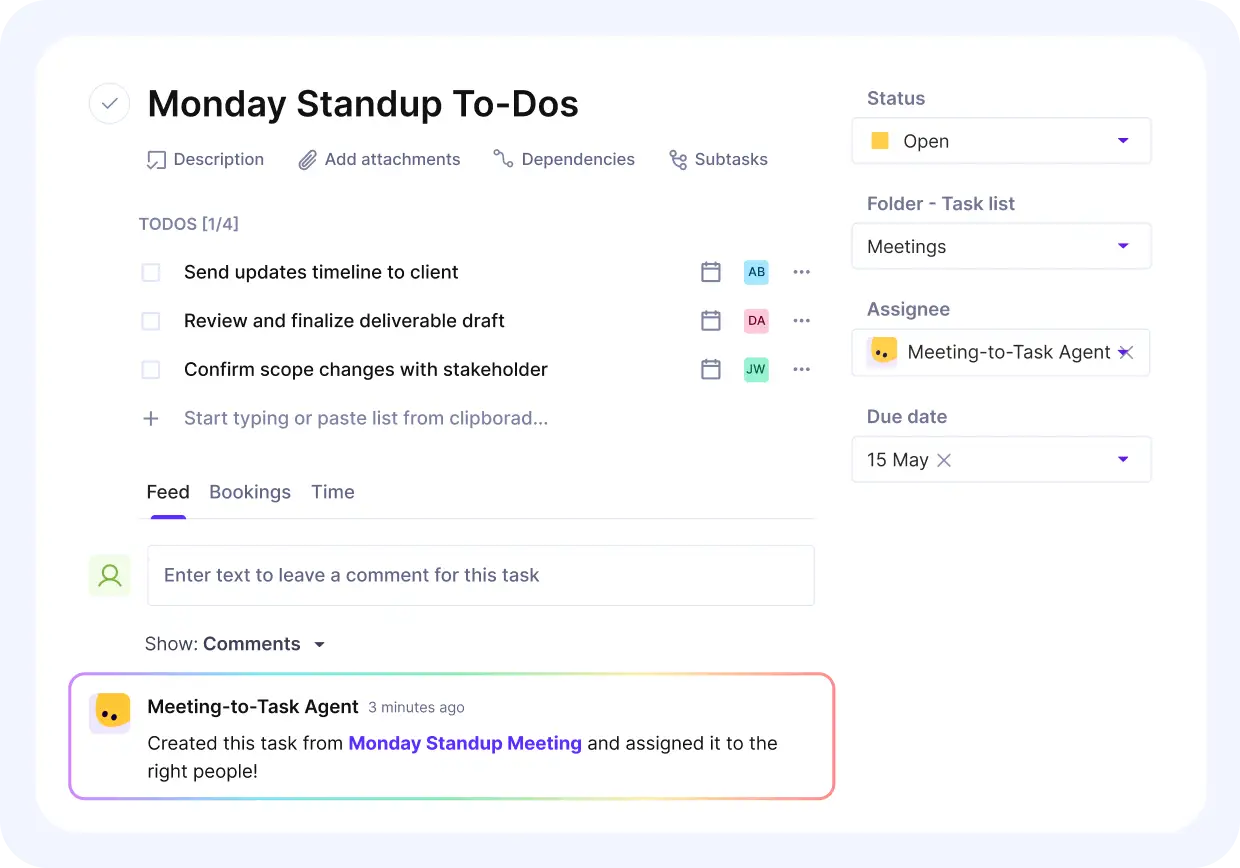
Turn action points into tasks with Productive’s AI Notetaker.
It then turns each action item into a task linked to the project it belongs to.
Let AI turn your meetings into tasks in Productive.
Key Challenges
The key challenges are scope creep, resource conflicts, and communication breakdowns. Complexity makes all three harder to manage.
PMI’s Pulse of the Profession 2026 puts the overall project failure rate at 13%. Complex projects fail at nearly twice that rate. The same report finds that managing complexity effectively increases the likelihood of project success fivefold.
You manage stakeholder expectations to limit scope creep and maintain engagement by matching skills. Proactive risk identification and contingency planning help with unexpected change.
Trust and transparent communication channels give a team more to work with when the rest goes wrong.
Decision-Making Processes
Decision-making processes shift with the complexity and urgency of the situation. They run from data-driven approaches to consensus-based agreements.
The steps stay the same, from problem identification through implementation:
- Use matrices to compare alternatives against predetermined criteria.
- Run regular risk analyses to anticipate obstacles before they arrive.
- Include stakeholder feedback using techniques such as the Delphi method to build buy-in.
Decisions about resource allocation or issue resolution land directly on timelines and budgets.
Handling that day well depends on a specific set of skills.
What Skills Does a Project Manager Need?
The skills a project manager needs start with leadership, communication abilities, risk management, and organizational capabilities. Project manager skills reach well beyond technical knowledge.

We’ll take a closer look at each.
Leadership Skills
Leadership skills guide the team through complex challenges toward a result. The style should adapt to the team’s needs and the demands of the work.
Communication Abilities
Communication abilities coordinate team efforts, manage stakeholder expectations, and move the work forward. In practice, that means clear emails and reports, productive meetings, and presentations that get to the point.
Your communication strategy should cover stakeholder engagement, scope clarification, and risk identification. Effective communication improves with feedback mechanisms that show what landed and what did not.
Risk Management
Risk management is systematic rather than reactive, covering identification, analysis, and response planning. Risks appear on most projects, so the job is to manage them rather than avoid them.
- Use analytical skills to evaluate both the probability and potential impact of each risk.
- Document and prioritize threats with tools like risk registers and matrices.
- Implement the appropriate response: avoidance, transfer, mitigation, or acceptance.
Organizational Capabilities
Organizational capabilities deliver consistency, and as a project manager, you set the example. They rest on:
- Planning and personal organization (seeing the big picture)
- Task prioritization (focusing on what matters)
- Documentation habits and protocols (how you preserve knowledge)
- Handling parallel work (several responsibilities at once)
- Effective process control (repeatable frameworks that improve efficiency)
Together, these capabilities turn disorganized project environments into structured ones.
Those skills get applied through a specific set of tools and methods.
What Are the Tools and Methods That Project Managers Use?
Project managers use collaboration platforms and task management software as tools, and Agile methodologies as a method family. Those three are our selection from a wider field. Traditional planning methods like work breakdown structures and Gantt charts sit alongside them. We’ll take a closer look at each.
Collaboration Platforms
Collaboration platforms are how a team connects and communicates regardless of location. The broader ones combine document sharing, real-time messaging, and task management.
- Platforms like Slack are built for instant team messaging.
- Tools like Atlassian Confluence are built for documentation and knowledge bases.
Adoption and data security are the obstacles worth planning for. Once those are settled, these platforms make execution smoother.
Task Management Software
Task management software provides the structure that guides day-to-day operations. You create, assign, and track tasks across Kanban boards, lists, and timeline views. The same work reads as a backlog, a schedule, or a workload depending on the view.
Automation sits on top of that structure. Recurring tasks, dependencies, and trigger rules handle the repetitive parts. Each rule has to be written out in advance: if this happens, do that. Anything you did not anticipate still lands back on you.
Productive’s Agents are virtual assistants you set up to handle busywork. You can build a Weekly Standup Agent that runs every Monday. It checks a project for tasks without a recent update and pings the assignees for progress.
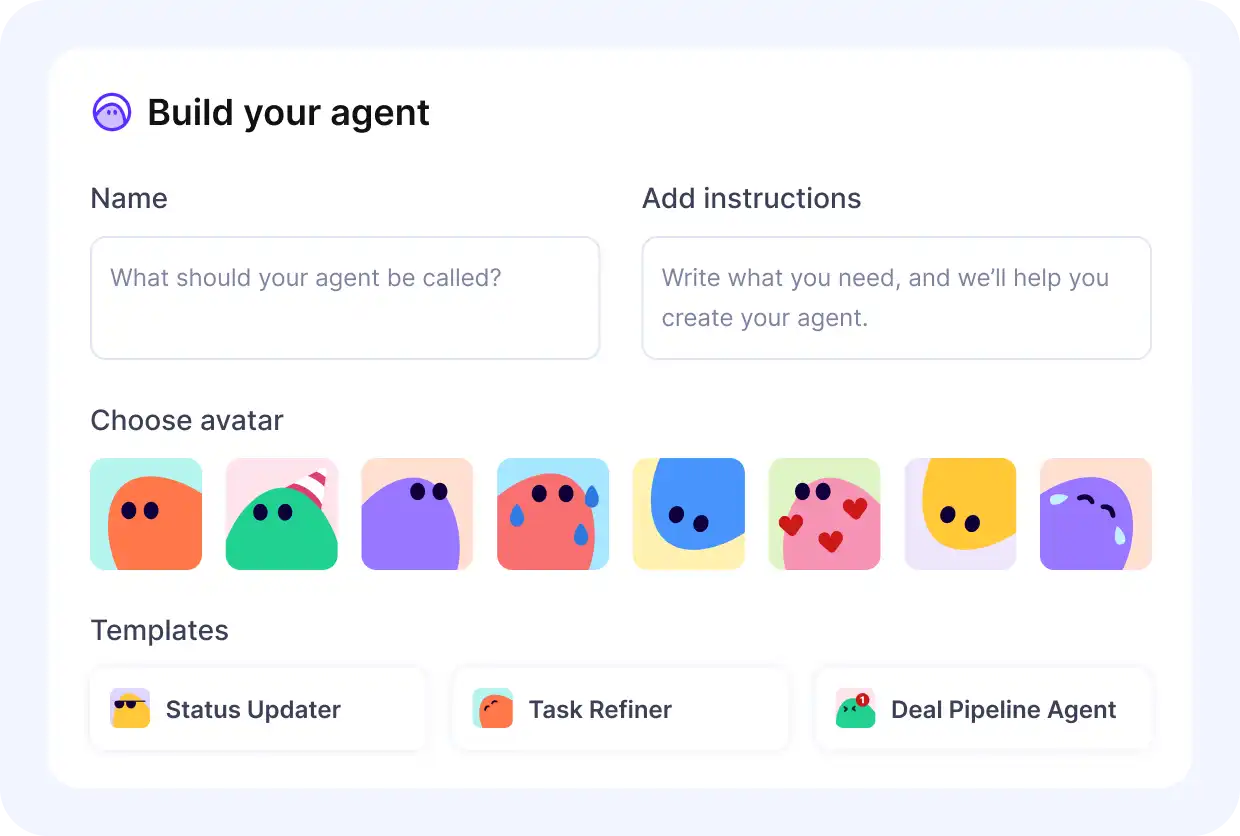
Build your own agent in Productive and let it handle the busy work.
You describe what it should do in plain language, with no code involved.
If you are exploring multiple AI tool options, ur roundup of AI project management tools compares and ranks 10 of them side by side.
Agile Methodologies
Agile methodologies break complex initiatives into iterative cycles called sprints. Frameworks like Scrum support collaboration and visibility through daily stand-ups and sprint retrospectives.
- Kanban boards visualize workflow, limiting work in progress and exposing bottlenecks.
- Sprint planning makes task assignments and capacity for the cycle explicit.
- Collaboration platforms support coordination across distributed teams.
Agile prioritizes working solutions over extensive documentation, which lets you adapt to changing requirements. We cover Agile values and principles in a separate guide.
Knowing the tools and methods is what makes the next role reachable.
What Are the Career Paths in Project Management?
Career paths in project management run from entry-level roles through intermediate management positions into specialized roles for managing projects. Project management roles widen as you go, from tracking one project to balancing a portfolio. We’ll take a closer look at each.
Entry-Level Roles
Entry-level roles include coordinator, junior PM, assistant PM, project administrator, and project control specialist.
In these roles, you assist senior managers with planning, progress tracking, and team collaboration, while building industry-specific knowledge.
Intermediate Management Positions
Intermediate management positions bring more complex initiatives and the first real experience of leading others. Responsibilities expand to include risk assessment, budget oversight, and stakeholder management.
Industry-specific roles become more accessible here, in construction, IT, software development, or energy.
After several years, senior roles involve mentoring junior managers and driving process improvements.
Specialized Roles for Managing Projects
Specialized roles for managing projects include portfolio manager, program manager, and PMO administrator.
Portfolio Manager
Portfolio management is the next level of oversight. You evaluate projects for strategic alignment and allocate resources across multiple initiatives.
- Use analytical tools to monitor performance metrics and model scenarios.
- Develop communication skills to influence stakeholders at all levels.
- Balance strategic objectives with tactical implementation to improve organizational ROI.
Program Manager
Program management sits between individual project execution and portfolio strategy. You oversee multiple interconnected projects and work toward broader outcomes rather than single deliverables, keeping stakeholders aligned.
PMO Administrator
The PMO administrator provides the support that keeps workflows running. In this entry-level role, you build core project management skills while keeping documentation accurate.
- Manage project documentation, version control, and reporting systems.
- Coordinate stakeholder communications and meeting logistics.
- Support data collection for timesheets, costs, and project metrics.
Reaching those roles depends on how deliberately you pursue them.
How Do You Advance a Project Management Career?
You advance a project management career through professional growth strategies and career advancement opportunities. One is deliberate skill development; the other is certification and visibility. We’ll take a closer look at each.
Professional Growth Strategies
Professional growth strategies are the ones you plan rather than wait for. They also have to be sustainable alongside the project work itself.
- Establish a career roadmap with concrete milestones, treating your development as a project.
- Build a professional network through industry associations, conferences, and mentorship.
- Commit to continuous learning through certifications and specialized knowledge.
Self-reflection and protecting work-life balance keep that growth from costing more than it returns.
Career Advancement Opportunities
Career advancement means moving from entry-level positions toward executive roles, in any industry that runs projects. The usual mix is formal education, practical experience, and recognized certifications.
- Pursue professional certifications like PMP or CAPM from PMI to expand job opportunities.
- Develop specialized expertise in high-demand methods or industries.
- Look for mentorship and visibility when networking.
As you advance, focus on leadership alongside technical proficiency. Demonstrate your value through consistent performance and strategic problem-solving.
What Helps a Project Manager Succeed
Success in project management comes from combining technical knowledge, interpersonal skills, and organizational discipline. The role covers planning, resourcing, budgets, reporting, and the daily decisions that keep all four aligned. Requirements keep shifting as projects grow more complex. That makes continuous learning part of the job rather than an addition to it.
Those responsibilities are hard to hold together when the work data and the financial data sit in separate systems. Productive brings projects, time, budgets, resourcing, and reporting into one platform. Budget spend and profitability update as the team works, and reports are ready without the spreadsheet assembly.
Book a short demo with Productive to see how it fits your projects.
Be Better at Managing Projects with Productive
Simplify planning, resource, task management, forecasting and reporting with an all-in-one tool for complete project management.
