Top 7 Scoro Alternatives in 2026 and a Data Migration Plan

The best alternatives to Scoro are Productive, Accelo, Synergist, Teamwork, Kantata, monday.com and Float.
We ranked these Scoro alternatives by how much work each one replaces, from quotes to accounting sync. For each pick, we cover key features, pros and cons from dated user reviews and who should skip it.
You get a comparison table, why teams switch, a step-by-step selection process, migration advice and an FAQ.
What Are the Best Scoro Alternatives in 2026?
The best Scoro alternatives in 2026 are Productive, Accelo, Synergist, Teamwork, Kantata, monday.com and Float. They range from PSA platforms, short for professional services automation, to project management tools like monday.com.
Our Shortlist by Best Fit
Comparison Table: What Each Tool Covers
| Tool | Best for | CRM and pipeline | Quotes and proposals | Retainers | Invoicing | Accounting sync (Xero, QuickBooks) | Free plan or trial | Who should use it | Who should skip it |
|---|---|---|---|---|---|---|---|---|---|
| Productive | Agencies and consultancies running sales, delivery and billing | Native | Native, with e-signature | Native, recurring budgets | Native | Invoices out, payments in | 14-day free trial | Teams that want won quotes to become budgets | Teams that only need a task board or scheduler |
| Accelo | Firms running most client work on retainers | Native | Native | Native | Native | Two-way invoices and payments | Demo | Teams needing two-way Xero or QuickBooks sync | Firms that bill mostly fixed-fee projects |
| Synergist | UK agencies controlling overservicing job by job | Native | Native, branded quotes | Native | Native | Xero, QuickBooks, Sage | Demo | Agencies needing purchase orders and billing plans | Teams working outside UK office hours |
| Teamwork | Client-services teams working with clients inside projects | Via HubSpot integration | Native, with tentative projects | Native, retainer budgets | Native | Invoice export only | Free plan | Teams that plan capacity before deals close | Firms wanting their pipeline in the same tool |
| Kantata | Mid-market and enterprise consultancies staffing by skill and margin | Via Salesforce connector | Native, estimates | Via fixed-fee tasks | Native | QuickBooks invoices and payments | Demo | Firms already running sales in Salesforce | Small agencies needing to go live in weeks |
| monday.com | Teams building their own workflows | Separate monday CRM | In monday CRM | Not built in | In monday CRM | QuickBooks integration | Free plan, 2 seats | Teams happy to configure boards and automations | Firms pricing work from role-based rate cards |
| Float | Teams wanting a dedicated resource scheduler | Not offered | Not offered | No retainer budgets, phase workaround | Not offered | Not offered, QuickBooks link ended 2024 | 30-day free trial | Teams keeping finance in another system | Firms needing quotes or invoices in the replacement |
How We Chose These Tools
We included tools that buyers weigh as a Scoro alternative and that cover projects, time tracking and resource planning. We ranked them by how many table columns from CRM to accounting sync each covers natively, per vendor docs.
We took pros and cons from dated G2 and Capterra user reviews and left out pricing, which changes often.
1. Productive – Best Scoro Alternative for Professional Services Firms
As a Scoro alternative, Productive is agency management software that runs sales, projects, budgets and billing in one place. A won deal becomes a budget, bookings reserve the hours, and logged time and expenses flow onto the invoice.
Replace Scoro with Productive
Turn a Won Quote Into the Project Budget Without Retyping It
You win the deal, then someone rebuilds the quote as a project budget by hand. Productive keeps pipeline management and quoting on the same deal record. In Productive, you build the proposal from the deal’s services with a document template and send it by email.
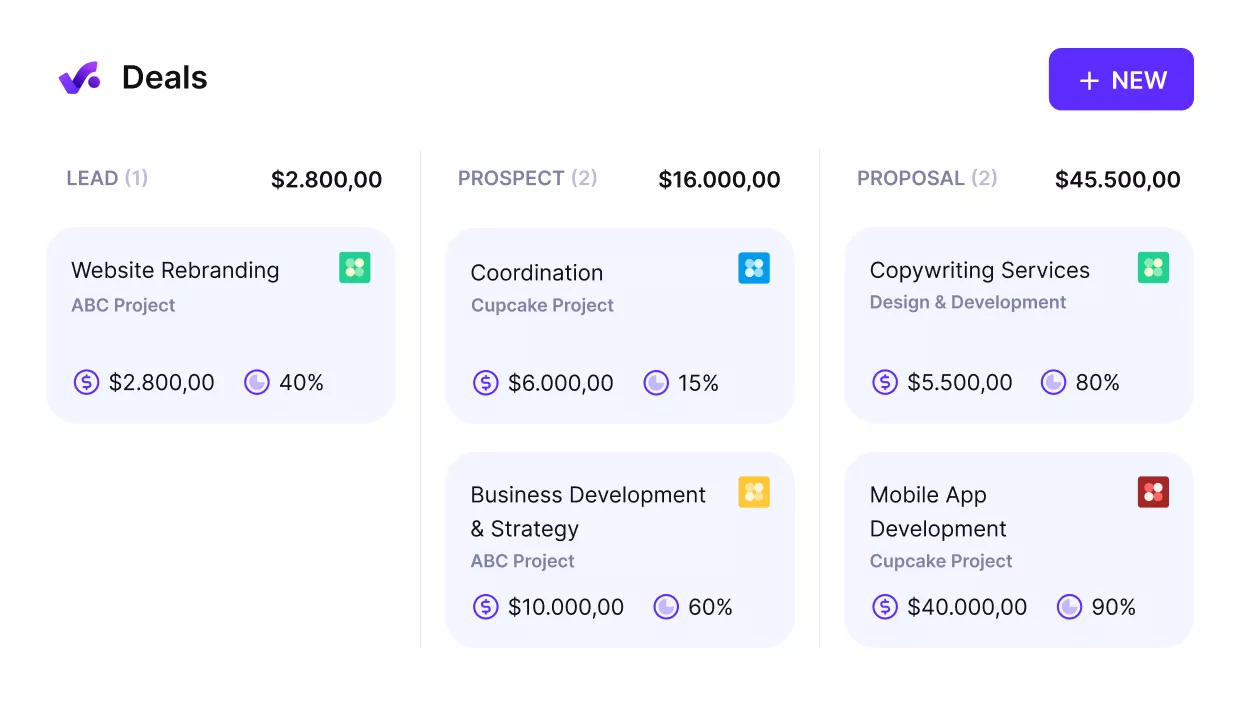
Support team collaboration on your business processes
The sales-to-project handoff starts when you mark the deal won. Productive turns its services into a project budget, either on a new project or an existing one. You choose whether time entries, expenses and future bookings move across.
Time approvals and custom cost rates carry over as budget settings. A won retainer deal creates a recurring budget, with one budget for each of the retainer periods.
Book Next Month’s Team Before the Client Signs
The client hasn’t signed yet, but you need to hold next month’s team. In the Resource Planner, you book people against services in budgets or deals, as confirmed or tentative. Tentative hours stay out of a person’s scheduled total until someone confirms them.
A day holding only tentative work shows a grey capacity indicator.
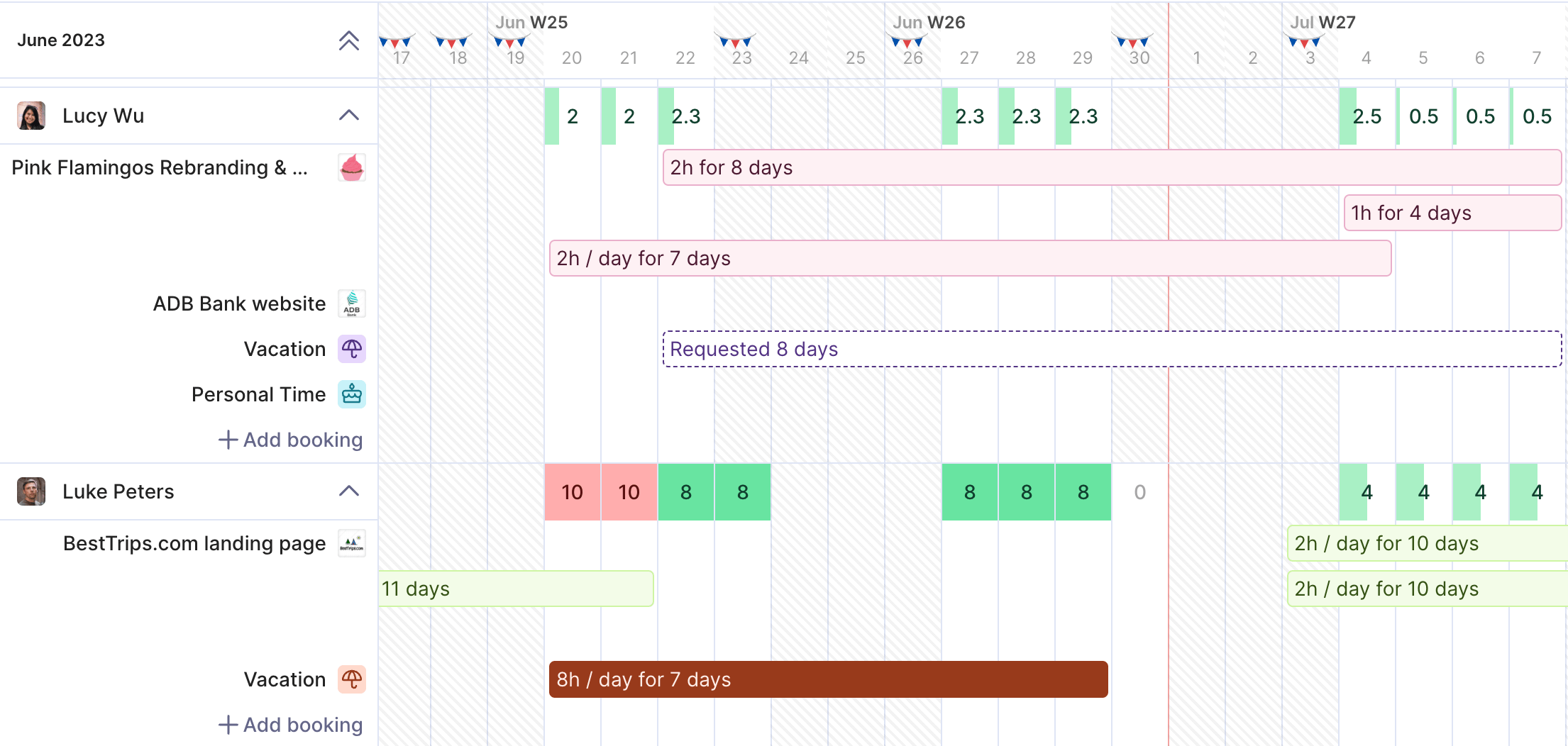
Get a real-time overview of your available resources.
Placeholders stand in for a hire or a person you haven’t picked yet. New budgets can get an Open hours placeholder service to schedule against. Approved time off shows in the planner, and bookings appear as suggestions in time tracking.
See Margin and Forecast Revenue on Every Project Before Month End
A project can look fine on hours and still lose money. Each budget’s Overview tab shows a profitability snapshot built from hourly cost rates, plus overhead where enabled. Revenue counts billable hours times the service price.
Billable expenses reduce the remaining budget and add to revenue, while non-billable expenses cut profitability only.
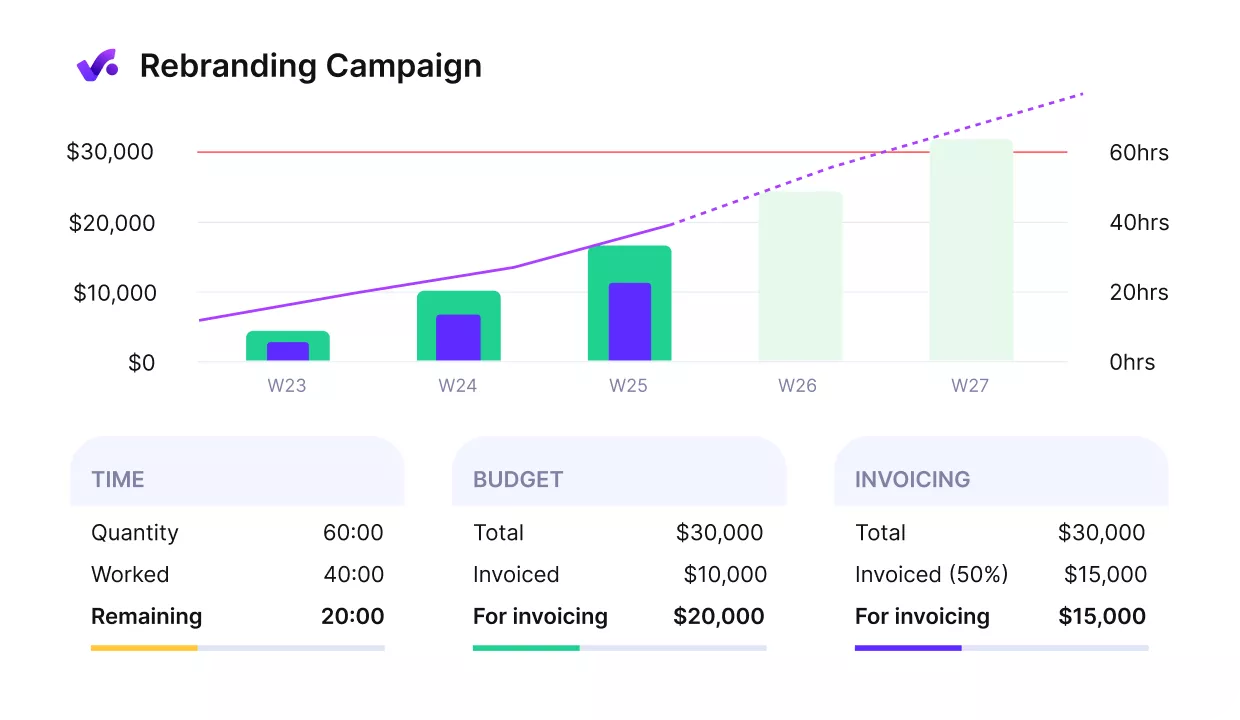
Productive gives you an early warning of budget overruns.
Forecasting charts on project budgets set scheduled time from the Resource Planner against logged hours and the budget total. You see the week a budget runs out before it arrives.
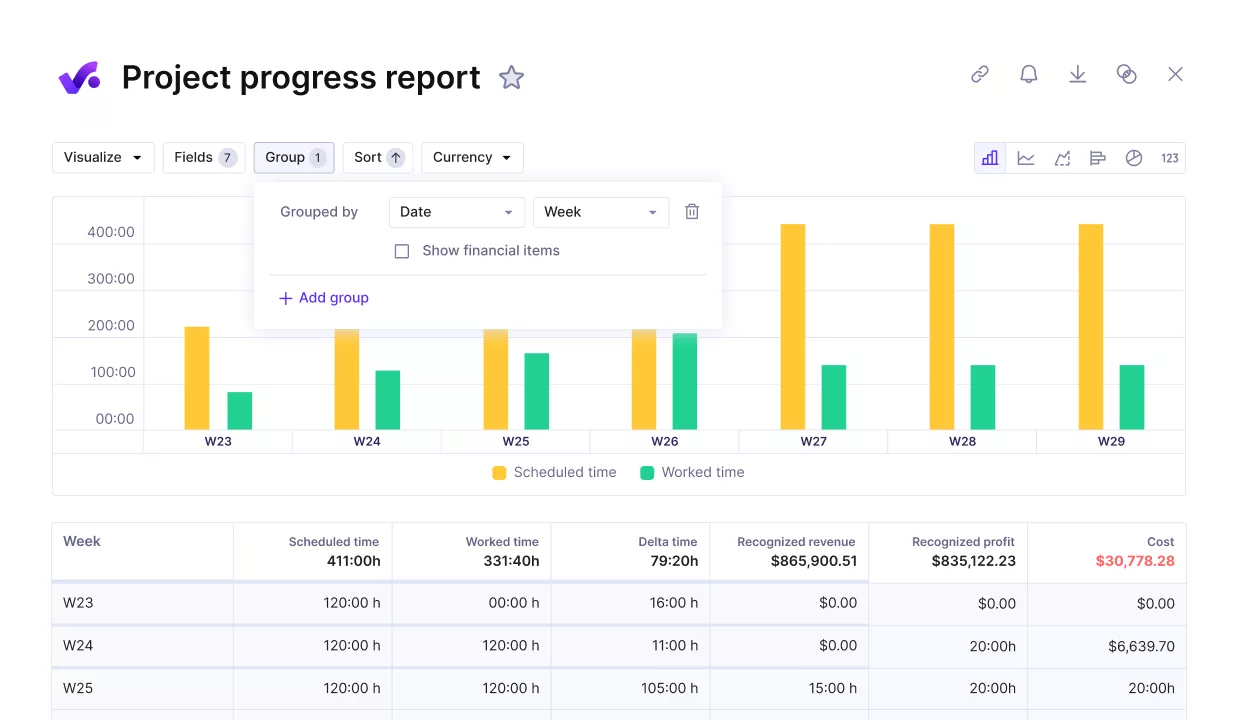
Measure project progress and performance against key financial metrics.
Revenue recognition then spreads each budget’s revenue over time, so financial reporting matches the work done. Project profitability becomes a weekly check, not a month-end surprise.
Get Reports and Automation Rules Built From a Plain-English Request
You rebuild the weekly report by hand, and the automation rule you meant to set up never happens.
Productive AI runs on all plans once an admin switches it on. The AI Assistant takes plain-language requests to search, create and update records, and to generate reports. Ask for resource utilization by team, and it builds the report from that description.
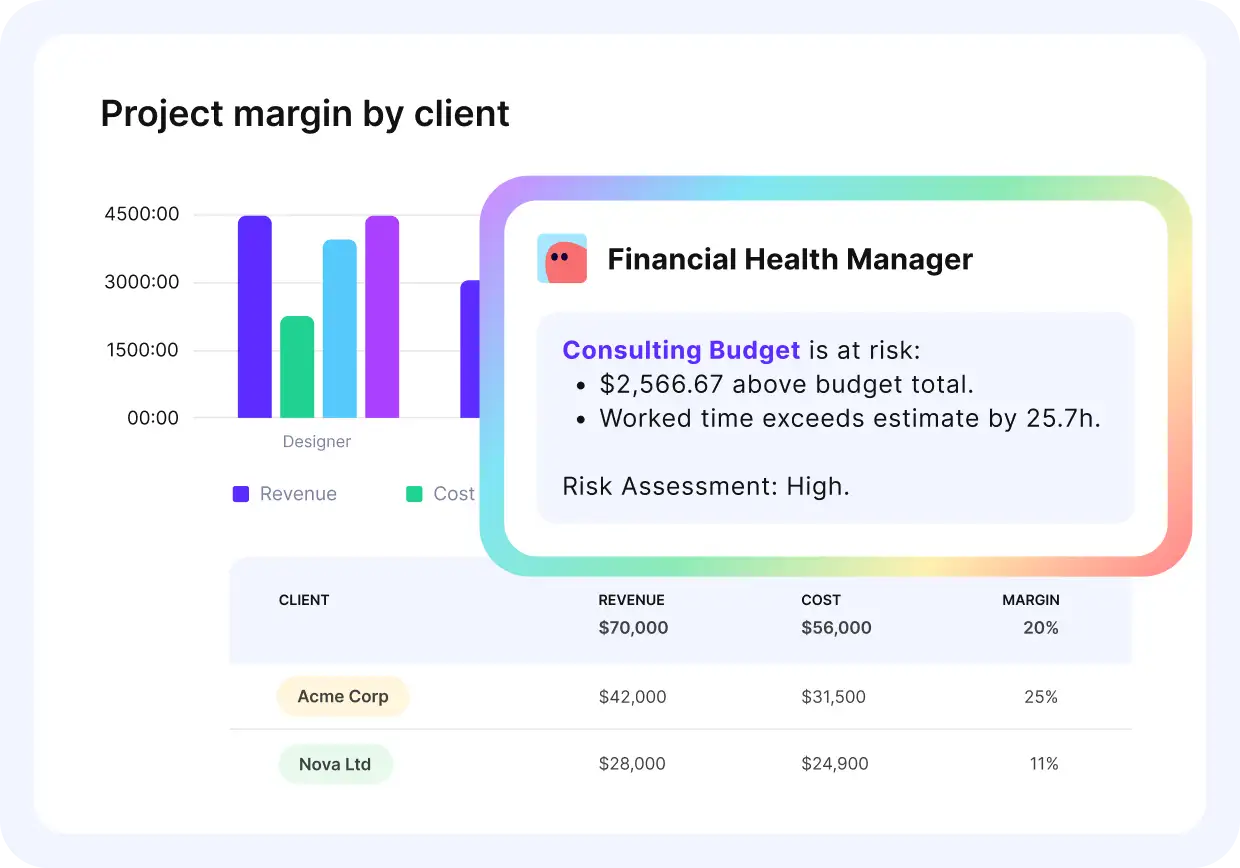
Productive’s AI agent gives you instant updates on budgets with plain language prompts.
It can also build automation rules from a description of what should happen. On higher plans, Skills save repeated instructions and Agents run on a schedule or trigger without anyone prompting them.
These AI tools work with the same records your business already keeps in Productive.
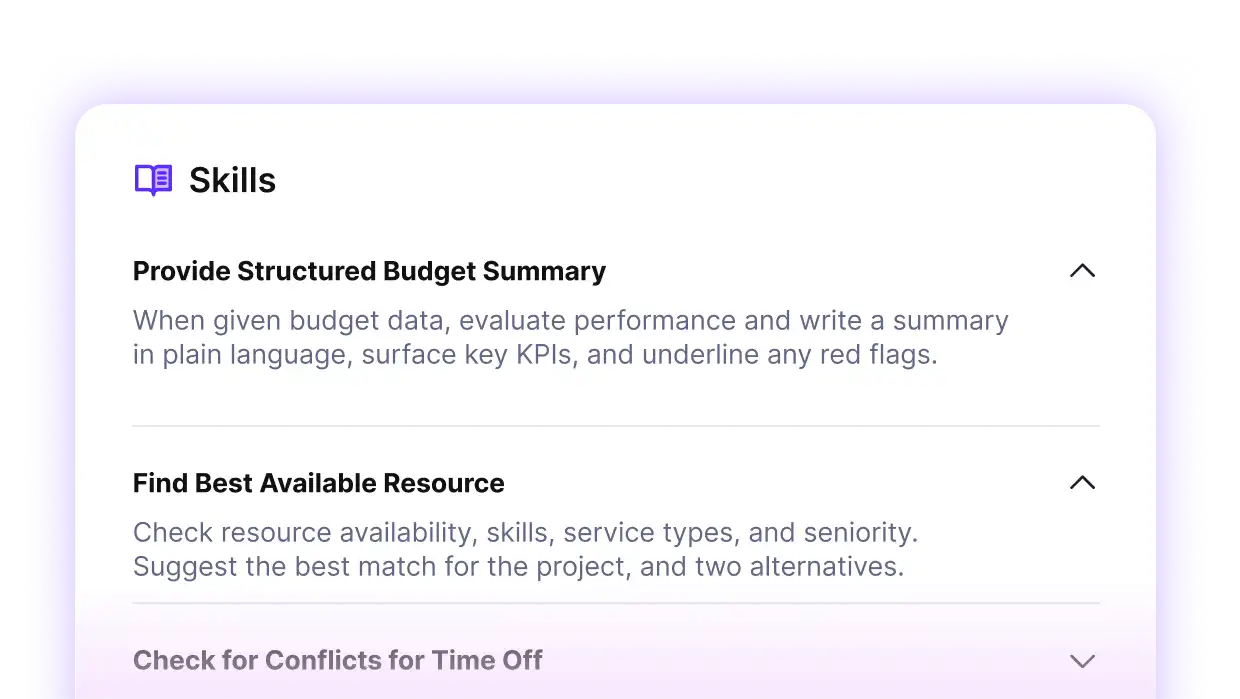
Build smart AI agents with custom skills.
Pricing
- Plans start with the Essential plan at $10 per user per month, which includes essential features such as budgeting, project & task management, docs, time tracking, expense management, reporting, and time off management.
- The Professional plan includes custom fields, recurring budgets, advanced reports, billable time approvals, and much more for $25 per user per month.
- The Ultimate plan has everything that the Essential plan and Professional plan offer, along with the HubSpot integration, advanced forecasting, advanced custom fields, overhead calculations, and more. Book a demo or reach out to our team for the monthly price per user.
Productive offers a 14-day free trial, so you can check out if it’s the right option for you, commitment-free.
Replace Scoro With One System From Deal to Invoice
In Productive, a won deal becomes the budget, bookings reserve the hours, and logged time flows onto the invoice.

2. Accelo – Best for Firms That Run Most Client Work on Retainers
Accelo is client work management software for service firms, covering sales, project management, retainers, timesheets and billing. Logged time lands in the retainer period that matches its date, and unused allowance can roll into the next.
If Accelo makes your shortlist, see how Scoro, Accelo and Productive compare side by side.
Key Features
- Retainer periods with rollover
- Project quotes tied to opportunities
- Client-facing portal for retainer balances
- Timesheets that feed invoicing
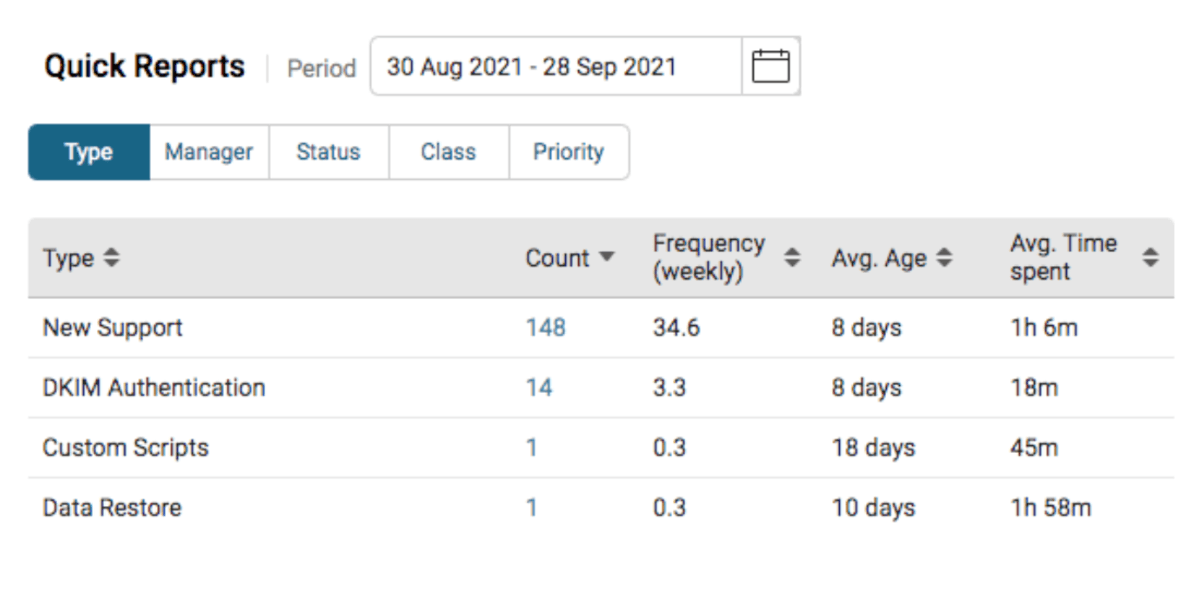
SOurce: accelo
Pros
- Retainers sit under the client with its projects and tasks. A retainer, the jobs it covers and their tasks stay linked on the same company record.
- Every email, call and timer appears in a single activity stream. You can open that stream for a single contact, project or ticket, or for the whole firm.
- Invoices link straight to QuickBooks Online. Time and materials contracts are easy to track and bill from the same records.
- Engagement templates and triggers bend to how each firm works. Templates can be heavily customized, and triggers add workflow automation for repeat steps.
Cons
- The user interface looks dated in places. Some screens still run an old and a new version side by side.
- Totals for past client work take digging. Hours across a client’s tickets and projects are hard to total, and insights don’t split billable from non-billable.
- Change orders have no direct place inside a project. Scope changes need a workaround instead of a change order on the project itself.
- Email can end up managed twice. Teams on Outlook handle their inbox in Accelo and again in Outlook.
Who Should Choose Accelo?
Choose Accelo if most client work runs on retainers and your books stay in Xero or QuickBooks. Firms that bill mostly standalone fixed-fee projects, with few or no retainers, should skip it.
The retainer periods that set Accelo apart would sit empty on every account.
3. Synergist – Best for UK Agencies That Control Overservicing Job by Job
Synergist is an agency management system that runs jobs from quote and schedule to timesheets and invoices. Each timesheet entry updates job budgets and agency project margins live, and a job heading over budget gets flagged.
Key Features
- Job budgets updated by every timesheet
- Budget tracking with overrun alerts
- Resource scheduling with team capacity
- Invoicing from timesheets, expenses and purchases
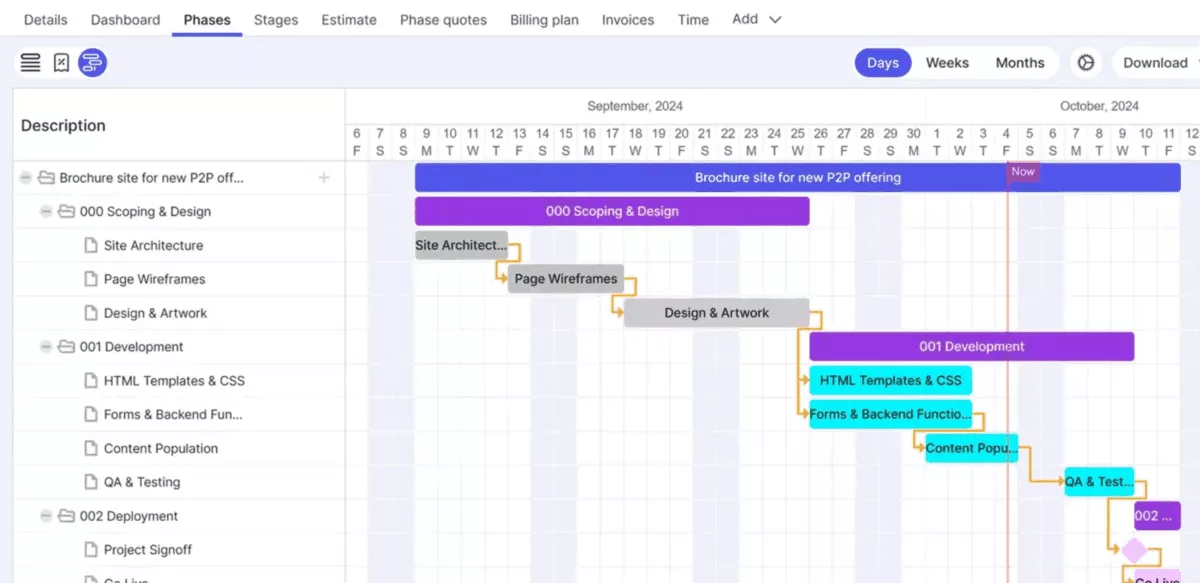
SOurce: synergist
Pros
- Project and client data sit together. Project and client figures can be viewed together, so agency meetings run on live numbers.
- Financial reporting runs on live job figures. Leaders get figures for financial decisions that the team had no access to before.
- Revenue recognition sharpens reported revenue. Revenue is recognized as work progresses, which tightens month-end figures.
- The helpdesk answers fast and knows the product. Support also helps teams fit the system around how the agency already works.
Cons
- Some features sit behind layers of menus. The dense user interface can overwhelm new starters without guided onboarding.
- The booking calendar can be fiddly. A hover pop-up on the resource calendar gets in the way of making bookings.
- Dashboards are hard to tailor team by team. A single dashboard setup does not easily fit what each team watches.
- It can lag once the whole agency is in it. Pages sometimes slow down when every team is working in the system at once.
Who Should Choose Synergist?
UK agencies that quote, schedule and bill by job will get the most from Synergist. Teams that work mostly outside UK office hours should look elsewhere. Synergist’s support desk is UK-based and keeps weekday office hours, so other time zones wait for answers.
4. Teamwork – Best for Client-Services Teams That Deliver Work With Clients Inside the Project
Teamwork.com is project management software for client-services teams, with time, budgets and invoicing built in. A client user comments on tasks in the project, while logged time draws down the budget and feeds invoices.
Key Features
- Client user access inside projects
- Fixed-fee, time and materials and retainer budgets
- Invoices built from logged time and expenses
- Tentative projects for resource management
SOurce: teamwork
Pros
- Clients work alongside you inside the project. Many clients take to it for messages and collaboration, which keeps project talk out of email.
- A single project setup handles flat fee or hourly billing. Fixed-fee and hourly client work run side by side without a second system.
- Time tracking is built in and easy to read back. People can see how long work actually takes and get faster over time.
- Automations take over repetitive project steps. Recurring work, such as monthly invoices sent to QuickBooks, can run on automation rules.
Cons
- Financial reporting can be unreliable for some teams. One agency owner found the same reports returned different results week to week, making forecasting hard to trust.
- Updates can land with little notice and new bugs. A recent issue had proofs dropping off a task when it moved projects.
- Unused features can’t be hidden. There is no account-level switch to turn off tools a team never touches, so screens stay busy.
- The API and its documentation lag behind the app. Teams building advanced integrations find the docs thin.
Who Should Choose Teamwork?
Pick Teamwork when clients take part in delivery and you bill from logged time. Firms that want the sales pipeline in the same system as delivery should look past it. Deals stay in HubSpot or another CRM, so pipeline and delivery reports sit in two systems.
5. Kantata – Best for Mid-Market and Enterprise Consultancies That Staff Projects by Skill and Margin
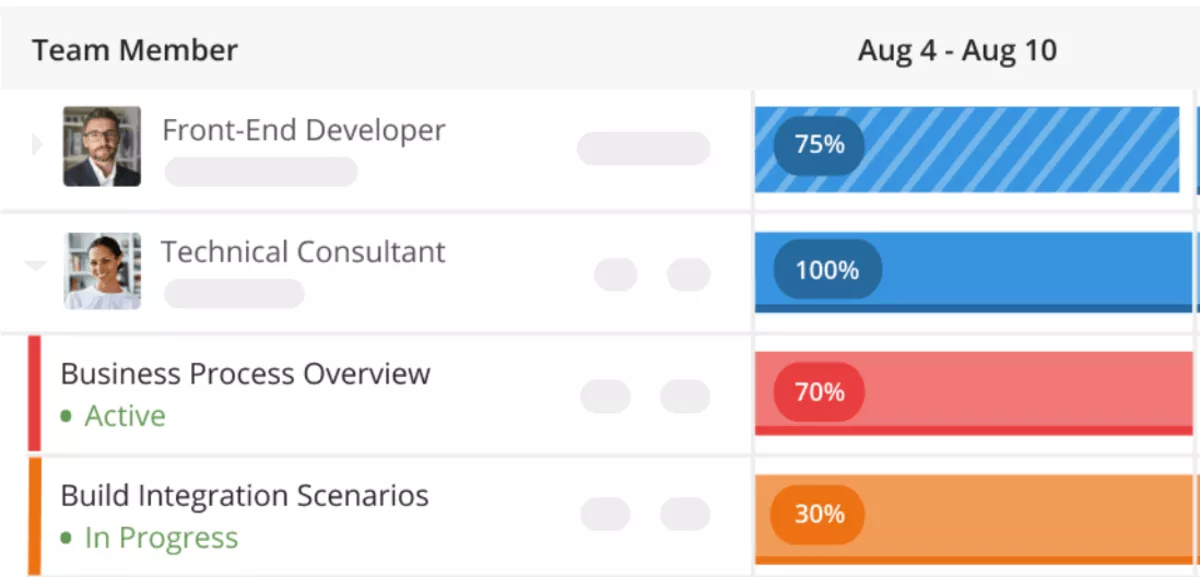
Kantata (formerly Mavenlink) is among the PSA platforms built for larger firms, covering resourcing, project financials and time. Managers add unnamed resources by role and required skills, then Kantata recommends named people who match and are available.
Key Features
- Skills-based resource management
- Estimates that show margin and profit
- Time and expense tracking
- Salesforce and QuickBooks integrations
SOurce: kantata
Pros
- Margins and burn rates update in real time. Management sees resource utilization and staffing capacity beside them, so decisions come faster.
- Budgets and billing sit in the same place. Financial reporting to clients draws on the same budget and billing figures, which builds credibility.
- Resource planning holds up across many engagements. Teams lean on it for staffing and milestone-based project planning across a portfolio.
- It connects to Jira and bends to custom setups. Teams can tailor the configuration and link delivery work across tools.
Cons
- Setup takes real configuration and training. Smaller teams with simple workflows can find it heavy before the value shows.
- Resource allocations can drift from the timeline. Hours sometimes lag behind what the timeline shows, so each allocation gets a second check.
- Day-to-day updates take too many clicks. Logging time and editing project details feel heavy, and data drifts without a standard setup.
- Support replies can be slow. Some fixes take about a week to come back.
Who Should Choose Kantata?
If you staff many engagements at once by skill and margin, Kantata is built for that. Smaller agencies that need to go live in weeks, without an implementation project, should pass. Its features need upfront configuration and training, so the first projects wait while setup finishes.
6. monday.com – Best for Teams That Want to Build Their Own Workflows
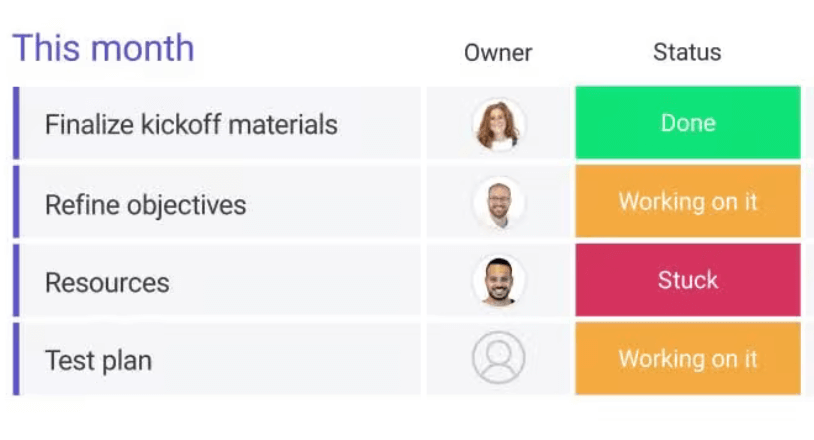
monday.com is work management software where teams build boards, columns and automations around their own process. You build a board with status and time tracking columns, then add automation rules that fire on status changes.
Key Features
- Custom boards with automation rules
- Timer column for tracked hours
- Workload view for team capacity
- monday CRM, sold as a separate product
SOurce: monday.com
Pros
- You shape the workflow, not the other way round. Boards, columns and workflow automation bend to how the team already works.
- Automation rules take minutes to set up. A rule that alerts the team when a task gets stuck simply runs once it is on.
- New team members pick up task management quickly. The user interface is visual enough that most people learn the basics with little training.
- Cross-board dashboards roll up the portfolio. Leaders see status across boards without building reports by hand.
Cons
- Financial reporting needs outside help. Overhead, complex billing and earned value sit outside it, and reports lack the depth of specialist project management software.
- Timers have hard limits. Two people can’t time the same item at once, and hours don’t export cleanly by client.
- Workspaces clutter as boards multiply. Without a clear structure set early, boards, automations and custom fields get hard to navigate.
- Guests mostly view rather than contribute. Clients and partners outside the subscription can’t easily add input inside the work.
Who Should Choose monday.com?
For teams that want to design their own boards and rules, monday.com is a strong pick. Firms pricing work from role-based rate cards and needing billable value from tracked hours should skip it.
7. Float – Best for Teams That Want a Dedicated Resource Scheduler
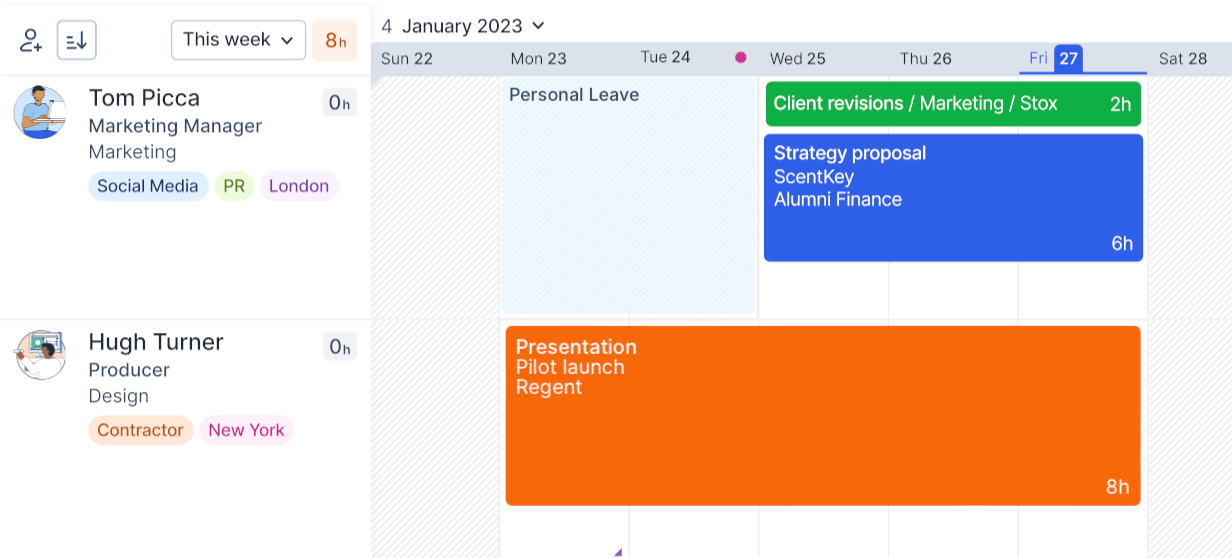
Float is resource scheduling software that books people onto projects on one shared team schedule. Each allocation books a person for set daily hours across dates, with time off on the same view.
Key Features
- Shared team schedule
- Capacity planning with time off
- Time tracking against scheduled hours
- Budgets by hours or fees, with margin
SOurce: float
Pros
- Everyone’s workload shows at a glance. You can see resource utilization for each person and spot overload before adding more work.
- The drag-and-drop user interface makes booking fast. Projects, people and timelines move in real time without extra steps.
- Holidays sit on the same timeline. Resource planning shows approved time off on the same timeline, so nobody plans work around someone who is away.
- Project costs and schedules live together. Budgets sit beside the schedule, so project management and costing share a view.
Cons
- The mobile app has sync glitches. Entries sometimes fail to line up between phone and desktop.
- Calendar integrations can lock meetings in place. Meetings pulled in from Google Calendar can’t be adjusted inside Float.
Who Should Choose Float?
Float is the right buy when the schedule itself is the job and finance already runs in another system. Float has no client quoting or invoicing, so skip it if the tool replacing Scoro must handle either.
Why Do Teams Switch From Scoro?
Teams switch from Scoro over three friction points: uneven support, delivery views that miss day-to-day work, and cost. Scoro is well rated as PSA platforms go, so read these as reasons some teams leave, not a verdict.
- For some long-time customers, support becomes the breaking point. A team left after five-plus years, citing time tracking issues and support that would not set up a meeting. Another got no reply even after follow-ups and found the documentation skipped features. Milder accounts describe support as decent but inconsistent.
- Delivery teams feel the second friction point in daily planning. The Gantt chart is built for resourcing, so it can’t double as a client-friendly timeline or export to PDF. In task management, creating tasks through the task feature takes more steps than adding them in the calendar. A design team with 200 jobs can’t see the latest actions on a single page, so things get missed.
- Pricing is the third friction point, and it bites hardest for smaller teams. Advanced features can require higher-tier plans, so small teams can find the pricing hard to justify. Even satisfied customers call it a little expensive, then credit how much it covers.
What keeps teams on Scoro is its business management breadth: quotes, project management, resourcing and invoicing in one place. Each invoice links to its project, and dashboards give leadership real-time financial reporting.
So leaving Scoro means replacing an all-in-one, which sets a high bar for Scoro alternatives.
How to Choose a Scoro Alternative?
Choose a Scoro alternative with five tests: list must-haves, rebuild a quote, match hours, plan staffing and sync invoices. Run each test on every tool on your shortlist, using your own Scoro data rather than sample projects.
PSA platforms and other Scoro alternatives can look alike in a demo, and these tests show where they differ.
Step 1: List the Apps Your Team Uses Every Week
Start with the Scoro apps on your plan and the user roles that open each one weekly. Scoro sells eight apps, from CRM and Pipeline to Client Billing, and each team buys what it needs. Any app those user roles use every week is a must-have.
Cut any tool that covers a must-have neither natively nor through two-way integrations before you book a demo.
If no finance app makes the list, compare the best project management software instead of PSA platforms. Check each pricing page too, because a must-have your business relies on may sit on a higher plan.
Step 2: Rebuild Your Last Signed Quote in Each Finalist
Take the line items from the last quote a client signed with your business. Export them from the quote list as CSV or XLS, adding fields first under View, then Data columns. The export carries only the columns on screen, so missing fields stay behind.
It passes if quotes become project budgets without anyone retyping a line. One line retyped by hand fails the sales-to-project handoff.
Step 3: Run Last Month’s Timesheets Through a Single Budget
Export last month’s time entries from Scoro’s detailed work report, which must be subgrouped by List before it exports. Note the time tracking totals and cost for one project that month. Load the entries into each finalist and compare that project in its reporting tools.
It passes when hours and cost match Scoro to the hour. It fails on any gap nobody can trace to a rate or rounding setting. That match is the base for financial reporting and for tracking budget burn against timesheets.
If finance books revenue monthly, check that revenue recognition lands in the same month too.
Step 4: Plan Next Month’s Staffing, Unconfirmed Work Included
Build next month’s staffing plan in each finalist, including unconfirmed work and approved time off. It passes if tentative bookings and time off both appear in project planning.
Anyone booked past capacity must also be flagged. Missing either is a fail.
Step 5: Send a Test Invoice to Accounting and Back
Send one real invoice from each finalist to the business’s Xero or QuickBooks account. Then record a payment against it in accounting. It passes when the invoice arrives and shows as paid back in the finalist.
If someone has to update payment status by hand, the sync runs one way, and that fails the test.
How to Replace Scoro Without Losing Your History?
Replace Scoro without losing history by exporting each record type before access ends, then checking it against Scoro. Exports are available on Scoro’s Standard and Enterprise platforms and all legacy plans, so check yours first.
Most migration work between PSA platforms is moving historical data cleanly. Give each export an owner and a checkable result, with Scoro’s export guide open for the steps.
- Site admin: Turn on the Export data permission under Settings, Administration, Permission sets. Export from a user account that sees all records, since each file holds only what the exporter can view. Outcome: a test export of the projects list matches Scoro’s row count.
- Finance lead: Set the invoice list’s Status filter to include received and partially received invoices. Export in detailed view, since the list shows only outstanding invoices by default. Outcome: the export holds every invoice issued in the retention period your business’s accountant requires.
- Finance lead: List every scheduled invoice and prepayment balance on the cutover date. Outcome: each is recreated in the new tool, retainer periods included, with an owner and a start date.
- Project manager: Export quotes and all time tracking entries using the settings from the finalist tests. Outcome: time totals per project match Scoro’s detailed work report.
- Operations lead: Export products and services, the user list, user roles and any custom modules. Rebuild one project from a template in the new tool. Outcome: that project carries the right rates.
- Finance lead: Set the cutover at the end of a billing period, so revenue recognition never splits a month. Outcome: no Scoro invoice is dated after it, and the last month’s financial data is kept in one system.
- Account owner: Put the date Scoro access ends in the calendar. Outcome: every export is opened and checked before that date, and migration work closes with nothing left in Scoro.
Frequently Asked Questions
Can You Keep Jira or HubSpot After Switching?
Yes, you can keep both if your Scoro alternative has native integrations, as Productive does. Productive’s Jira widget logs time to linked projects, and HubSpot deals sync at mapped stages on its top plan.
Kantata syncs Jira issues with its tasks, and Teamwork’s HubSpot integration creates tentative projects as deals move.
Which Option Fits a Small Agency Best?
For a small agency, Scoro can fit: reviewers at 11-to-50-person firms praise its quotes and resourcing. Others found it slow to learn, and some say its pricing plan can deter small teams.
Among PSA platforms, Productive fits small agencies better, and its 14-day free trial lets you check that yourself.
Is There a Free Option on This List?
Teamwork and monday.com are the Scoro alternatives here with free plans, but neither covers finance work. Teamwork’s free plan covers up to 5 people and 5 projects, with billable time tracking starting on paid plans.
monday.com’s free plan covers 2 seats and 3 boards, but excludes monday CRM, where quotes and invoices live.
Final Thoughts: Move to Another All-in-One Platform
Pick an all-in-one alternative, since PSA platforms covering everything your team needs cut migration work. With a separate tool for each job, rates and hours get re-entered or synced, and budgets lag.
Check your Step One list against the table, then put shortlisted Scoro alternatives through Steps Two to Five. If you want to see a won deal become a budget, book a demo of Productive’s business management platform.
Leave Scoro Without Losing the All-in-One
Productive covers CRM, proposals, resource planning, budgets and invoicing in one place, so hours never need syncing between tools.