Feasibility Study Guide (2026) – Types, Steps & Example

A feasibility study is a structured way to test whether a project is realistic before you commit to a scope or a fee.
Companies often say yes to work they can’t actually staff or price profitably, then discover the margin gap once delivery is already underway.
By the end you’ll know the six types and how a feasibility study differs from a business case. You’ll also have the seven steps and a worked example that ends in a go or no-go call.
Key Takeaways
- A feasibility study tests whether a project can be delivered before you commit budget, people, or a fixed fee. It sits at the front of project management, before any plan exists.
- Most feasibility studies cover six types: technical, financial, market, operational, legal, and schedule.
- A feasibility study runs in seven steps, from preliminary analysis to a documented decision. The cost and capacity data usually comes from the best project management software.
- The output is a short feasibility study report carrying one of three verdicts: go, no-go, or conditional go.
What Is a Feasibility Study?
A feasibility study is a documented assessment of whether a project can be delivered within its constraints. Those constraints are technical, financial, legal, operational, and scheduling. It also tests whether the expected benefits justify the cost.
It is produced during the project initiation phase, after an opportunity is qualified and before anything is signed. That is the earliest point in the project lifecycle where the answer can still be no.
For services firms the economic question is margin and utilization, not cost against a fixed budget. You are billing time rather than building an asset. The study models who staffs the work, at what rate, and whether the blended margin clears your threshold.
The output is a documented go, no-go, or conditional go.
Feasibility Study vs. Business Case vs. Project Charter
A feasibility study asks whether a project can be delivered. The other two documents answer different questions: whether it deserves funding, and who is authorized to start it.
| Feasibility study | Business case | Project charter | |
|---|---|---|---|
| Purpose | Tests whether the work is deliverable | Argues that the work is worth funding | Authorizes the work to begin |
| Key question | Can we deliver this at an acceptable margin? | Should we invest in this? | Who owns this, and what is in scope? |
| Who reads it | Delivery leads and finance | Finance and the budget holder | The delivery team and the client-facing owner |
| When it happens | Before the proposal goes out | Once viability is confirmed | After approval, before kickoff |
What Are the Types of Feasibility Studies?
The six types of feasibility study are technical, financial, market, operational, legal, and schedule. A full feasibility analysis tests each constraint separately. Most feasibility studies cover all six, at depths that depend on where the risk sits.
| Type | What it assesses | The question it answers | In services delivery | Where it fails |
|---|---|---|---|---|
| Technical feasibility | Tools, integrations, specialist skills | Can we build it with what we have? | API access and someone on the bench who has done it before, not machinery | Technical capability gaps carry hiring or migration lead times nobody priced |
| Financial feasibility | Cost rates, billable rates, margin | Does the money work? | Economic feasibility is a threshold, so name the margin floor before you model | Financial viability claimed after the model is just justification |
| Market feasibility | Demand, competition, pricing | Will anyone buy it? | Yours on a new service line, the client’s on delivery work | Inherited market feasibility that nobody tested, so economic feasibility rests on their assumption |
| Operational feasibility | Capacity, handoffs, concurrent load | Can we run it alongside current work? | Capacity by role and the handoff points between teams | Operational readiness fails quietly when two clients need the same person in week four |
| Legal feasibility | Contracts, compliance, data rules | Are we allowed to do it? | Data residency, IP ownership, subcontractor clauses, sector rules | The cheapest type to check and the most expensive to get wrong |
| Schedule feasibility | Dependencies, lead times, availability | Can we deliver it on time? | Client approval cycles and procurement lead times, not just hours of work | Scheduling realism dropped, so every approval is assumed to land same-day |
How To Conduct a Feasibility Study? (7-step Process)
To conduct a feasibility study, screen the work for blockers, fix the scope, and test demand. Then model the margin, check capacity, price the risks, and record a decision. Each step produces a number or a document the next step needs.
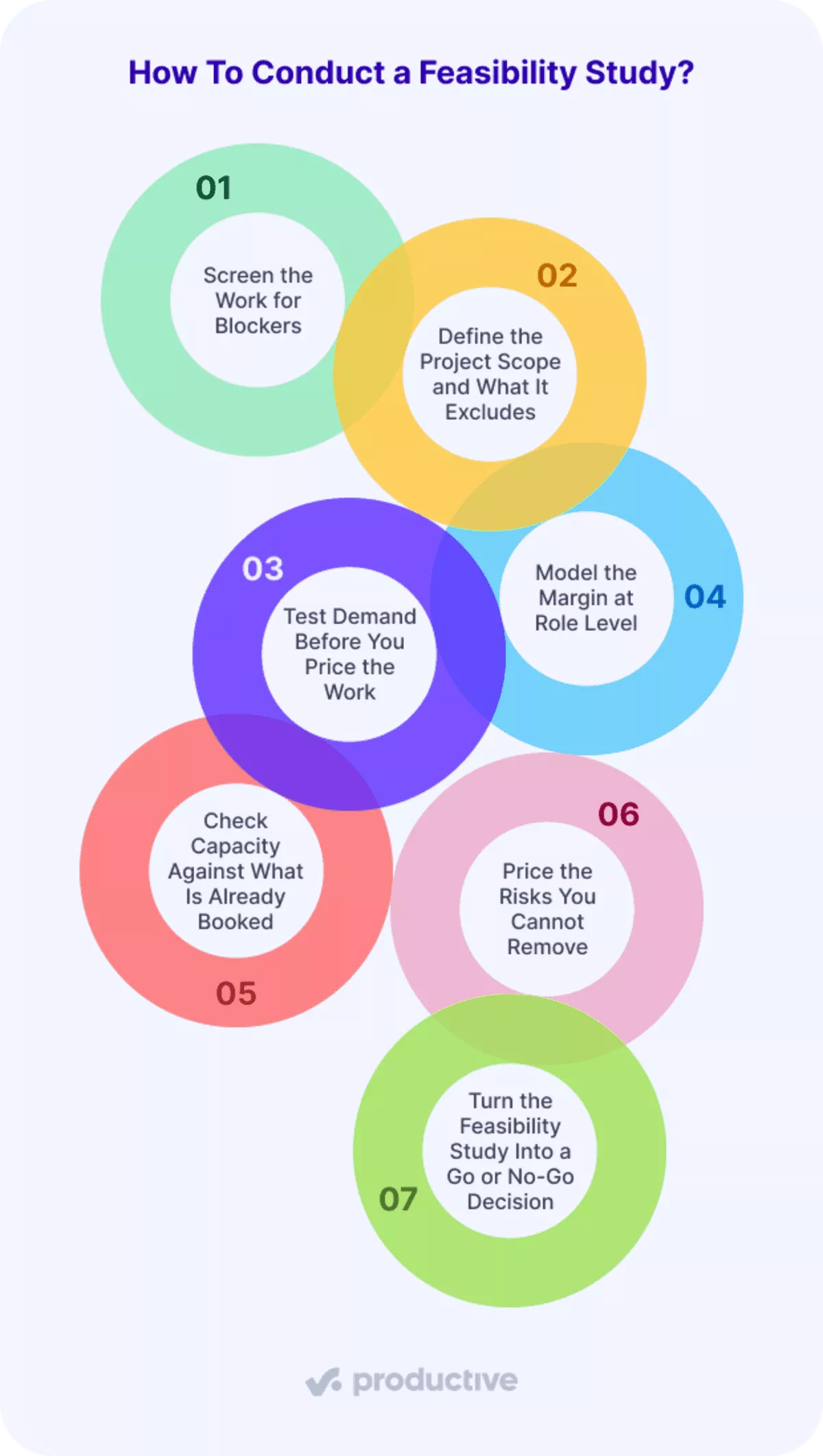
Step 1: Screen the Work for Blockers
The preliminary analysis is the cheapest hour of the whole feasibility analysis. It exists to kill a bad project before you spend a week on one. Run it alongside a running a SWOT analysis first if the opportunity is unfamiliar. Three checks do most of the work.
- Write a one-paragraph scope statement naming the deliverable, the end user, and the measurable outcome. “Improve the client’s online presence” fails that test. “Increase organic traffic 30% in six months through a site redesign” passes it.
- Estimate hours by phase and multiply by your blended rate. If that figure lands more than 25% above the budget the client has named, reprice before going further.
- Check which roles the work needs against your workforce planning data. If more than one role has to be hired or subcontracted, price that risk in now.
Step 2: Define the Project Scope and What It Excludes
Write one sentence naming what the project produces, then write the exclusions list underneath it. For a website build, name which integrations are included and which platforms stay out of this phase.
Then document the three constraints that govern every later decision: budget ceiling, hard deadline, and compliance requirements. Data residency and accessibility standards both belong here.
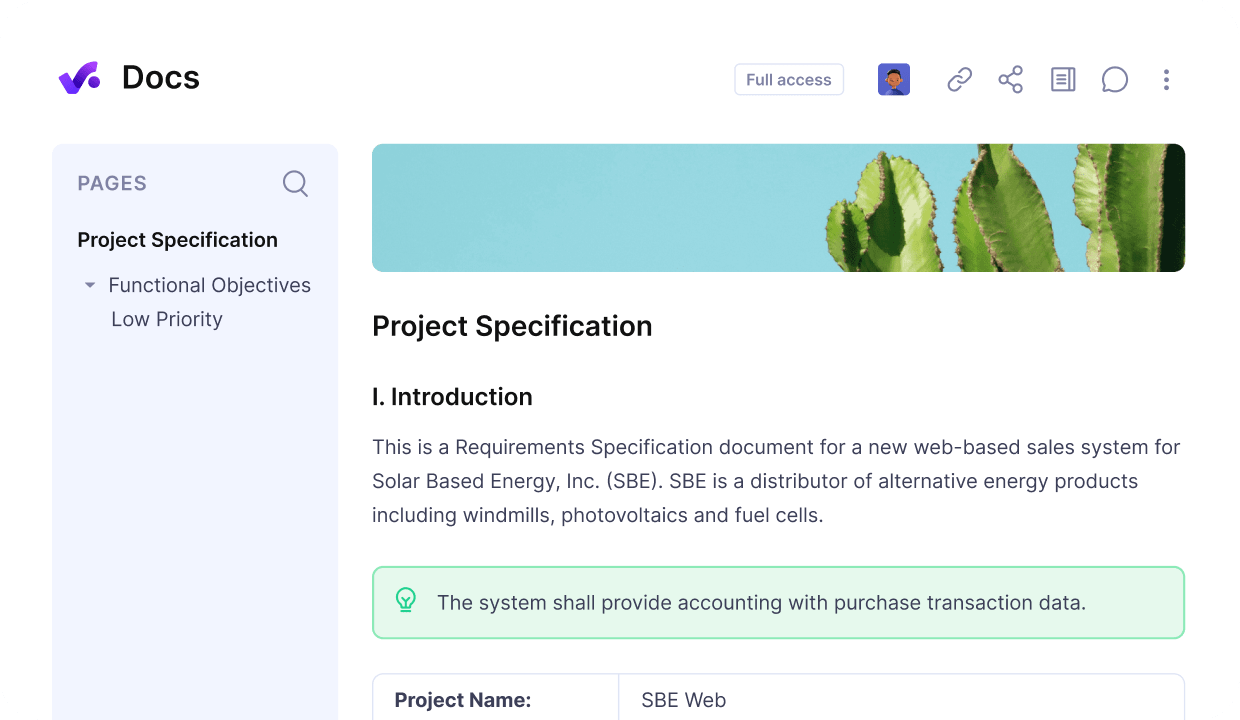
Use Productive’s docs to write down the project scope and share it with other stakeholders.
Get that document signed by the client contact and your delivery lead. Without a signed boundary, every later addition arrives as an expectation rather than a change request. That is how scope creep takes hold.
Step 3: Test Demand Before You Price the Work
Market research answers a different question depending on who carries the risk.
For a new service line the risk is yours. Define the target audience narrowly: industry, buyer role, budget band. A target audience of “agencies” cannot be tested. “Marketing agencies of 30 to 80 people who already outsource paid media” can.
Then test customer demand three ways:
- Run a competitor analysis of published rate cards and proposals you recently lost. Send a short market survey to that segment. Then call five of them, because a survey will not surface the objection that ends the sale.
- Read market trends across two years, not two quarters. Market demand that only appeared last month usually disappears the same way. A target audience visible across several market trends is the one worth pricing for.
- For client delivery work the risk is mostly theirs. Has the client validated demand, or are you building against their assumption? Ask what evidence the brief rests on before you accept it.
Either way, flag regulatory approvals and permit timelines now. They are the most common reason a feasibility study finishes late.
Step 4: Model the Margin at Role Level
For firms that bill time, cost estimation is a margin model rather than a capital budget.
Split cost estimation into three cost categories: people, tools, and pass-through. People costs are role cost rates multiplied by estimated hours. Tools are the licences the engagement needs. Pass-through is anything you buy for the client and rebill.
Then build the model:
- List every role, its cost rate, its billable rate, and the hours you expect it to consume.
- Calculate gross margin per role, then in aggregate. Benchmark hours against what comparable work actually consumed, not against the estimate you wish were true.
- Rerun the model at 20% and 40% hour overruns. If the 40% case falls below your margin floor, the fee is wrong, not the estimate.
- Check utilization before you commit anyone. Someone already at 85% who picks up 20 hours a week is over capacity. The overflow lands on their other clients.
Set revenue projections against the same months as the costs. Build financial projections by month rather than by project, so you can see when the money actually lands. The break-even point is where cumulative revenue meets cumulative cost.
Revenue projections past that point are profit rather than recovery. For more depth, see how to increase agency profit margins.
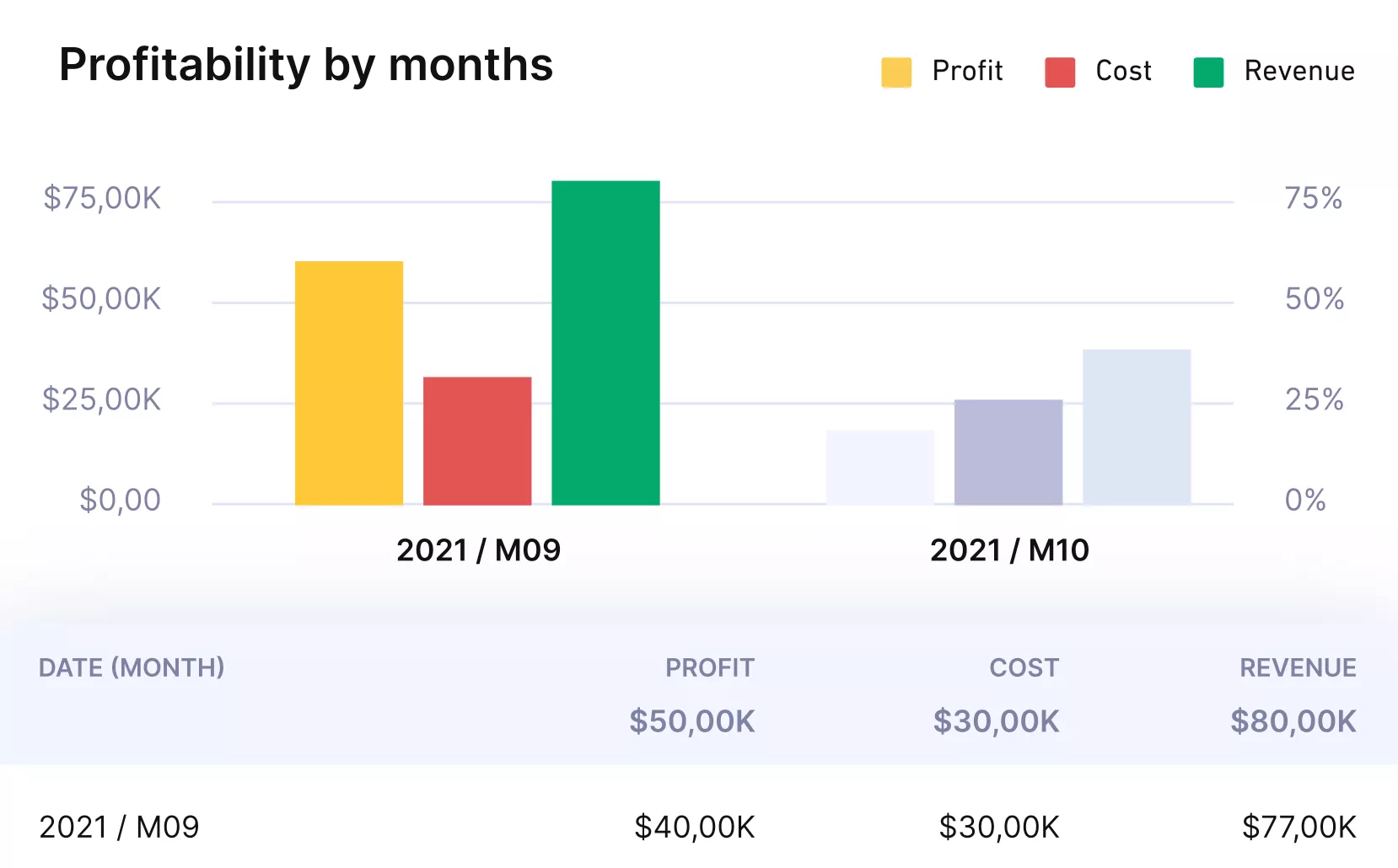
Get detailed profitability insights from Productive.
Two calculations close the financial analysis. A cost-benefit analysis weighs total cost against the value delivered, including any cost savings the client expects. ROI calculations divide net profit by total investment. That return on investment is what you compare against other work you could take.
Financial projections that only hold at full utilization are not financial viability. They are a best case.
Productive’s budgeting tools hold cost rates and delivered actuals in one place. Cost estimation then rests on what comparable work really cost.
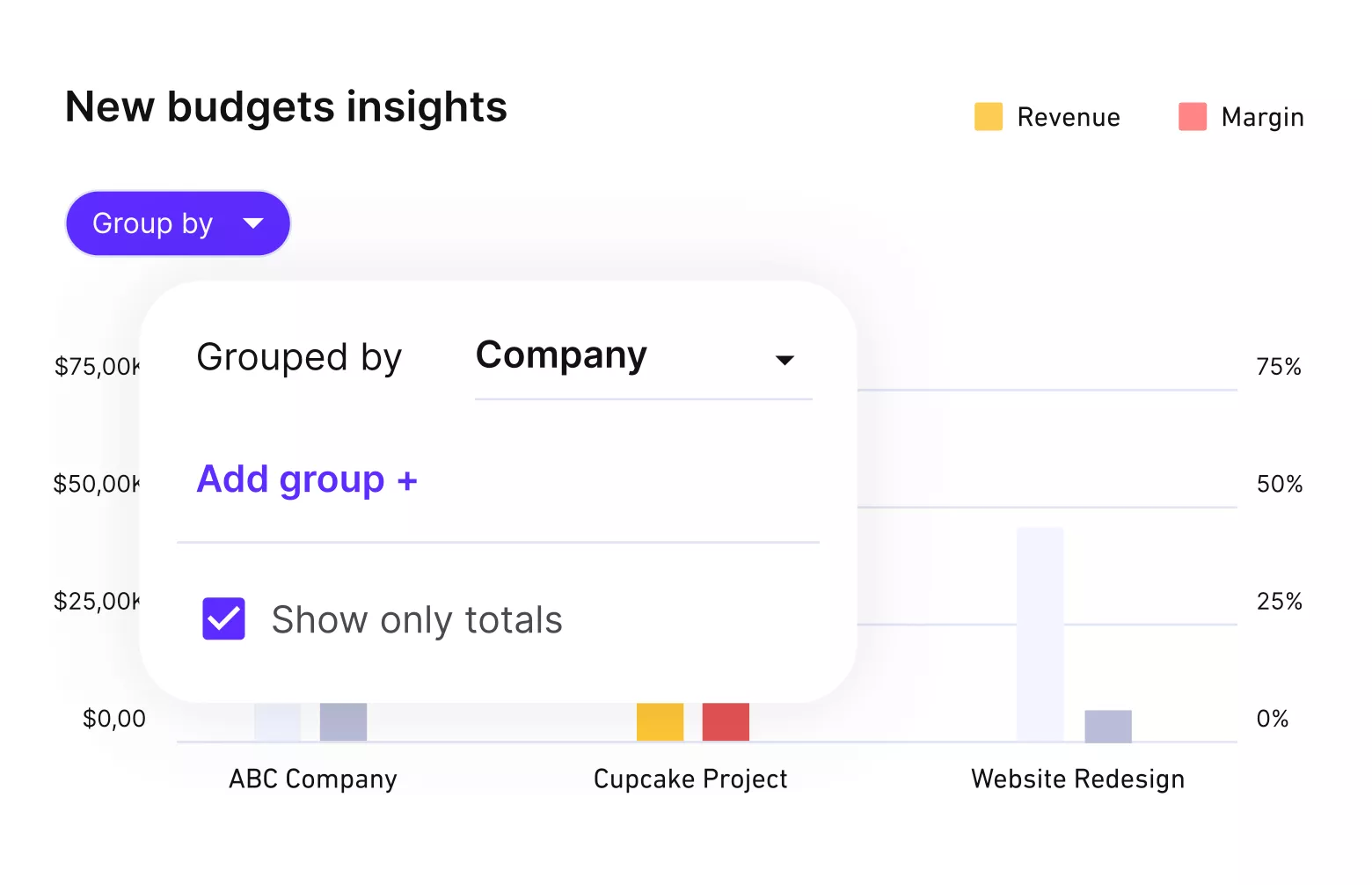
See real-time budget updates.
Step 5: Check Capacity Against What Is Already Booked
Operational feasibility comes down to one question: who is free. Open the booking calendar for the delivery window and read capacity by person. Team averages hide what actually breaks delivery: one person at 110% while two sit at 60%.
Productive’s Resource Planner shows that split across concurrent bookings.
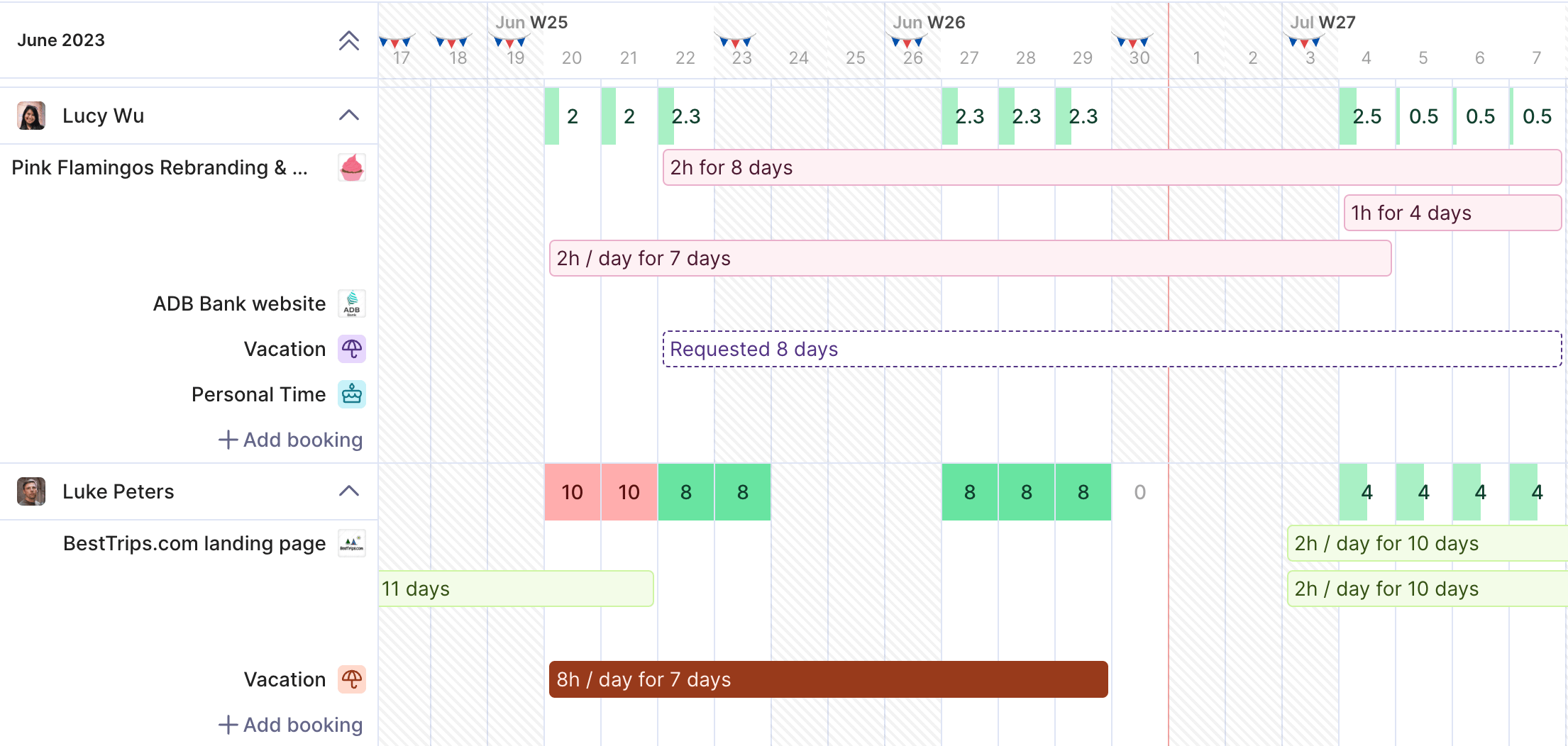
Manage your resources from a single view.
Name the skills gaps, then attach a lead time to each fix. Hiring takes weeks, subcontracting takes days, and a tool change takes as long as the migration.
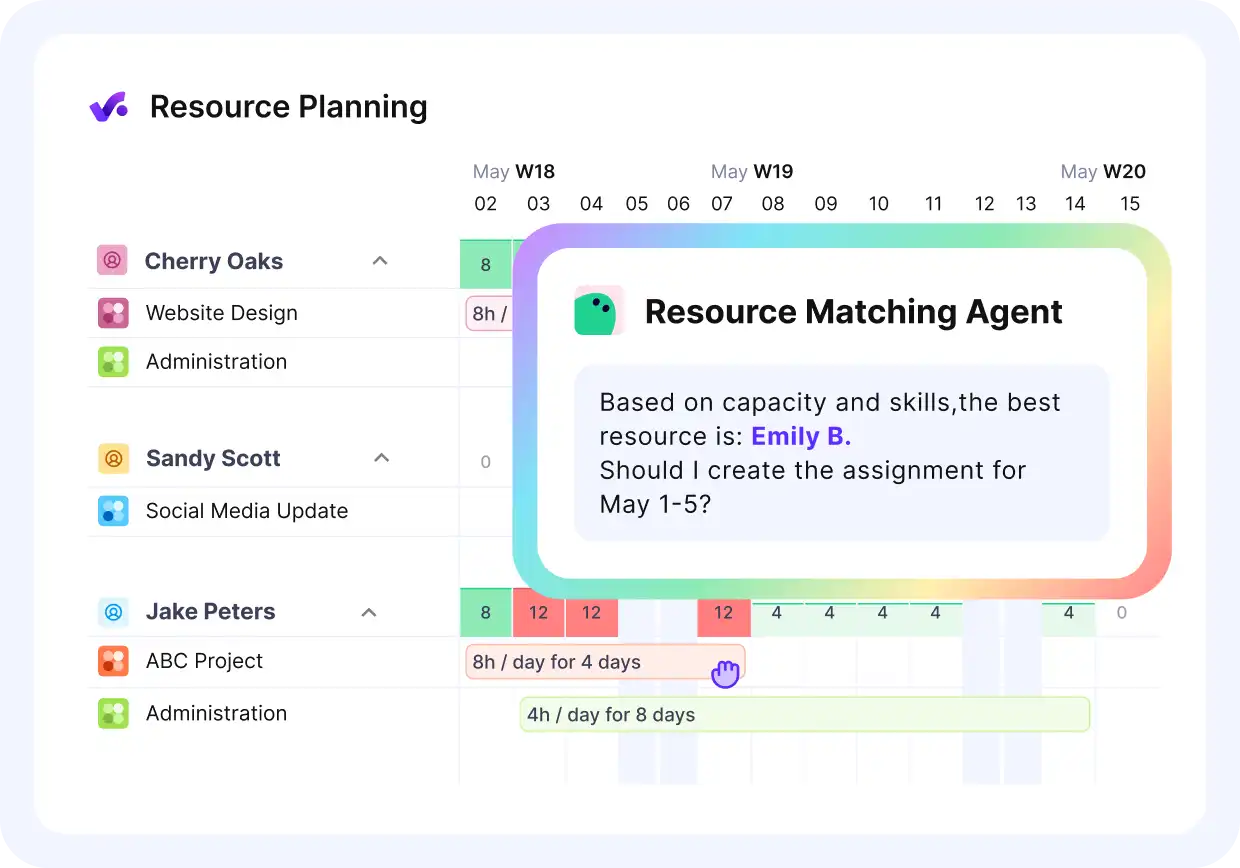
Ask Productive’s AI assistant to match the skills and avaiable capacity with the work ahead.
List the technical requirements the work depends on and confirm they connect. When time has to be re-keyed by hand into finance, cost data arrives weeks after the money is spent.
If that is your situation, compare tools that combine time tracking and billing before the engagement starts.
Then name an owner and a trigger for each approval step: scope sign-off, timesheet review, invoice authorization.
Step 6: Price the Risks You Cannot Remove
A risk assessment is only useful when the output is a number and a name. Work through the assumptions the project depends on: budget, availability, approvals, client commitments, technical requirements.
Budget assumptions deserve the most scrutiny, because what causes project cost overruns is usually visible at estimate stage.
- Score each assumption on likelihood from one to five. Score impact in money, not adjectives. A two-week slip costs the day rate of everyone left idle.
- Separate financial risks from technical and legal ones. Each category has a different owner and a different fix.
- For every high scorer, write the response, the trigger that activates it, and the person who acts. Log all three in your how to build a risk register.
- Flag risks that depend on the client or a third party separately. You control the response but not the timing.
Step 7: Turn the Feasibility Study Into a Go or No-Go Decision
Write a one-page executive summary with one verdict sentence per dimension, then record one of three outcomes.
- Record a go when three conditions hold at once. The return clears your margin floor. The technical requirements sit inside your team’s current capability. No single risk could end the work on its own.
- Record a conditional go when the numbers work but something has to change first. This is the most common honest outcome. Name the condition, the owner, and the resolution date. Then set the setting clear project milestones the work will be measured against.
- Record a no-go with the specific change that would reopen it. Without that sentence, the same opportunity returns unchanged in six weeks and gets re-argued from scratch.
Start Your Feasibility Study From Real Data
A demo shows where the feasibility study inputs live: role cost rates, delivered hours, and who is already booked.

What Goes in a Feasibility Study Report?
A feasibility study report runs from an executive summary through the analysis to a recommendation and next steps. Most of it is written as you work, not afterwards.
| Section | What it covers |
|---|---|
| Executive summary | The recommendation and the two or three findings behind it. Write this one last. |
| Project overview | What the work is, and why it is being considered now. |
| Objectives and scope | The deliverable, the exclusions, and the constraints agreed at sign-off. |
| Assumptions and constraints | Every assumption the numbers rest on, listed so a reader can challenge the inputs. |
| Analysis by feasibility type | One subsection per type, so financial feasibility and operational feasibility each end in their own verdict. |
| Financial model | Role rates, hours, margin, break-even, return on investment, and the financial projections behind them. |
| Risks and dependencies | The risk assessment output: a scored register with an owner and a trigger against each entry. |
| Recommendation | Go, no-go, or conditional go, with any conditions named. |
| Next steps | Who does what, by when, and what the delivery plan inherits. |
What Is a Feasibility Study Example?
A feasibility study example: a consultancy weighing a fixed-price digital transformation for a mid-market retail client. Scope: 12 weeks, €120,000 fixed fee, one senior consultant, two mid-level analysts, one project manager.
- Financial feasibility: 480 estimated hours at an €85/hour blended cost rate puts internal cost at €40,800. Against the €120,000 fee, gross margin is €79,200, or 66%. A 20% overrun drops it to 59%, still comfortable. A 40% overrun brings it to 52%, close to the firm’s 45% floor.
- Resource: The senior consultant is at 80% utilization across two retainers. This engagement pushes her to 110% for weeks 3 through 7. Either the start date moves by three weeks or a contractor covers the gap. Without that, the existing retainers absorb the risk.
- Technical feasibility: The client’s legacy ERP exposes no standard API. Custom middleware adds an estimated 60 hours and €15,000 in third-party licensing, neither covered by the fixed fee. Together they take margin from 66% to 49%.
- Market feasibility: Two comparable retail transformations already delivered, reference clients available, discovery risk low.
- Legal and operational feasibility: The client requires EU data residency, which current cloud infrastructure already meets. No extra legal review needed.
- Schedule: The 12-week window carries no float. The middleware work adds 60 hours to the critical path. The three-week delay that fixes the capacity conflict moves delivery to week 15.
What the study concludes:
- Margin holds if hours hold, but the middleware alone costs 17 points of it. Make it a pass-through or add it to the fee.
- The capacity conflict is the biggest delivery risk, and measuring resource utilization by person is what surfaces it. A three-week delayed start or a scoped contractor booking removes it without touching the fee.
Verdict: conditional go. The engagement is viable once the capacity conflict is resolved and the middleware is repriced. Neither is a reason to walk away. Signing before both are fixed would be.
What Are Feasibility Study Best Practices?
The best practices for a feasibility study are named owners, primary data, and scoring before discussion. Each guards against a different way a feasibility assessment goes wrong.
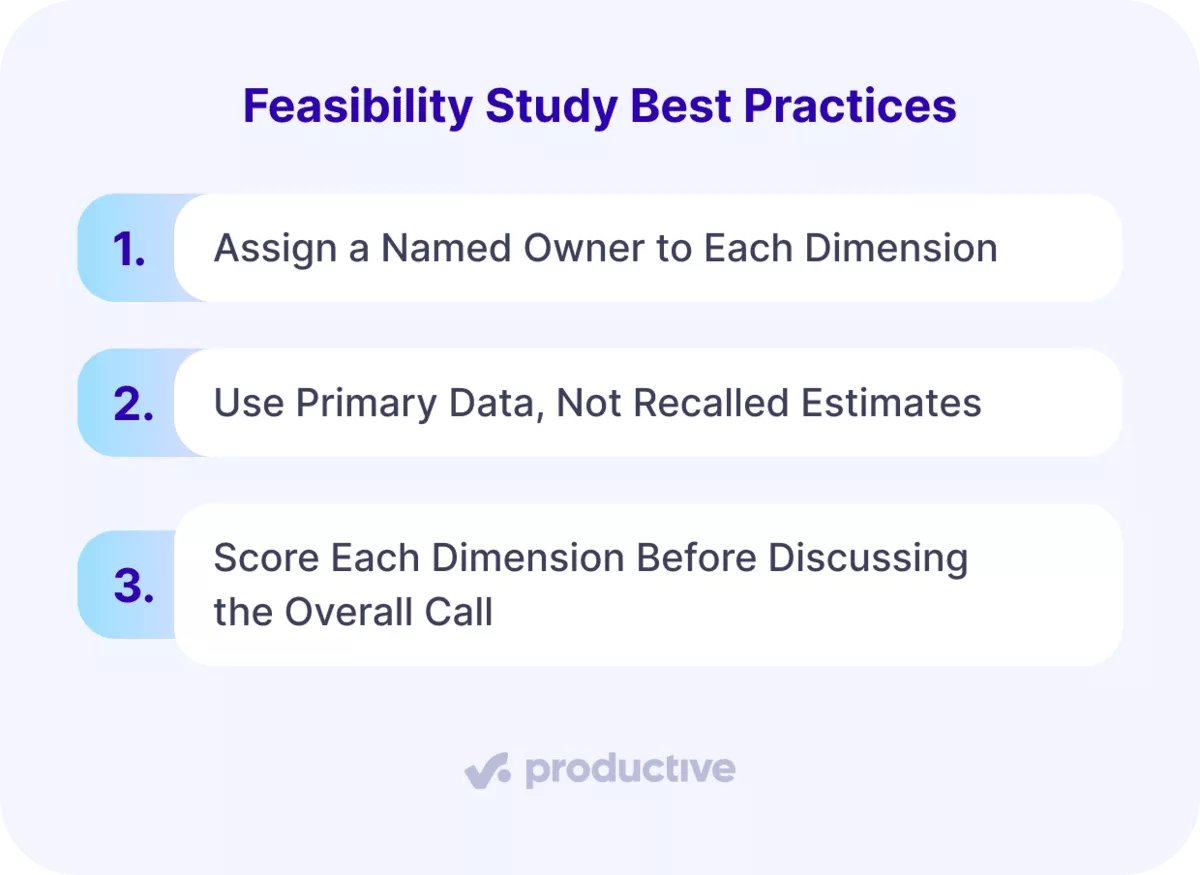
Best Practice 1: Assign a Named Owner to Each Dimension
Split the feasibility analysis by dimension and give each one an owner. A delivery lead who has run similar engagements will spot resource risks a finance analyst would miss. The reverse is equally true.
Assign owners at the start rather than pulling people in at the end to review a finished draft.
Best Practice 2: Use Primary Data, Not Recalled Estimates
Reliable inputs mean tracking actual costs against estimates, real cost rates, and signed contracts. The most useful numbers sit inside work you have already delivered. Look at hours a role actually consumed, the realized margin, and where scope expanded.
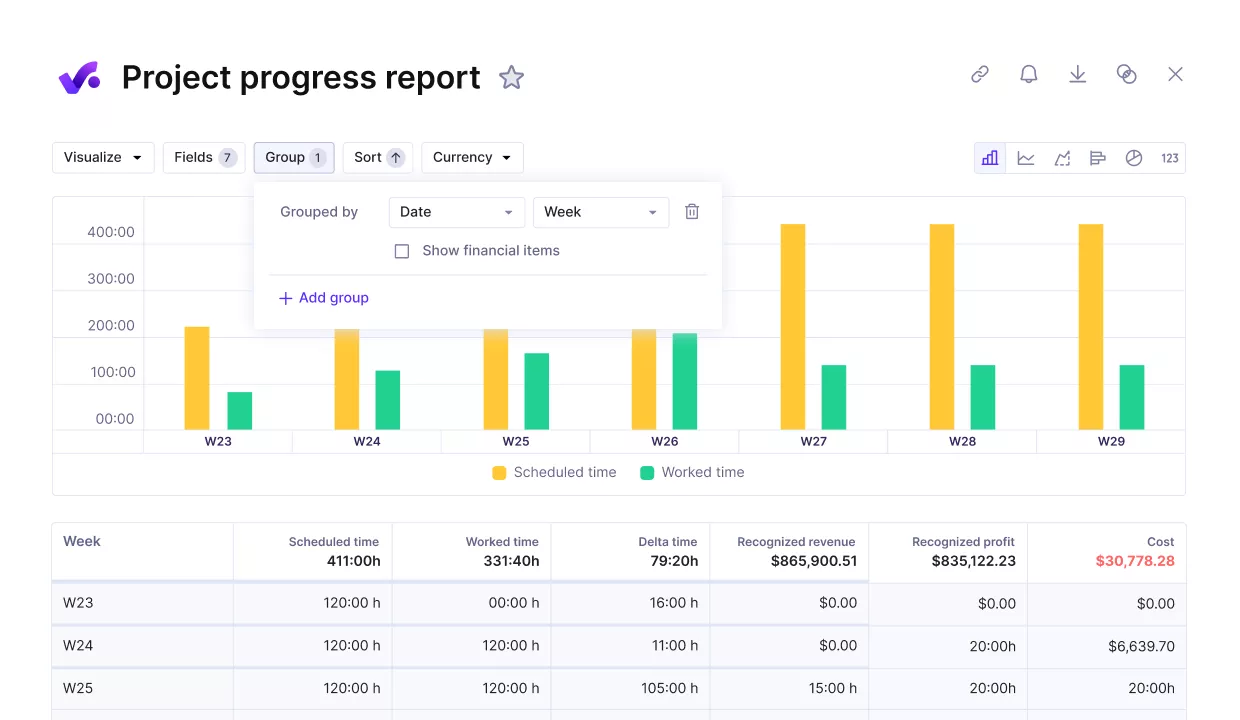
Measure your project’s progress against key performance metrics.
Teams tracking time and budget at task level can pull that directly. In Productive’s project management platform it comes out of the same record the work was logged against.
Best Practice 3: Score Each Dimension Before Discussing the Overall Call
When an opportunity is exciting or a client relationship is at stake, assumptions get shaded toward a green light. Rate each dimension against a fixed threshold first, then discuss.
Attach the data, so stakeholders can challenge the inputs rather than only the conclusion.
Final Thoughts – What Makes a Realistic Viability Analysis?
What the study runs on is record-keeping. What comparable work actually cost, which people are actually free, and which engagements actually made money. Firms that hold those records answer a go or no-go question in an afternoon.
Firms that do not spend the first day rebuilding them from exports, then decide on instinct anyway.
If you want your next scoping conversation to start from real numbers, book a demo.
FAQ
How Long Does a Feasibility Study Take?
A day or two for a single client engagement, or several weeks for a new service line.
Who Should Run a Feasibility Study?
Whoever owns the number being tested: finance the margin, delivery the capacity, the account owner the client assumptions.
What Happens if a Feasibility Study Says No?
The study worked, so record what would have to change before anyone reopens it.
What Is the Difference Between a Feasibility Study and a Business Plan?
A feasibility study tests whether something can work, and a business plan sets out how you will run it.
When Don’t You Need a Feasibility Study?
Skip it when you hold recent actuals from comparable work, or when overrun risk sits with the client.
What Tools Do You Need to Run a Feasibility Study?
A business feasibility study runs on history, so it moves fastest when records, capacity and costs share one system. Productive holds all three.
Connect With Agency Peers
Access agency-related Slack channels, exchange business insights, and join in on members-only live sessions.
