What Is Cost Efficiency? Meaning and 5 Ways to Increase It

You can hit every deadline and still lose money on a project that took more hours than you budgeted. Cost efficiency means producing a given output for the lowest cost, without lowering its quality.
Below are the definition, the difference from cost-effectiveness, why it matters, the obstacles, and five ways to increase it.
Key Takeaways
- Cost efficiency compares what delivery costs against what it produces: it improves when the same scope ships to the same standard on fewer paid hours.
- Cost-effectiveness judges the outcome rather than the steps: a cheaper way of working only counts if the client still gets the result you sold.
- Cost efficiency matters because it sets how much of each fee you keep: lower delivery costs at the same quality mean higher margins and more cash left after each project.
- We cover five ways to increase cost efficiency: run a cost-benefit analysis, automate admin, pick the right pricing, match people to projects, and track efficiency metrics.
What Is Cost Efficiency?
Cost efficiency is producing a given output for the lowest cost, without lowering its quality. You can measure it as cost per unit of output: total cost divided by what is produced. Ways to improve it include:
- Optimizing how resources are used (finances, employees, facilities)
- Improving processes with automation and workload management
- Improving reporting for informed decision-making
In manufacturing, economies of scale also help: as output grows, the cost per unit falls. In professional services, the gains come from improving operational efficiency in delivery: how hours are planned, staffed, and billed.
Cost-effectiveness, the closest neighboring term, measures the result instead.
What’s the Difference Between Cost-Efficient and Cost-Effective?
The key difference between cost-efficient and cost-effective is what each one measures: the process or the result. We separate the two this way:
- Cost-efficient meaning: process-oriented. It counts the resources used, so shipping the same scope on fewer paid hours is more efficient.
- Cost-effective meaning: result-oriented. It weighs the outcome against its cost, so a pricier approach can still qualify if it removes rework.
Check cost-effective vs. cost-efficient on a finished project: efficiency shows what delivery used, effectiveness whether it paid off.
Example: Moving From On-Premises Servers to the Cloud
Moving from on-premises servers to the cloud is cost-efficient when it cuts hardware, IT support, and scaling costs.
It becomes cost-effective only if results improve as well, such as fewer missed deadlines or projects staying closer to budget.
The business case starts with margins and cash flow.
Why Is Cost Efficiency Important?
Cost efficiency is important because it sets how much of each fee you keep once delivery is paid for. In a Gartner survey of 200+ CFOs, 56% ranked achieving cost optimization targets among their top five priorities.
Its benefits include:
- Higher profit margins: lower delivery costs at the same quality leave more of each fee as profit.
- Competitive advantage: a lower cost base lets you quote lower prices or invest more in quality.
- Sustainability: efficient operations use fewer resources and create less waste.
- Financial stability: more cash left after each project helps you meet obligations and fund sustainable growth with less outside funding.
Budgets are where these gains are planned, so it helps to know the factors that shape a project budget. Getting there runs into a handful of obstacles, covered next.
What Are the Potential Challenges of Increasing Cost Efficiency?
The potential challenges of increasing cost efficiency include stretched resources, internal resistance, and missing buy-in. These five are examples, not a complete list:
- Too few resources to drive the effort
- Resistance inside the organization
- Limited HR capacity and capabilities
- Unclear opportunities, with no agreed number or priority
- No buy-in from senior management
Action: run one efficiency project at a time, give it a leadership owner, and review it alongside margin. Five cost optimization strategies come next.
How Do You Increase Cost Efficiency?
You increase cost efficiency by using a cost-benefit analysis to pick what to fund, automating repetitive admin work, choosing a pricing model that protects your margin, matching the right people to each project, and tracking the metrics that show where to improve. These five methods are our own grouping.
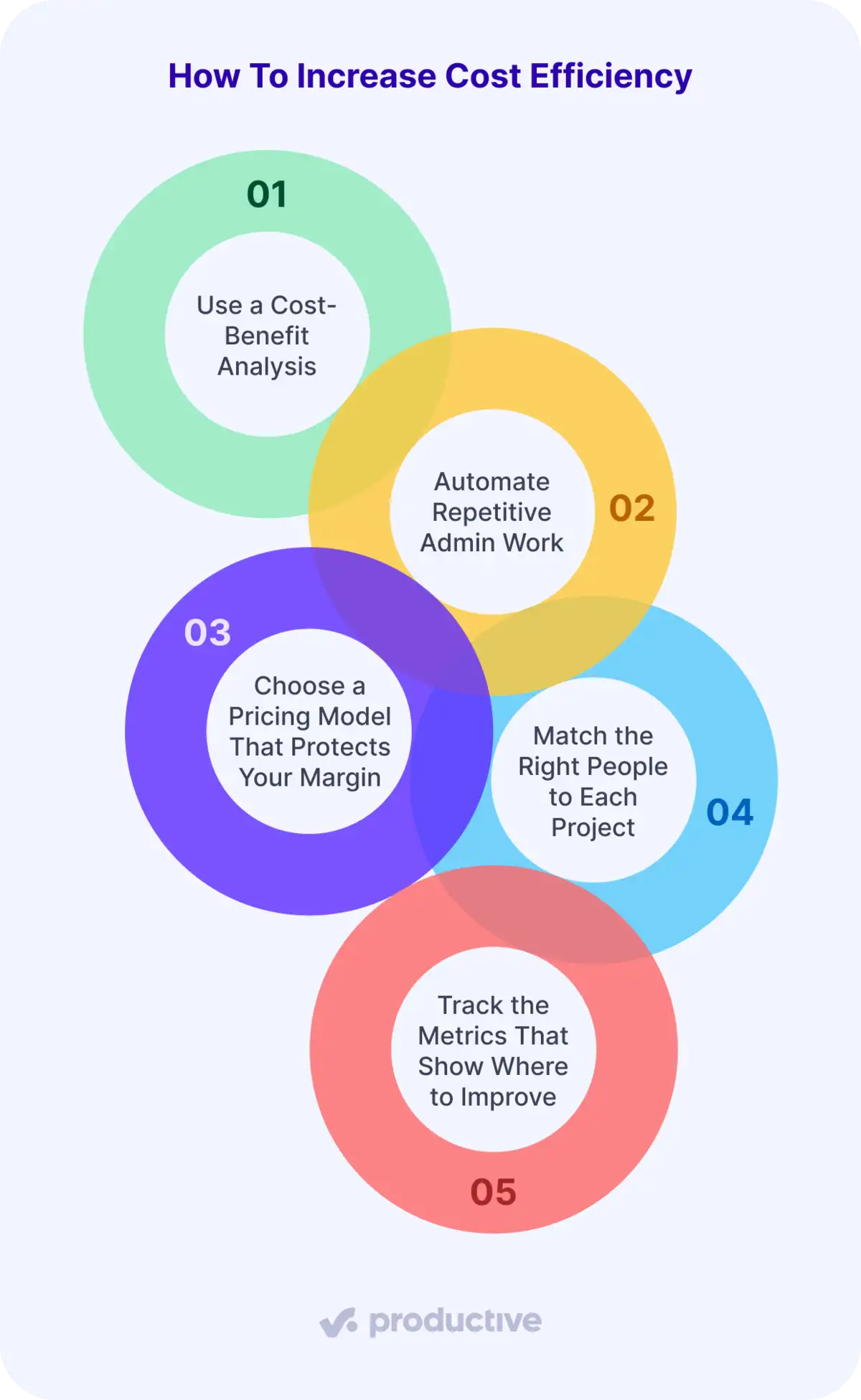
We’ll take a closer look at each.
1. Use a Cost-Benefit Analysis to Pick What to Fund
Using a cost-benefit analysis to pick what to fund means comparing each initiative’s cost with its return. Budget then goes to the changes that save the most. It helps you:
- Quantify the costs and benefits of each initiative
- Prioritize the investments with the highest returns
- Allocate resources and make informed decisions
A Four-Step Cost-Benefit Analysis
A simple cost-benefit analysis follows four steps: define, identify, quantify, and analyze:
- Define the project: outline the scope and objectives of the project or decision.
- Identify costs and benefits: list direct costs (staffing, materials), indirect costs (overhead), and intangible costs such as lower team morale. Benefits can be direct (revenue, market share) or intangible (brand perception, customer satisfaction).
- Quantify costs and benefits: put a monetary value on each using historical data, market analysis, and expert opinion. Include the opportunity cost, meaning what the same hours could earn elsewhere.
- Analyze the results: work out the net benefit, weigh risk-related costs such as delays, and decide whether to go ahead.
2. Automate Repetitive Admin Work
Automating repetitive admin work cuts the hours spent on tasks that follow the same steps every time. It also cuts administrative cost and reduces human error in data entry and billing. Examples in professional services include:
- Timesheets built from integrated timers or the resourcing schedule, instead of typed up every Friday
- Uninvoiced amounts pulled from fixed budgets or tracked hours into a draft invoice
- Payment reminders sent on a set sequence after the due date
- A live report of unpaid invoices and finalized payments, instead of a monthly chase list
In Productive, AI Time Tracking fills out your timesheets from calendar events, matched against your previous time entries.
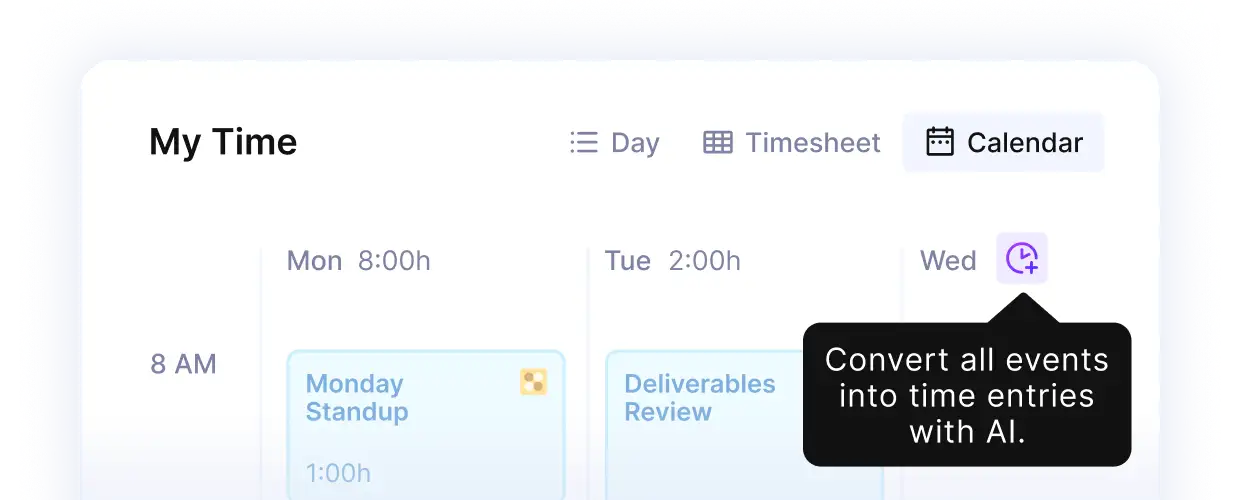
AI Time Tracking fills out your timesheets from calendar events and previous time entries in Productive.
Fill Timesheets Without Manual Entry in Productive.
3. Choose a Pricing Model That Protects Your Margin
Choose a pricing model by weighing how predictable the work is and who should carry the cost of overruns. The models and their trade-offs include:
- Hourly pricing: every hour worked is paid, which suits unpredictable work. It doesn’t reward finishing faster, though.
- Project-based (flat) pricing: you can plan resources with certainty. If the scope is loosely defined, you risk underestimating costs and losing margin.
- Retainer pricing: predictable income makes resource planning easier and can lower the cost of winning clients. Without transparent reporting, expectations can drift until the retainer is unprofitable.
- Performance-based pricing: revenue follows specific outcomes. It doesn’t suit work whose results are hard to measure.
- Value-based pricing: prices follow the value delivered rather than time spent, which rewards the most impactful approach over the fastest.
- Productized services: standard packages reduce variability, so delivery can get cheaper and easier to scale.
4. Match the Right People to Each Project
Matching the right people to each project means putting the right skills and seniority on each task. In consultancies, law firms, and other professional services, resource planning is about people rather than machinery.
Resource matching means aligning each person’s skills and experience with what a client project needs. Resource planning also covers longer-term work such as succession planning, talent retention, and building capacity.
Practices That Improve Resource Planning
Resource planning improves when you start from an honest picture of each person’s skills and availability. Practices that help include:
- Analyzing current resources, including competencies and preferences
- Balancing allocation across projects with a capacity planning template
- Monitoring progress with live metrics and adjusting as you go
- Investing in learning and professional growth
5. Track the Metrics That Show Where to Improve
The metrics that show where to improve include lead time, resource utilization, cost variance, profit margins, and return on investment. We’ll take a closer look at each. Depending on your industry, you might track others, such as throughput in manufacturing.
Lead Time
Lead time measures the time from the start of a process to its completion. In professional services, it covers a project from kickoff to delivery.
Shorter lead times can improve client satisfaction and flexibility. In manufacturing, they also cut inventory and storage costs.
To shorten it, treat it as continuous improvement: review workflows regularly, keep communication tight, and automate where you can.
Resource Utilization
Resource utilization measures how much of each person’s total time goes to billable work. You can analyze it per employee, department, or seniority.
It’s easy to overdo. Leave room for non-billable work such as pitching for new projects, internal meetings, and learning.
Cost Variance
Cost variance in project management compares the budgeted cost of the work done with its actual cost. A positive variance means the project is under budget. A negative one means it has gone over.
A related metric, the cost performance index, shows budget efficiency as a ratio above, below, or equal to 1.0.
Profit Margins
Profit margin is the share of revenue left after costs. It reflects both your pricing and your operational efficiency. Improving it means controlling costs and optimizing pricing, for example by prioritizing high-value projects.
In Productive, ask AI to build a report such as profitability per project, instead of starting from scratch. The AI Assistant can present it as an Artifact, saved automatically and exportable as a PDF.
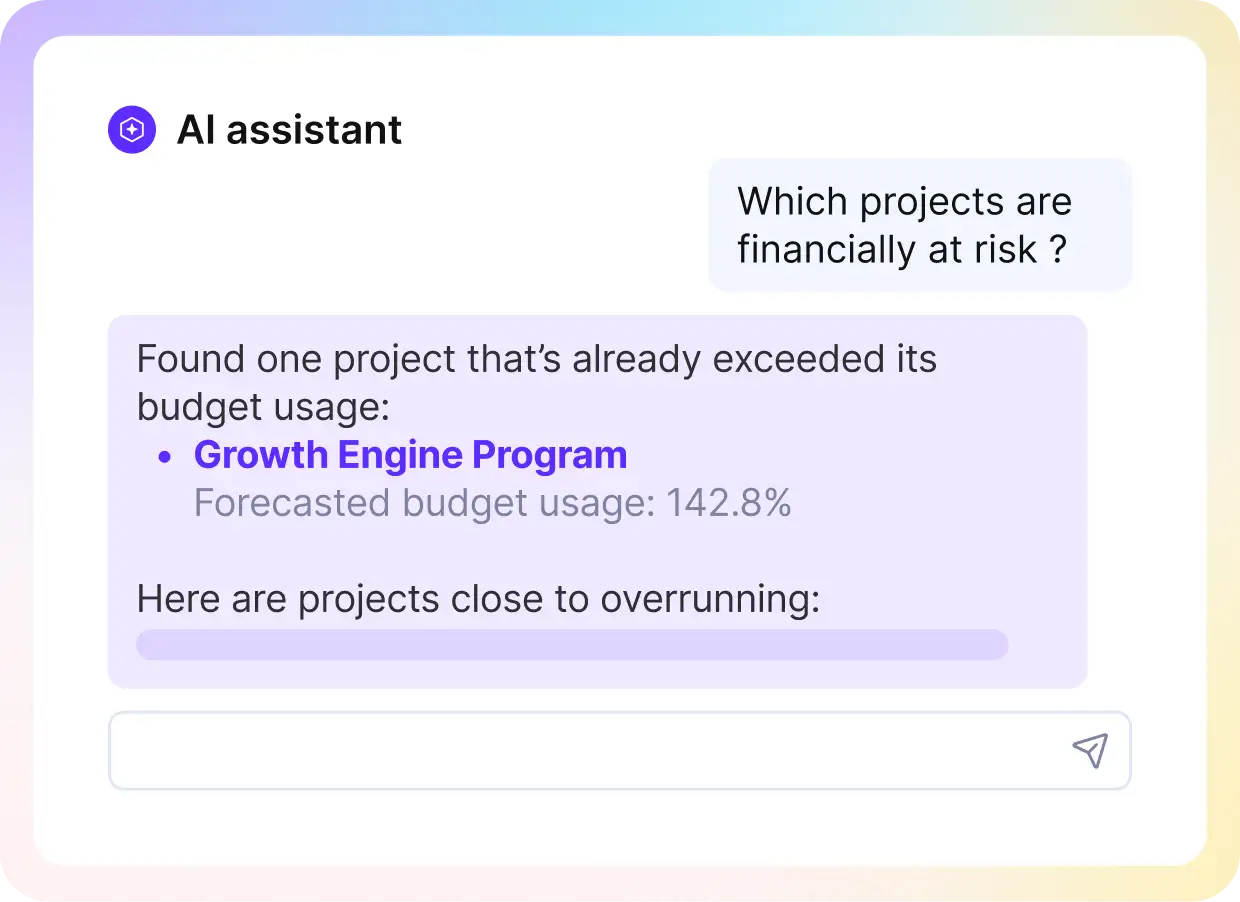
Ask AI for insights in plain language in Productive.
If you’re comparing tools for this, see these financial reporting software tools compared.
Return on Investment (ROI)
ROI measures the gain or loss on an investment relative to what you put in. Comparing it across projects shows where resources are poorly allocated.
Some activities, such as PPC advertising, can pay back fast. Others, like brand development or employee training, pay back slowly but can support long-term profitability.
ROI can be tangible, such as sales and cost savings. It can also be intangible, such as brand recognition, customer experience, and employee morale.
How Productive Supports Cost Efficiency
Productive supports cost efficiency by keeping hours logged, rates, and budgets connected. The five methods depend on those numbers. Split across timesheets, spreadsheets, and invoicing tools, they may hide a project’s real cost until it closes.
Productive runs resources, projects, and finances in one platform built for agencies, consultancies, and other professional services firms. Time and expenses logged against a budget update its spend and profit in real time. Scheduled work feeds a forecast of future cost and profit margins.
Start measuring the actual cost of your delivery work by booking a demo with Productive.