Project Coordinator vs Project Manager: Differences Explained

The difference between a project coordinator vs project manager can seem blurry at first, especially since both roles often work on the same projects. But they do not own the same kind of work, and when teams treat them like they do, task updates get scattered, and crucial decisions get delayed.
So let’s clear everything up. In this guide, we’ll walk through what each role actually does, the skills each one needs, how they work together, and when you might need to hire one, the other, or both. We’ll also look at how a project coordinator can advance their career, how much each role earns, and how software supports their day-to-day work.
Key Takeaways
- Project managers and project coordinators handle different parts of the same work: managers own scope, decisions, and outcomes, while coordinators keep tasks moving, updates flowing, and issues surfaced early.
- Each role relies on a specific set of practical skills: coordinators rely on organization, communication, and attention to detail, while managers need planning, judgment, and leadership.
- A project coordinator can become a project manager by moving from support to ownership: owning small project decisions, building advanced skills, and acquiring recognized certifications are steps in the right direction.
- Project management software gives both roles a shared, real-time view of project progress: it connects delivery work to budget health, reduces manual reporting, and helps both roles stay aligned without switching between tools using the best PM platforms.
What Is the Difference Between a Project Coordinator vs Project Manager?
The difference between a project coordinator vs project manager (PM) is that the project manager owns project outcomes and decisions, while the coordinator supports execution and keeps the work organized.
The easiest way to see the difference is to compare what each role owns day to day.
Comparison table
| Area | Project manager | Project coordinator |
|---|---|---|
| Project outcome | Owns delivery and results | Supports delivery and keeps work moving |
| Scope | Defines, protects, and adjusts scope | Tracks scope updates and keeps records current |
| Decisions | Makes delivery decisions and trade-offs | Follows up on decisions and communicates changes |
| Budget | Monitors budget health and responds to overruns | Helps update data and flag issues |
| Risk | Identifies risks and decides how to handle them | Tracks risks and raises them early |
| Client communication | Manages expectations and difficult conversations | Shares updates and helps keep communication organized |
| Team coordination | Sets direction and priorities | Follows up on tasks, timelines, and dependencies |
| Reporting | Interprets progress and decides what happens next | Prepares updates and keeps information accurate |
| Accountability | Accountable for delivery | Accountable for coordination and follow-through |
| Day-to-day focus | Steering the project | Keeping the project on track administratively |
The pattern is simple. The PM owns the bigger picture, while project coordination helps the project run in a structured, visible way. Clear roles make hiring easier, handoffs cleaner, and projects much less likely to drift.
If you also want to compare this role with another client-facing delivery role, you can check out our guide on project manager vs account manager.
With that difference clear, let’s look at what a project coordinator actually does day to day.
What Does a Project Coordinator Do?
A project coordinator keeps a project organized, up to date, and moving forward by handling the follow-up work that delivery depends on.
That usually means the coordinator role sits close to the action. They do not own the final call on scope, budget, or client outcomes, but they do make sure the team has the information, structure, and project documentation it needs to keep working without chaos.
Typical coordinator responsibilities include:
- organizing timelines, task management, and day-to-day updates so people know what needs to happen next
- preparing meeting notes, project documentation, and shared records that keep project deliverables clear
- following up on deadlines, dependencies, and missing updates before they become bigger problems
- updating trackers, reports, and status notes so the PM is not working with stale information
- supporting communication across the team by keeping the right people informed at the right time
- flagging risks, blockers, or gaps early when something needs the PM’s attention
In practice, strong project coordination prevents small problems from becoming annoying ones. It is the difference between a team that spends half a meeting figuring out what is going on and a team that can actually get on with the work.
To do that well, though, a coordinator needs more than a tidy task list and a decent memory. Let’s look at the skills that make someone strong in this role.
Which Coordinator Skills Are Most Important?
The most important coordinator skills are organization, communication, attention to detail, time management, documentation, and reliability.
We will now look at each skill type in more detail.
- Organizational skills. A coordinator needs to keep timelines, tasks, notes, and updates in order so the team doesn’t have to dig for basic information.
- Communication skills. The role depends on sharing updates clearly, following up without confusion, and making sure the right people know what changed.
- Attention to detail. Small misses in deadlines, notes, or dependencies can create bigger project problems later, so details matter a lot here.
- Time management. Coordinators often juggle check-ins, follow-ups, administrative tasks, and reporting across multiple projects simultaneously.
- Documentation. Clear records make handoffs smoother and help the team work from the same version of reality.
- Reliability. People need to trust that updates are accurate and that deadlines are met.
Put simply, strong project management skills at the coordinator level help the whole team work more smoothly.
Now that the support side is clear, the next step is to examine the changes that occur when someone moves from coordination to full project ownership.
What Does a Project Manager Do?
A project manager leads a project by owning its scope, priorities, decisions, and delivery outcomes.
That also places the role more clearly among other managerial roles, because it carries direct responsibility for how work gets planned, prioritized, and delivered.
That means the PM role goes beyond keeping work organized. It is about making sure the project has a clear plan, stays commercially healthy, and gets where it needs to go without the whole thing wobbling every time something changes.
Typical project manager responsibilities include:
- defining project scope, timeline, and project plans so the team knows what it is delivering and when
- managing priorities, trade-offs, and resource allocation when time, people, or budget get tight
- owning project progress, project objectives, and outcomes instead of just reporting on activity
- handling stakeholder communication, client expectations, and changes before they turn into confusion
- managing project risks, blockers, and cost estimates so issues are dealt with early
- making decisions when the project goes off track, rather than waiting for someone else to step in
- monitoring budget tracking and overall delivery performance, so the work stays realistic and profitable
This role gets much harder when there is no live view of budgets, tracked hours, or resource availability. That is when PMs end up asking people for updates, chasing timesheets, and spotting overruns after the damage is already done.
Productive’s Budgeting solves that with automatic budget burn calculations and tracked time tied directly to financial views, so the PM can see where the project stands right now.
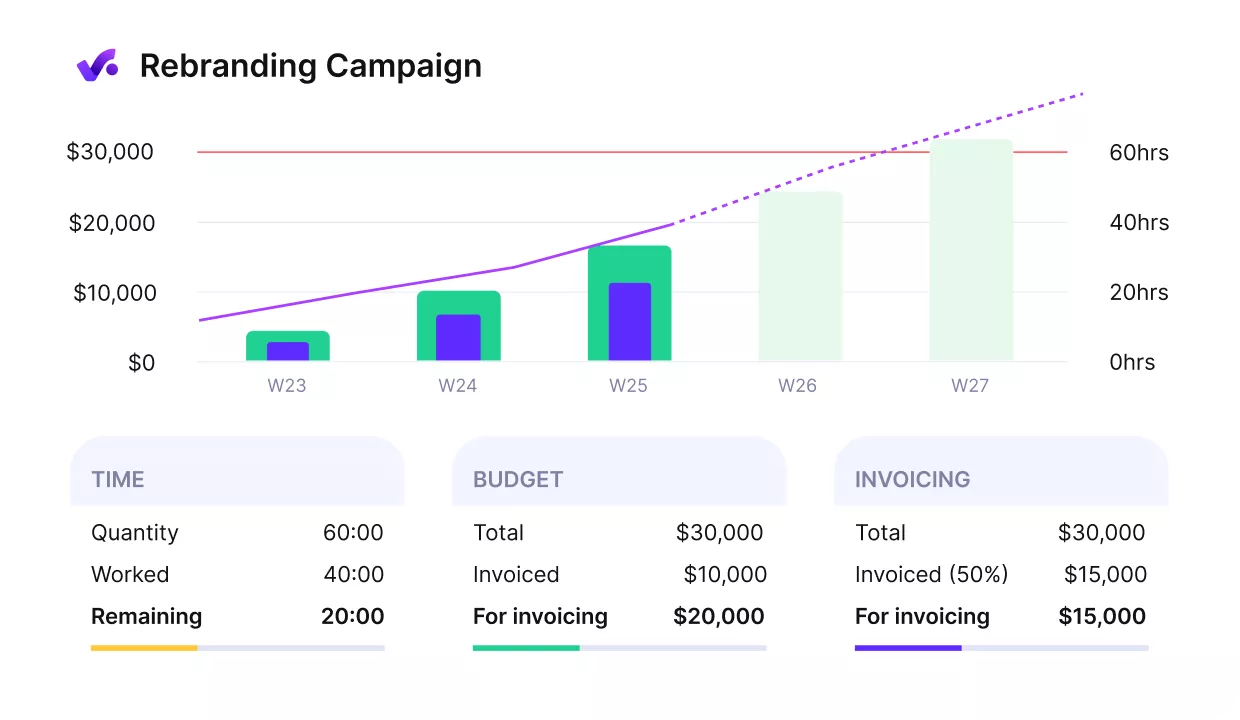
VIEW YOUR PROJECT BUDGET IN REAL TIME IN PRODUCTIVE.
Get full control of all your budgets in Productive
Next, it is worth looking at the skills that help a manager support their work.
Which Manager Skills Are Most Important?
The most important manager skills are planning, decision-making, leadership, stakeholder management, risk management, and financial awareness.
We will now look at each skill type in more detail.
- Planning. A strong manager turns scope into a realistic timeline, clear priorities, and steps the team can actually follow.
- Decision-making. When timing, budget, or staffing shifts, the manager needs to make practical decisions rather than wait for the problem to resolve itself, which it rarely does.
- Leadership. This means giving the team direction, creating accountability, and strengthening team management when priorities shift or the project gets noisy.
- Stakeholder management. Good stakeholder communication keeps clients, leads, and internal teams aligned on expectations, changes, and next steps.
- Risk management. managers need to spot issues early, understand what could throw delivery off course, and respond before small risks become expensive ones.
- Financial awareness. A PM does not need to be an accountant, but they do need enough management experience and commercial sense to understand how time, scope, and decisions affect project health.
In short, manager skills need to be broader because the role carries broader responsibilities.
Once those responsibilities are clear, the next useful question is how both roles actually work together on the same project.
How Do These Roles Work Together on a Project?
These roles work together by splitting support and ownership across the same project lifecycle.
The clearest way to see how the roles connect is to look at the workflow step by step.
Role Breakdown Across the Project Workflow
| Project phase | What the project manager does | What project coordinaton does |
|---|---|---|
| Planning | Defines scope, priorities, budget, project milestones, and project schedule | Organizes timelines, notes, and setup details |
| Kickoff | Aligns the team and stakeholders on project objectives and expectations | Shares materials, captures notes, and tracks action items |
| Execution | Guides delivery, removes blockers, and makes trade-offs | Follows up on tasks, deadlines, and dependencies |
| Monitoring | Reviews progress, risks, and budget health | Updates trackers, reports, and status changes |
| Issue handling | Decides how to respond when scope, timing, or resources shift | Flags issues early and makes sure the right people see them |
| Delivery and wrap-up | Owns final outcomes, handoff quality, and next steps | Closes out records and keeps wrap-up details organized |
Taken together, the division is clear: the PM decides where the work needs to go, and project coordination helps the work get there without losing shape. That split also reflects core project management principles, such as clear ownership, visible progress, and timely decision-making.
A common problem shows up when reporting lives in spreadsheets or scattered tools. Then the PM spends too much time pulling numbers and building updates instead of managing outcomes.
Productive cuts that work down with real-time dashboards and AI-powered reporting, so PMs can see budget burn, utilization, and margins without assembling the story by hand.
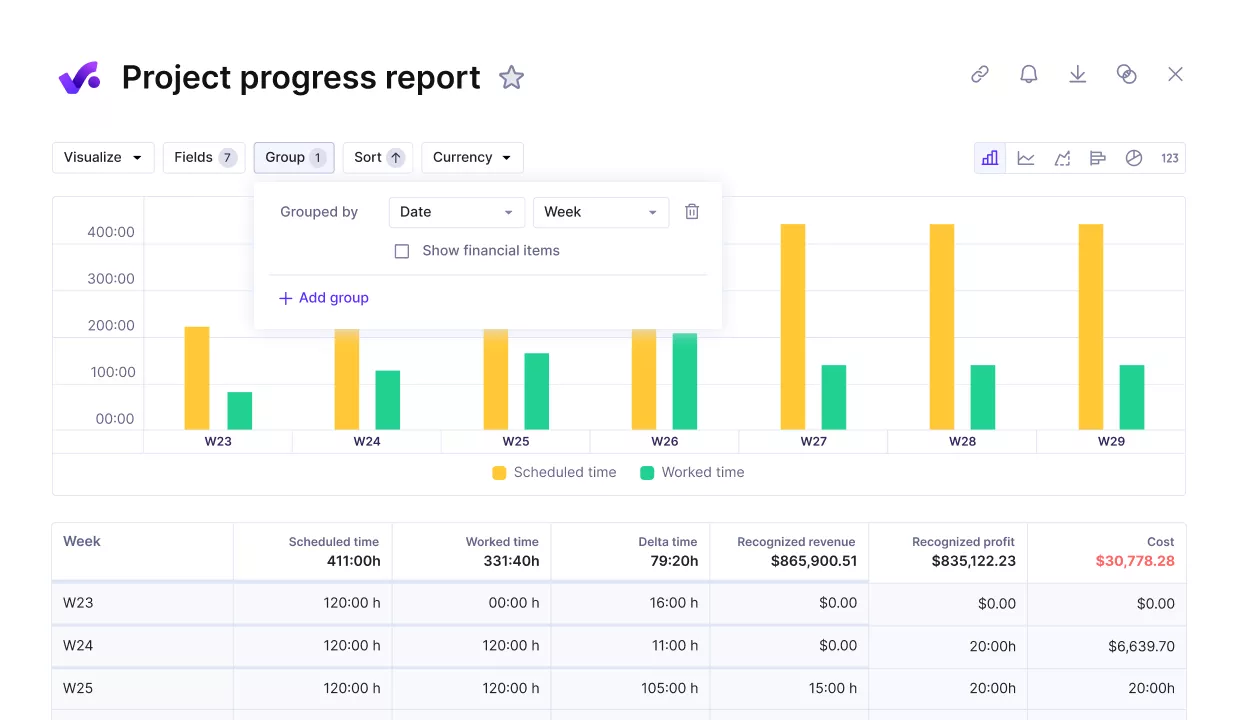
GENERATE AI-POWERED REPORTS AND VIEW PROJECT PERFORMANCE IN PRODUCTIVE.
You can ask AI to generate insights such as projected revenue for next quarter, an absence report for the last six months, and utilization by team or person.

AI-powered reporting is my favorite feature. Reports that once required manual setup now generate in minutes, enabling immediate support for decision-making. Everything lives in a single ecosystem that truly functions as a single source of truth.
Read the full customer story to see how DonQ grew in complexity with full control using Productive.
Once you see how the roles work together, the next question is: when do you actually need one, the other, or both?
When Should You Hire a Project Coordinator, a Project Manager, or Both?
You should hire a project coordinator, a project manager, or both, depending on how much coordination the team needs, how much delivery ownership is missing, and how complex the project work has become.
That decision usually comes down to what is breaking first. Sometimes the team already has clear leadership, but work still gets messy because nobody is keeping timelines, updates, and follow-through in order.
Based on that, you should:
- Hire a project coordinator when senior team members already own delivery, but they are spending too much time chasing updates, fixing handoffs, and pulling status reports together.
- Hire a project manager when deadlines keep slipping, priorities keep changing, or client expectations drift because nobody clearly owns delivery decisions.
- Hire both when the team needs one person to keep execution organized and another to own scope, trade-offs, and project outcomes.
If hiring is one side of the equation, career growth is the other. So next, let’s look at how a coordinator can grow into a PM.
How Can a Project Coordinator Become a Project Manager?
A project coordinator becomes a project manager by taking ownership of decisions, building advanced skills, and acquiring a certification.
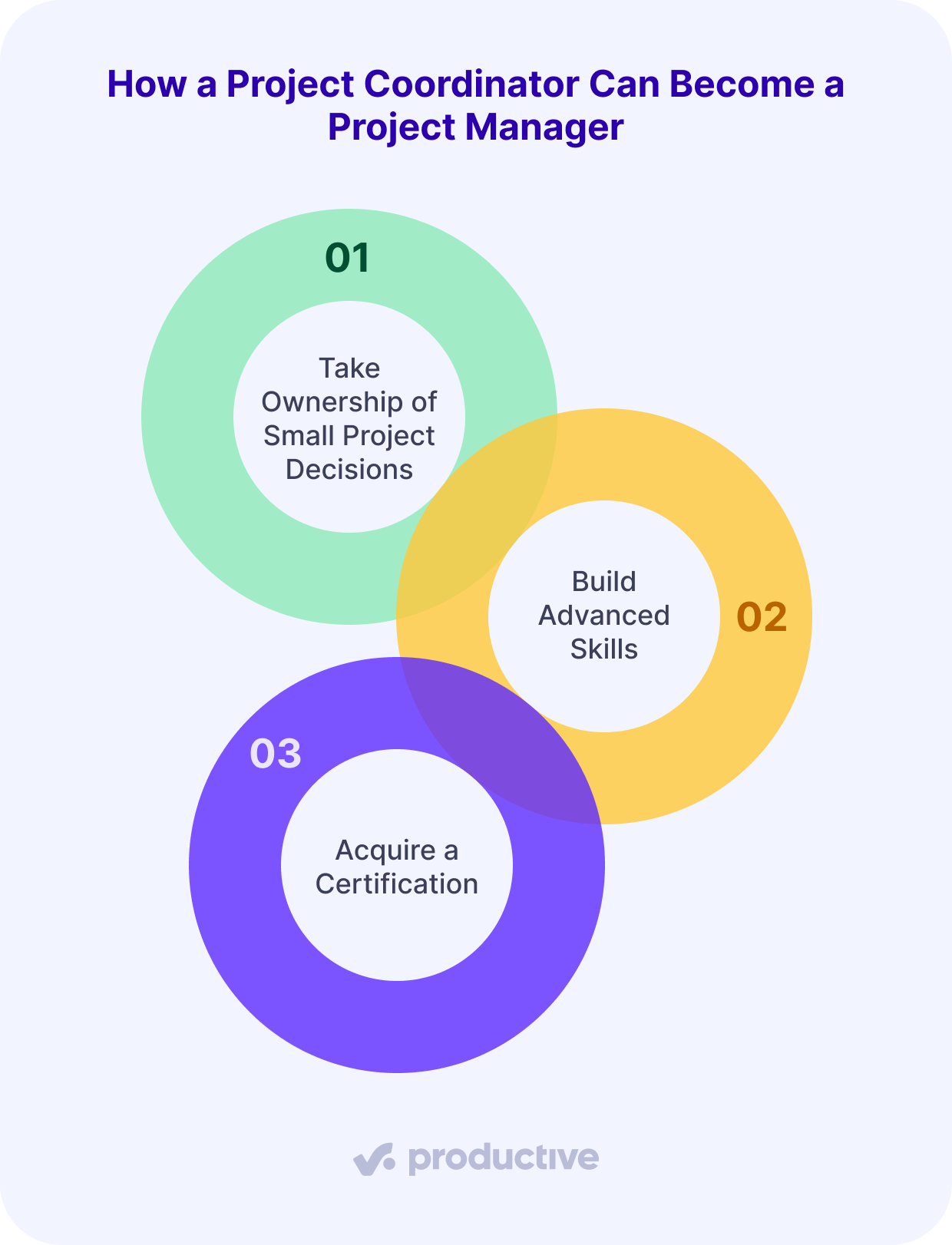
We’ll look at each step in more detail.
Take Ownership of Small Project Decisions
A coordinator begins moving toward a manager role when they start owning small decisions and can demonstrate that those decisions led to real results.
That usually starts with work like this:
- owning one timeline, workstream, or client update instead of only following up on other people’s tasks
- making calls within a defined part of the project scope instead of escalating every small issue
- checking whether project deliverables are actually moving toward project goals, not just whether tasks are marked done
- improving visible success metrics, such as cleaner handoffs, better timing, or fewer last-minute surprises
That is the real shift. It is not just about doing more. It is about demonstrating sufficient management experience to handle a slice of delivery effectively. Once a coordinator can do that consistently, the jump toward a manager role starts to look a lot more credible.
Build Advanced Skills
A coordinator moves closer to a PM role when they learn how planning, budgets, and client communication affect delivery.
That usually means getting comfortable with work like this:
- contributing to big-picture planning instead of only tracking deadlines
- helping shape project plans so the team can deliver work in a realistic order
- understanding how budget tracking and cost estimates affect what the team can promise
- improving stakeholder communication so clients and internal teams stay aligned when plans change
Once someone can connect planning, money, and communication, they are no longer just supporting delivery; they are part of it.
Acquire a Certification
Certifications can help this role move toward a higher role, but they work best when they build on real project experience.
Useful certification paths include:
- The Certified Associate in Project Management (CAPM) from the Project Management Institute is a solid starting point for early in a project career.
- Project Management Professional (PMP) is a widely recognized certification that signals strong, hands-on delivery experience.
- Scrum Master certifications (for example, PSM or CSM) if the team works in an agile setup.
- Business analysis certifications (for example, CBAP or similar) if the role involves shaping requirements and linking work to business outcomes.
You can also build supporting knowledge in areas like waterfall project management, but that is an approach, not a certification.
As one useful benchmark, Sci-Tech Today reports that PMP-certified professionals earn about 25% more than people without the certification, which helps explain why the PMP is often treated as a serious career step.
Once the path into the role is clear, the next practical question is what that move usually means financially.
How Much Do Project Coordinators and Project Managers Earn?
Project coordinators usually earn less than project managers because the two roles carry different levels of ownership and decision-making.
According to Built In’s salary page, the average salary for a project coordinator in the US is $65,496. According to the same source, Built In reports that the average salary for a project manager in the US is $97,395.
| Role | Average salary (US) |
|---|---|
| Project coordinator | $65,496 |
| Project manager | $97,395 |
That gap usually comes down to responsibility. A project manager owns scope, decisions, risks, and outcomes, while a coordinator supports execution and keeps work organized. Salary can still vary by industry, location, company size, project complexity, and management experience.
Once the salary picture is clear, the next question is how software helps both roles work better.
How Does Project Management Software Support Coordinators and Managers?
Project management software supports coordinators and managers by connecting delivery work to budget health, reducing manual reporting, and keeping both roles aligned without switching between tools.
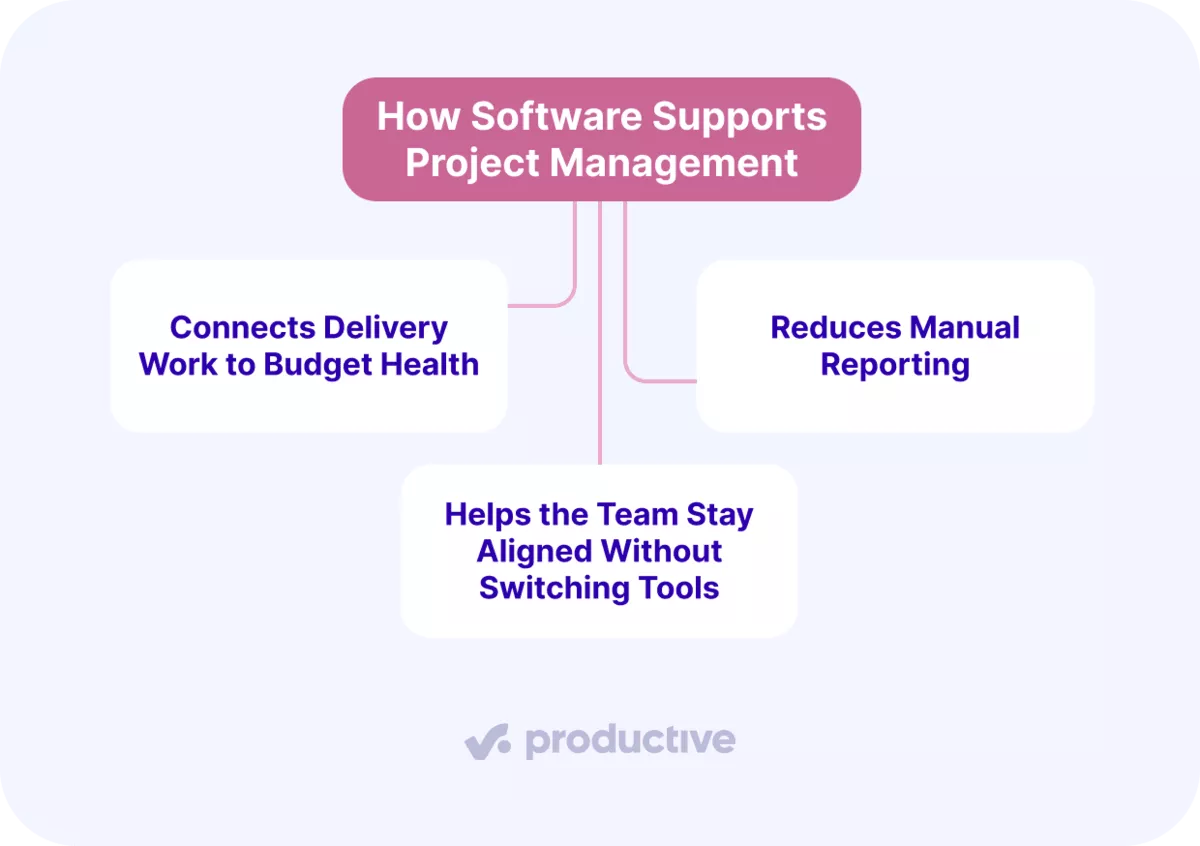
We’ll look at each of these in more detail.
Connects Delivery Work to Budget Health
Software helps most when it shows how day-to-day delivery affects budget status and overall project health.
That matters because tracked work is only useful if it tells you something. When time tracking feeds into budget tracking and project dashboards, a PM can see whether project deliverables are still on track financially, not just whether people look busy.
In practical terms, that helps teams answer questions like these much faster:
- Are we burning through the budget too quickly?
- Is tracked time lining up with the original plan?
- Are the deliverables still healthy, or is the margin quietly disappearing?
That is where software stops being a task list and starts being a decision-making tool. It gives both roles a clearer picture of what the project is costing, how the work is moving, and whether the plan still makes sense.
Reduces Manual Reporting
Project management tools make reporting less manual by pulling progress, time, and budget data into a single, clear view.
When project dashboards update from live time tracking and budget tracking, both roles can see progress and success metrics without rebuilding the same report over and over. That makes reporting faster, cleaner, and easier to trust.
The benefit is practical. Project coordination spends less time chasing admin, and the manager gets more time actually to manage the work.
Helps the Team Stay Aligned Without Switching Between Tools
Software helps both roles stay aligned when everyone works from the same information, rather than piecing updates together across different systems.
That matters because project coordination gets messy fast when task management, time tracking, resource management, CRM, and invoicing all live in separate tools. Then the PM ends up acting like the human glue between systems, which is not exactly a glamorous use of anyone’s time.
Productive solves this by bringing project management, time tracking, budgets, resource planning, and invoicing into one place, so teams spend less time chasing data and more time moving work forward.
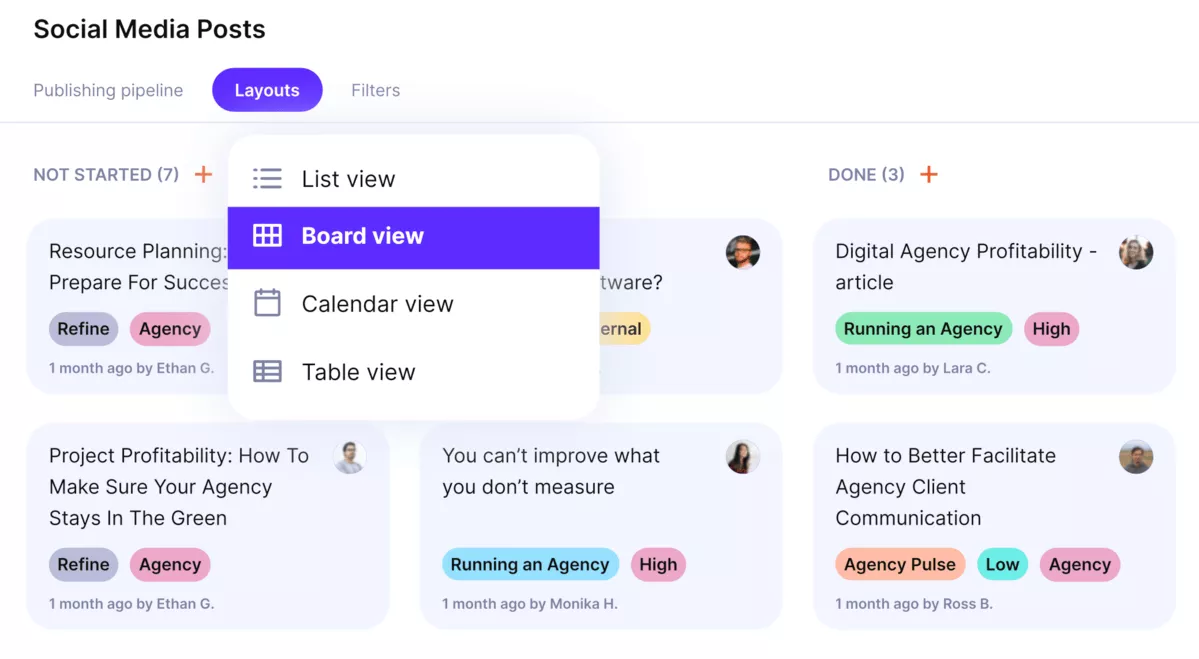
PLAN, TRACK, AND MANAGE PROJECTS IN ONE PLACE IN PRODUCTIVE.
If you are comparing tools, you can also check out our list of the best project management software.
How Project Management Roles Support a Growing Business
Project management roles support a growing business by keeping ownership clear and delivery structured as work gets more complex. Coordinators and managers solve different parts of that problem, but both help keep work predictable and manageable.
The other half of the equation is having the right system behind them. Tools like Productive give both roles a shared view of budgets, progress, and performance so that they can act on real data rather than chase updates.
If you want to see how that works in practice, you can book a demo with Productive and explore how it can support your business’s projects at every stage.
Manage projects, people, and budgets in one system.
Productive gives you a real-time view of project progress, resource plans, and financials so your team can stay aligned and make better decisions.
