Budget Forecasting Guide for Professional Services

Many professional services struggle with having accurate budget forecasting. Project plans change, the scope shifts, and before long, the numbers you are reporting no longer reflect where the business is actually heading. If you want to learn how to forecast budgets for your business, you should read this article.
This guide explains what budgeting and forecasting are, how they differ, and how to create a budget forecast. You’ll also see how software tools can make the process easier and more accurate.
Key Takeaways
- Budgeting sets the target, forecasting updates the numbers: for a services team, that means aligning revenue goals with real utilization and pipeline timing so margin stays predictable.
- Forecasting methods vary by structure and discipline: rolling, driver-based, and bottom-up approaches help services teams align projections with capacity, utilization, and real bookings.
- A solid budget forecast includes revenue, utilization, delivery costs, and overhead: review these numbers monthly and explain any differences between your forecast and actual results.
- Software strengthens control and visibility: real-time updates in a single, connected system link everything, so decisions are based on live data rather than outdated financial reports.
What Is Budget Forecasting?
Budget forecasting is a crucial financial planning process that combines a company’s static budget with real-time, dynamic projections based on historical data, market trends, and operational performance.
It integrates budgets and forecasting into a single system. Together, they keep the business plans aligned with facts, not assumptions.
In practice, this is the foundation of financial forecasting for agencies that depend on billable time, utilization, and project timing.
We will now explain both components to make it even clearer, starting with budgeting.
What Is Budgeting?
Budgeting is a structured process that turns strategic planning into clear financial targets for your business over a fixed period, usually a year.
A strong annual budget defines revenue goals, margin expectations, and hiring assumptions. A business budget makes those financial goals concrete, so teams know what must be sold, delivered, and protected.
A practical company budget should help you answer questions that directly affect delivery and margin:
- How much revenue must we sell and deliver to hit our target margin?
- Do we have enough billable capacity to support that revenue?
- Can we afford another senior hire without lowering utilization or profitability?
- Are our rates high enough to cover delivery costs and operating expenses?
Some firms use zero-based budgeting, justifying every expense from scratch. Others adjust last year’s numbers. What matters most is that your annual budget matches how your business actually operates.
Even if utilization drops or projects are delayed, your budget must remain viable. That’s the point of financial planning. Forecasting ensures your budget stays grounded in reality.
What Is Forecasting?
Forecasting is an ongoing management process that estimates future revenue, costs, margin, and cash flow using historical data. In simple terms, it is a structured financial projection of the business’s future.
Effective financial forecasting starts with historical data and adjusts as market conditions shift. You update revenue forecasts when start dates move and revise cash forecasts when payment timing changes.
Productive’s Forecasting combines past performance with future bookings from the Resource Planner.
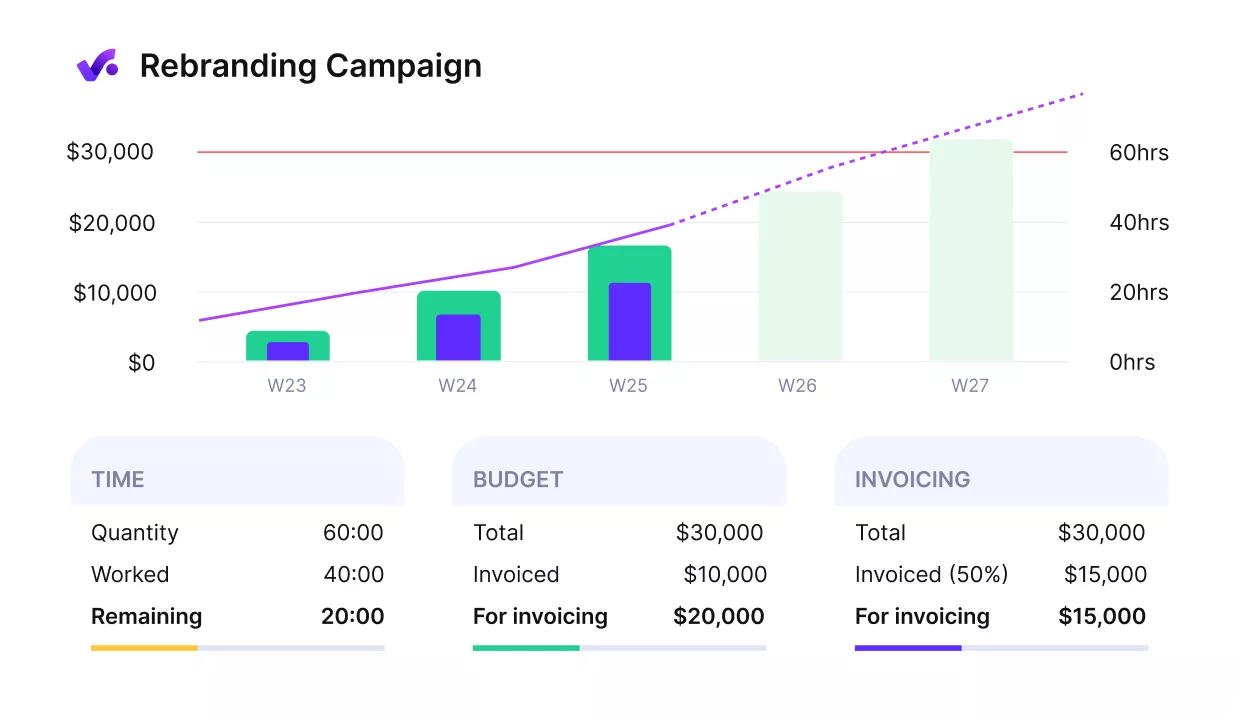
FORECAST YOUR BUDGETS WITH PRODUCTIVE FOR FINANCIAL VISIBILITY.
You can instantly see whether a budget may be depleted and whether it will remain profitable. That visibility supports more accurate forecasts and earlier decisions.

What’s nice about Productive is that now we use scheduling as an actual data resource to create our financial forecasts. So no more manual work, which is really nice, and it gives everybody an extra push to make sure that their scheduling is accurate because it’s the basis of the financial forecast. So, if you want an accurate financial forecast, you should have accurate scheduling. We’re really happy with that.
Read how Makerstreet keeps everything on track, all in one place with Productive.
Now that forecasting is clear, the next step is choosing the right method to structure it for your business.
Forecasting Methods
The forecasting methods are annual budget with periodic reforecast, rolling forecast, driver-based forecasting, top-down and bottom-up forecasting, and other advanced methods.
We will take a look at each method more closely:
- Annual budget with periodic reforecast. An annual plan is set and then updated quarterly or when major changes occur. This approach fits firms with stable retainers and predictable demand. Its trade-off is slower reaction time when pipeline timing shifts frequently.
- Rolling forecast. A fixed window, such as the next 12 months, is always projected forward. This structure supports forecast accuracy when the scope and start dates often move. The tradeoff is the operational discipline required for consistent monthly updates.
- Driver-based forecasting. The forecast is built from key drivers like billable rate, utilization, and capacity. This forecasting model reflects how services generate revenue through people and time.
- Top-down and bottom-up forecasting. Top-down forecasting sets a big revenue goal, then breaks it down for each team. Bottom-up forecasting starts with the work you already have and the people available to do it, then adds those up. For most services teams, bottom-up works better because you can only deliver as much as your team can handle. However, it only works if your project and pipeline numbers are accurate.
- Other advanced methods. Larger firms may apply regression analysis, predictive analytics, or machine learning to generate predictive insights. These methods can increase stakeholder confidence when historical data quality is high. If the data is weak, added complexity rarely improves financial outcomes.
If you are comparing tools, you can explore our list of forecasting software to find which option best suits your business.
Now that you understand the main methods, let’s clarify the differences between budgets and forecasting.
What Is the Difference Between Budgeting and Forecasting?
The difference between budgeting and forecasting is that budgeting sets targets while forecasting updates expectations.
Budgeting and forecasting comparison:
| Aspect | Budgeting | Forecasting |
|---|---|---|
| Purpose | Set revenue and margin targets | Update expected financial outcomes based on current data |
| Time Horizon | Typically annual | Rolling or periodic |
| Update frequency | Fixed, often yearly | Monthly or as conditions change |
| Primary inputs | Strategic plans, cost assumptions | Bookings, capacity, actual performance |
| Best used for | Direction and resource planning | Adjustments and decision-making |
Budgeting is done once a year and sets your big-picture goals. Forecasting happens more often and helps you see where things are heading based on real results. If the numbers start to slip, it’s a signal to act, not just report.
With the difference clear, let’s look at how to build a practical budget forecast step by step.
How Do You Create a Budget Forecast for a Professional Services Business?
You create a budget forecast for a professional services business by defining your time frame and update cadence, forecasting revenue, forecasting capacity and utilization, forecasting delivery costs, calculating projected net profit, and reviewing the monthly budget vs forecast.
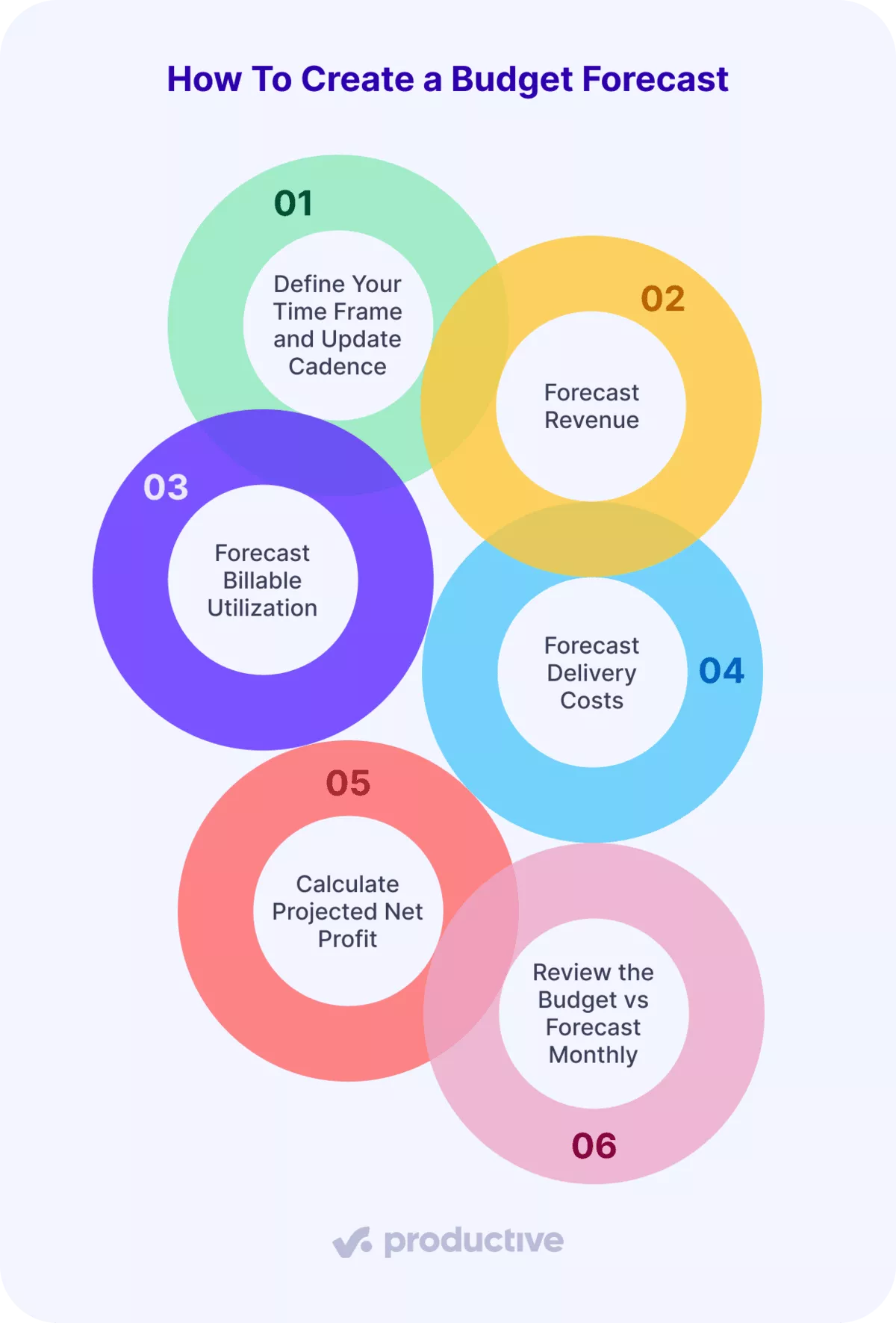
We will walk through each step in detail below so you can apply it directly to your business.
Step 1: Define Your Time Frame and Update Cadence
Define a clear time frame and a consistent update rhythm before you model any numbers. For most professional services firms, that means keeping an annual view aligned with strategic planning and updating the forecast monthly.
Why monthly? Because pipeline timing, utilization, and project scope change faster than an annual plan. If you only revisit the numbers quarterly, small shifts compound quietly
Step 2: Forecast Revenue
Build revenue forecasts from what you can actually deliver, not what you hope will close. Revenue forecasting means aligning sales planning with delivery reality and ensuring the sales department and operations use the same numbers.
Break revenue into three buckets:
- Committed: signed retainers and approved SOWs with agreed start dates.
- Likely: late-stage pipeline with a realistic close probability.
- Possible: early opportunities that may land, but should not carry the plan.
Apply probability once, clearly. If a $100,000 deal has a 60% chance of closing, model $60,000 in the relevant month, not the full amount. Keep it simple and consistent.
Be especially cautious with enterprise clients. Their buying cycles are longer and start dates slip more often, which affects timing even when the deal eventually closes.
Step 3: Forecast Billable Utilization
Forecast billable utilization before you assume revenue will land. In professional services, utilization drives margin more than almost anything else.
Start with workforce planning and confirm how many hours your team can realistically bill this month. Human resources data should reflect PTO, internal projects, and new hires ramping up. Then apply a realistic utilization percentage based on actual delivery patterns, not best-case assumptions.
Productive visualizes utilization across departments, skill sets, or individual team members. You can also forecast utilization for future projects to see whether upcoming work aligns with your team’s availability.
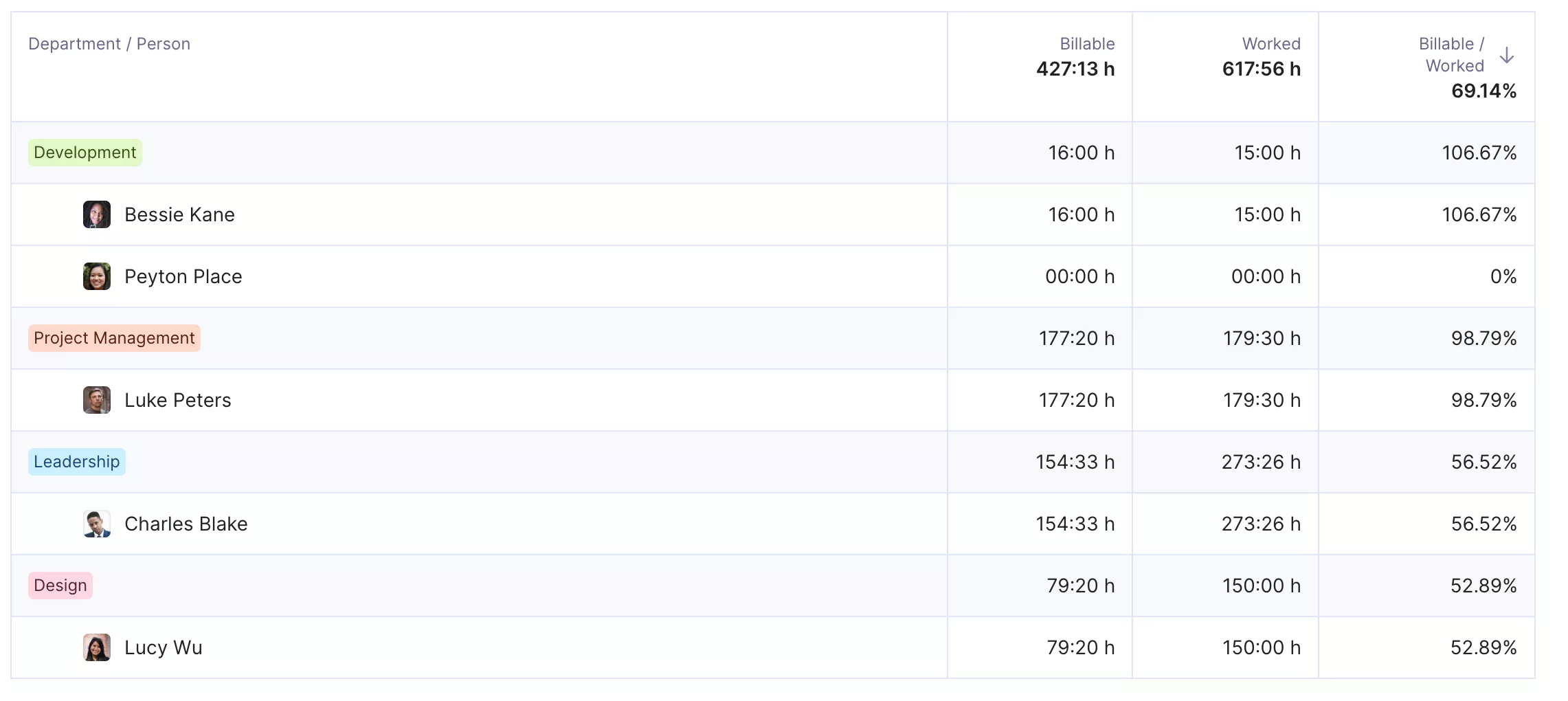
FORECAST BILLABLE UTILIZATION WITH PRODUCTIVE.
When used this way, resource utilization helps teams make better decisions before problems show up in delivery.
Forecast billable utilization in Productive
Step 4: Forecast Delivery Costs
Forecast delivery costs with the same discipline you apply to revenue. In professional services, this usually includes:
- Salaries tied to billable work
- Contractor and freelancer fees
- Project-specific expenses
Build simple cost controls into your process. Compare planned costs to actuals each month and run a light variance analysis to catch drift early. If delivery costs rise faster than revenue, the margin will shrink.
Step 5: Calculate Projected Net Profit
After calculating your delivery costs, add overhead expenses. Overhead includes operating expenses like leadership salaries, rent, software, and other non-billable items needed to run the business. Next, calculate your projected net profit.
The formula for calculating net profit:
Formula Net Profit = Revenue – Direct Costs – Overhead Costs
This final number shows the profit left after covering all major expenses. If you’re planning to grow, remember to factor in customer acquisition costs. Ignoring these extra costs can make your profit look higher than it really is.
Step 6: Review the Budget vs Forecast Monthly
Reviewing the budget vs forecast monthly shows whether your plan still holds. The goal is simple: compare what you planned, what you expected, and what actually happened.
Monthly Budget vs Forecast Comparison:
| Month | Budget Revenue | Budget Delivery Cost | Forecast Revenue | Forecast Delivery Cost | Actual Revenue | Actual Delivery Cost | Overhead | Net Profit ($) | Net Profit Margin | Variance Note |
|---|---|---|---|---|---|---|---|---|---|---|
| Jan | $500,000 | $270,000 | $480,000 | $270,000 | $470,000 | $300,000 | $100,000 | $70,000 | 15% | Project start delayed |
| Feb | $520,000 | $280,000 | $510,000 | $300,000 | $505,000 | $295,000 | $100,000 | $110,000 | 20% | Utilization improved |
Notice two things.
First, the forecast columns show updated expectations before the month closes. In February, the forecast delivery cost reflects what you learned from January’s higher actual cost.
Second, actual revenue, actual delivery costs, and net profit margin clearly show the financial impact. When margin shifts, trace it back to revenue timing, utilization, or cost discipline.
If you can manage this in a spreadsheet, great. But why not use software when it makes things so much easier?
How Does Software Improve Budget Forecasting?
Software improves budget forecasting by connecting financial forecasting with real delivery capacity, modeling multiple scenarios, and tracking forecast vs actual performance in real time.
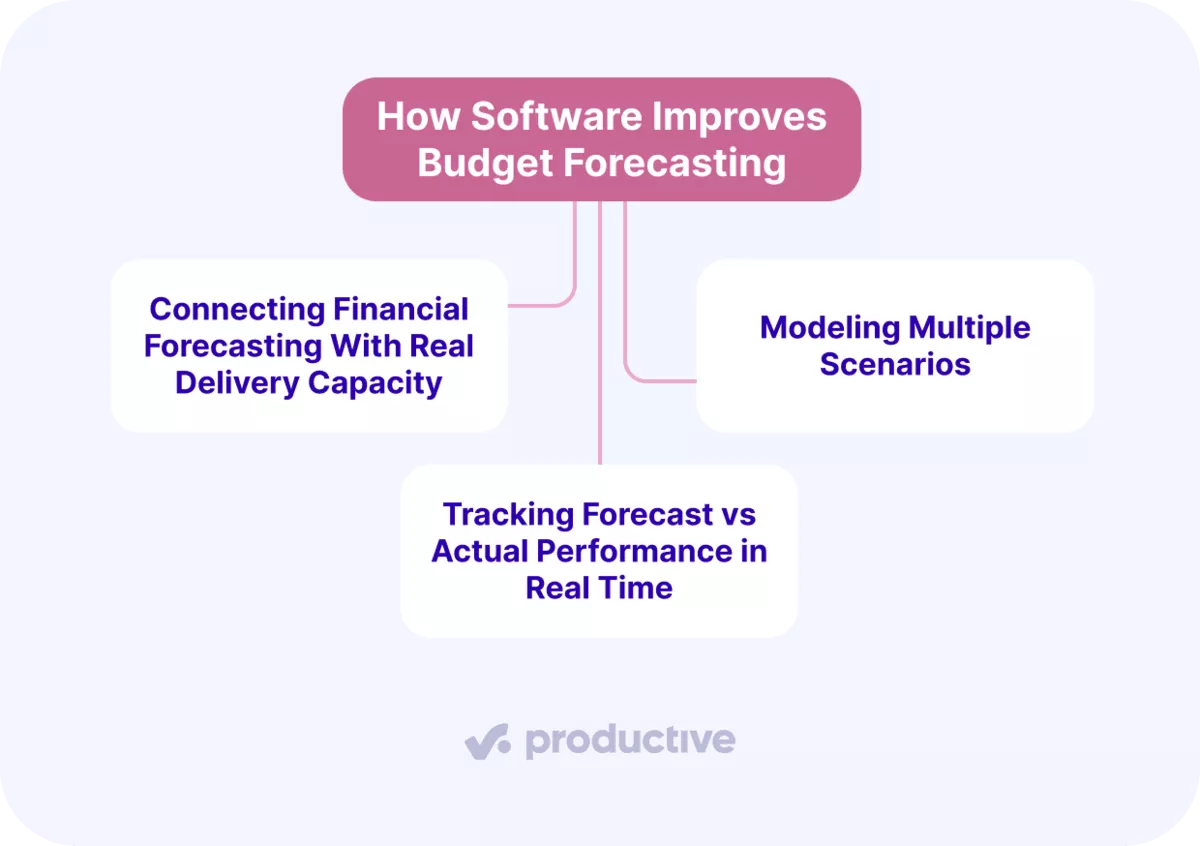
We will look at each of these ways more closely below.
Connecting Financial Forecasting With Real Delivery Capacity
This need for better forecasting is real. According to the Global CFO Report 2025 from FTI Consulting, 85% of CFOs identified forecasting accuracy as a primary area needing improvement.
Connecting financial forecasting with delivery capacity means your sales data, resource plan, and financial view operate from the same live inputs.
In practice, that means:
- When a deal closes, revenue is automatically updated.
- When a start date slips, projected revenue shifts.
- When utilization drops, margin adjusts.
- When a new hire joins, available capacity increases.
With budgeting and forecasting software, financial software no longer lives in isolation. Instead of exporting numbers into Microsoft Excel and rebuilding spreadsheet reporting each month, teams rely on data integrations that sync projects, roles, rates, and costs in real time.
Modeling Multiple Scenarios
Modeling multiple scenarios means testing important assumptions without breaking your live numbers.
With modern forecasting software and financial modeling software, you can run structured scenario analysis in minutes. Adjust revenue timing, utilization, or contractor rates, then compare the impact side-by-side.
For proactive planning, Productive’s Scenario Builder lets you prototype multiple budget or deal scenarios without affecting live data.
By adjusting services and resources, you can instantly compare the projected costs and profitability of different approaches. This helps you make data-driven decisions during both sales and production.
If you are comparing tools, explore our list of scenario planning software to find options that fit your workflow.
Tracking Forecast vs Actual Performance in Real Time
Tracking forecast vs actual performance in real time means seeing financial impact as it happens, not weeks later in a static financial statement.
Instead of waiting for month-end, teams can:
- Compare live revenue and delivery costs against the latest forecast.
- Spot margin gaps the moment utilization or spend shifts.
- Adjust hiring, pricing, or scope before small issues grow.
This immediacy directly improves forecast accuracy and reinforces cost controls because decisions are made while there is still time to act.
In cloud-based solutions that support cloud-based collaboration, finance and delivery teams share a single live source of truth, allowing business analysts to intervene before financial outcomes drift off plan.
Final Thoughts
Budgeting sets your goals. Forecasting keeps you on track. For professional services, where revenue relies on utilization, timing, and disciplined delivery, a solid budget forecast turns assumptions into real numbers and gives you time to adjust before profits decline.
When spreadsheets start slowing you down, software speeds up and improves the reliability of the process. Productive brings everything into a single, connected workflow so decisions are based on live data, not static reports.
If you want to see how this works in practice, book a demo with Productive and explore its budget forecasting.
Run Budget Forecasting in One Connected Platform
Productive links bookings, utilization, delivery costs, and margin in one system. Instead of managing disconnected spreadsheets, you can run budget forecasting on live operational data and make decisions before small issues affect profitability.
