America’s AI Hiring Boom: The States Competing Hardest for AI Talent in 2026

The AI hiring race is heating up across the U.S., with businesses in every corner of the country competing for workers with artificial intelligence skills.
To understand where AI hiring demand is hottest, we analysed active job listings from Glassdoor in May 2026, recording every job description that referenced artificial intelligence across all 50 U.S. states. But while states like California and New York are expected to dominate, the data reveals a far more surprising picture of where AI hiring demand is really growing fastest.
As hiring pipelines expand to accommodate surging demand for AI talent, organizations are increasingly turning to AI project management tools to streamline recruitment workflows at scale.
Key Findings
- Washington State leads the nation – nearly 1 in every 26 job openings mentions AI, a concentration rate of 3.80%, more than 21 times higher than West Virginia at the bottom of the ranking (0.18%).
- Massachusetts ranks second at 2.91%, driven by Greater Boston’s dense tech, life sciences, and research ecosystem.
- California ranks third at 2.67% – and while it holds the highest raw count of AI listings (15,409), its enormous workforce means concentration lags Washington and Massachusetts.
- Information Technology leads all sectors, with 14% of job postings mentioning AI skills by 2024 – up from 4.33% in 2016.
- Professional services are accelerating fast: marketing, finance, law, and business management have all more than doubled their AI hiring share since 2016.
- IT consultancies and managed service providers are among the fastest-growing AI employers – driven by client demand for AI-enabled services.
The States with the Highest Demand for AI Talent
1. Washington – AI roles make up 3.80% of all job openings.
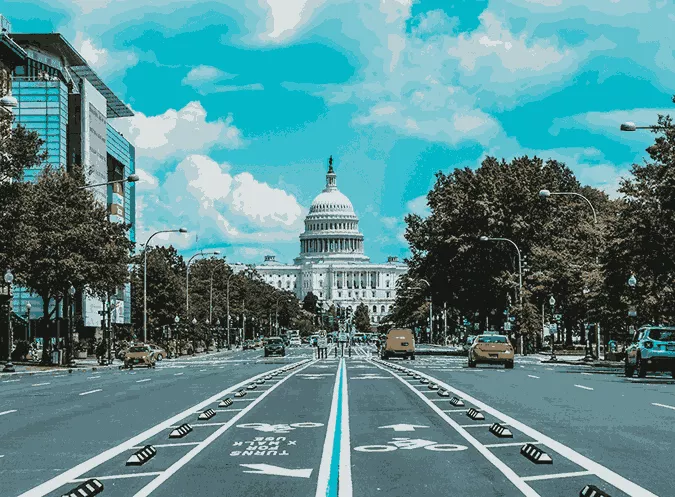
Washington State tops our ranking with 4,309 active Glassdoor job listings mentioning AI – representing 3.80% of the state’s estimated total job openings, the highest AI job concentration in the country. That is more than 21 times higher than West Virginia at the bottom of the ranking (0.18%), revealing just how uneven the AI hiring landscape remains across America.
Why it ranked here:
- 4,309 AI-related job listings – highest concentration in the study at 3.80% of total openings
- Home to Microsoft (Redmond) and Amazon (Seattle) – two of the world’s largest AI investors
- Total workforce of 3.5 million supports a large and diverse base of tech and professional roles
- Job opening rate of 3.2% reflects a tightly competitive hiring market
- AI demand spans core tech, finance, logistics, defence, and public sector roles
2. Massachusetts – AI roles make up 2.91% of all job openings.

Massachusetts ranks second at 2.91%, with 3,493 AI-related listings across a workforce of 3.6 million. Greater Boston has long been Silicon Valley’s most credible rival for tech and life sciences talent, and its AI hiring numbers confirm that trajectory is accelerating.
Why it ranked here:
- 3,493 AI listings – second highest concentration at 2.91% of total openings
- Greater Boston is a leading global hub for life sciences, biotech, and AI research
- Dense university ecosystem (MIT, Harvard, Northeastern) drives both academic and commercial AI hiring
- Job opening rate of 3.3% reflects strong but competitive demand
- AI roles span healthcare, fintech, defence tech, and professional services
3. California – AI roles make up 2.67% of all job openings.

California ranks third at 2.67% and holds the highest raw count of AI listings in the entire study at 15,409 – nearly three and a half times more than second-placed Washington in absolute terms. Despite its enormous workforce of over 18 million, California’s concentration still places it comfortably in the top three, reflecting the sheer density of AI-focused businesses across the Bay Area, Los Angeles, and San Diego tech corridors.
Why it ranked here:
- 15,409 AI listings – the highest raw count of any state in the study
- Home to the global headquarters of Google, Apple, Meta, and hundreds of AI-native startups
- Concentration of 2.67% despite an enormous workforce of 18 million-plus
- Job opening rate of 3.2% – same as Washington, reflecting tight competition for talent
- AI demand spans every sector from entertainment and media to agriculture and logistics
4. Virginia – AI roles make up 1.93% of all job openings.

Virginia’s fourth-place finish at 1.93% is a result many observers underestimate. Northern Virginia is home to the largest concentration of data centres in the world, and the corridor between Washington D.C. and Tysons Corner is one of the most active AI and cybersecurity hiring markets in the country.
Why it ranked here:
- 3,686 AI listings representing 1.93% of estimated total openings
- Northern Virginia hosts the world’s largest concentration of data centres
- Major hub for government tech, defence AI, and cybersecurity roles
- Proximity to Washington D.C. drives demand for AI in public sector and policy-adjacent roles
- Job opening rate of 4.7% – among the higher rates in the top five, signalling strong unfilled demand
5. New York – AI roles make up 1.88% of all job openings.

New York rounds out the top five at 1.88%, with 6,471 AI listings across a workforce of 9.5 million. New York’s AI hiring story is driven by finance, media, advertising, and a fast-growing tech scene in Manhattan and Brooklyn.
Why it ranked here:
- 6,471 AI listings – third highest raw count in the study
- Financial services sector is a major driver of AI hiring, from risk modelling to algorithmic trading
- Growing tech corridor in Manhattan and Brooklyn generating significant AI demand
- Media, advertising, and creative industries driving AI hiring in content and marketing roles
- Job opening rate of 3.6% reflects a healthy and competitive labour market
The Surprising Performers: States That Defy Expectations
While the top five largely reflects where you might expect AI hiring to concentrate – major tech corridors, financial centres, and government contracting hubs – the data throws up some genuinely unexpected results further down the ranking.
Arkansas ranks 16th at 1.02%:
Ahead of states like Georgia, Tennessee, Florida, and Michigan. With 593 AI listings across a workforce of 1.3 million, Arkansas’s result likely reflects growing demand in logistics, supply chain technology, and retail tech – sectors anchored by Walmart’s global headquarters in Bentonville, which has been investing heavily in AI-powered retail and supply chain systems.
Delaware ranks 22nd at 0.84%:
Punching well above its weight for a state with fewer than 500,000 workers. Delaware’s concentration of financial services firms, legal and corporate services companies, and pharmaceutical businesses is driving AI hiring in compliance, data analysis, and drug discovery roles.
Why Some Large States Rank Lower Than Expected
Texas ranks 12th at 1.14% with 6,326 AI listings – a strong absolute number but one that is diluted across a workforce of nearly 14 million. The state’s enormous economy, dominated by energy, real estate, construction, and traditional manufacturing, means AI jobs represent a smaller share of total openings than in more specialised states.
Florida sits 21st at 0.86% with 3,458 listings across a workforce of 9.8 million. Similar dynamics apply: Florida’s economy is heavily weighted toward hospitality, healthcare, and real estate – sectors that are adopting AI more slowly than tech and professional services.
The key insight is that concentration and raw volume tell different stories. California has more AI jobs in absolute terms than any other state by a significant margin – but Washington and Massachusetts have built economies where AI skills are proportionally more central to the workforce.
The Bottom of the Ranking: Where AI Hiring Lags Most
The five states at the bottom of the ranking have one thing in common: their economies run on physical industries – energy, agriculture, and traditional manufacturing – rather than the tech and professional services sectors driving AI hiring everywhere else. Less knowledge work means less AI demand, and the numbers reflect that clearly.
50. West Virginia – AI roles make up 0.18% of all job openings.

The numbers:
- 72 AI listings across a workforce of 701,470
- Concentration of 0.18% – joint lowest in the study
- Highest job opening rate in the ranking at 5.8%
- Economy dominated by energy, mining, and manufacturing – sectors with low AI adoption rates
49. Mississippi – AI roles make up 0.18% of all job openings.

The numbers:
- 101 AI listings across a workforce of 1.16 million
- Concentration of 0.18% – joint lowest in the study alongside West Virginia
- Job opening rate of 4.8% – high overall demand but low AI specificity
- Agriculture, healthcare, and manufacturing dominate the employment base
48. North Dakota – AI roles make up 0.25% of all job openings.

The numbers:
- 47 AI listings across a workforce of 424,030
- Concentration of 0.25% – third lowest in the study
- Job opening rate of 4.5%
- Agriculture, energy, and logistics dominate – sectors at the early stages of AI adoption
47. Alaska – AI roles make up 0.29% of all job openings.

The numbers:
- 42 AI listings across a workforce of 321,040
- Concentration of 0.29% – fourth lowest in the study
- Job opening rate of 4.5%
- Oil, gas, fishing, and tourism dominate – geographically dispersed with limited tech infrastructure
46. South Dakota – AI roles make up 0.30% of all job openings.

The numbers:
- 42 AI listings across a workforce of 321,040
- Concentration of 0.29% – fourth lowest in the study
- Job opening rate of 4.5%
- Oil, gas, fishing, and tourism dominate – geographically dispersed with limited tech infrastructure
The Industries Driving AI Hiring Demand
Technology: The Gold Standard Is Shifting
Eight years ago, if you wanted an AI job, you worked in tech. Full stop. In 2016, just 4.33% of IT job postings mentioned AI skills. By 2024 that figure had hit 14% – and while that threefold jump is striking, the real story is what is happening everywhere else. Tech’s grip on AI hiring is loosening. Every other sector is closing the gap, and closing it fast.
Marketing: AI Has Gone From Buzzword to Job Requirement
Marketing and Public Relations has gone from unlikely AI adopter to the second most AI-hungry sector in the country – jumping from 2.27% of listings in 2016 to 8.11% in 2024. Employers now expect marketers to show up on day one knowing how to use AI for content production, campaign targeting, and performance analysis. AI fluency has quietly become a baseline hiring requirement in an industry that barely acknowledged the technology less than a decade ago.
Professional Services: The Sector Nobody Expected to Lead
The biggest surprise in the data is not that tech companies want AI talent – it is that law firms, accountancies, management consultancies, and managed service providers want it just as badly. These are not businesses building AI products. They are businesses that realised their clients expect AI-enabled services, and are now racing to staff up before their competitors do.
Sector-by-sector growth (2016 to 2024):
- Business Management and Operations (consultancies, business process specialists): 0.54% to 1.40% – up 159%
- Human Resources (HR tech providers, recruitment agencies, workforce consultancies): 0.79% to 2.00% – more than doubled
- Finance (financial services firms, accounting consultancies, advisory businesses): 0.45% to 1.33% – nearly tripled
- Law, Compliance, and Public Safety (legal tech, compliance consultancies): 0.36% to 0.95% – up 164%
- Science and Research: 2.63% to 6.16%
- Engineering: 1.85% to 3.80%
- Design, Media, and Writing: 0.97% to 3.06% – one of the sharpest relative rises in the study
Silicon Valley No Longer Has a Monopoly on AI Hiring
The top five states by concentration – Washington, Massachusetts, California, Virginia, and New York – are broadly what you would expect. But the more interesting story sits further down the ranking. Arkansas, Delaware, Iowa, and Kansas all outperform states that look more tech-forward on paper. The driver in each case is sector-specific: retail and logistics tech in Arkansas, financial and legal services in Delaware, precision agriculture and insurance in Iowa and Kansas. Even at the bottom of the table, West Virginia and Mississippi both have AI listings. Modest numbers – but ones that almost certainly did not exist five years ago.
What This Means
The competition for AI talent is no longer confined to tech. Marketing agencies, financial services firms, logistics companies, and consultancies are all building out AI capabilities – and increasingly competing for the same people to do it. For employers, the businesses that move fastest will have the advantage. For workers, AI skills are shifting from specialism to baseline expectation across almost every profession. In the top-ranked states that shift has already happened. Everywhere else, the window to get ahead is still open – but it is closing.

The data makes clear that AI is no longer sitting in one corner of the business – it is becoming embedded across resourcing, project delivery, and financial visibility at every level. As organisations take on more AI-driven work, the operational complexity grows with it. That is exactly why we are seeing more agencies and consultancies looking for platforms that give them a single view of their people, their projects, and their margins. The hiring boom is just the start.
Methodology
We analysed active Glassdoor job listings in May 2026, recording every job description mentioning artificial intelligence across all 50 U.S. states.
To calculate AI jobs as a share of total openings, we combined workforce data from the Bureau of Labor Statistics (OEWS survey) with state-level job opening rates from the BLS JOLTS survey (December 2025). Industry-level data on AI skill mentions by sector is sourced from Lightcast’s Beyond the Buzz report (2025), which analysed over 1.3 billion job postings.
Connect With Agency Peers
Access agency-related Slack channels, exchange business insights, and join in on members-only live sessions.
