Director of Operations Role – Responsibilities, Skills, and KPIs

The director of operations role is here to oversee delivery and keep day-to-day work aligned with operations strategy. To be amazing at their jobs, these directors have to be strong communicators, strategic planners, clear decision-makers, and financially aware. Still, people often confuse the role with similar positions or are unsure what it actually covers.
This guide demystifies the super-important role of operations director. We’ll cover the responsibilities, the skills, how it compares to other roles, the KPIs it needs to track, and how software makes the director’s life easier.
Key Takeaways
- A director of operations keeps day-to-day execution connected and under control: the role oversees delivery, improves workflows and handoffs, aligns work to business priorities, coordinates across teams, tracks risks and performance, and supports planning as priorities shift.
- The role relies on a practical set of director skills: leadership, communication, operational planning, analytical thinking, financial awareness, decision-making, and change management, all of which help turn operational strategies into consistent execution.
- Operations management is measured through a set of core KPIs: billable utilization, client margin, CPI, and SPI, which show whether work is profitable, well-paced, and under control.
- Operations management software helps an operations director see, plan, and manage the business more clearly: it gives visibility into work, budgets, and team capacity, supports resource planning and workload balancing, and connects operations with financial performance.
What Is a Director of Operations?
A director of operations is a senior-level manager responsible for overseeing daily business activities, improving operational efficiency, and helping the business stay profitable as it grows.
Depending on the company’s size and business administration setup, you may also see this title written as operations director or director of operations. It is one of the more senior managerial roles in a professional services business.
At a high level, the role is defined less by one department and more by the kind of responsibility it carries:
- turning plans into consistent execution
- keeping company operations connected across teams
- helping the business stay controlled as complexity increases
Many generic definitions come from environments where operations mean supply chain management, inventory control, or other large operational systems, including financial institutions. That is helpful context, but we will cover how the role functions in professional services.
The next question is what that responsibility actually looks like in practice, day to day.
What Does the Director of Operations Role Do Day-to-Day?
The director of operations role day to day oversees delivery across teams, improves workflows and handoffs, aligns work with business priorities, coordinates across teams, tracks risks and performance, and supports planning and execution.
Here’s what each of those looks like in practice.
- Overseeing delivery across teams. A director keeps an eye on active work, deadlines, and team capacity to catch issues early rather than let them become expensive surprises later.
- Improving workflows and handoffs. They look for gaps, duplicated work, and messy handoffs, then make process improvements that help work move with less friction.
- Aligning work with business priorities. They ensure day-to-day decisions support strategic goals and the company’s bigger operations strategy, not just whatever is loudest in Slack that week.
- Coordinating across teams. They connect project management, finance, and leadership so cross-functional teams work from the same picture, not three competing versions.
- Tracking risks and performance. They watch for delivery risks, resourcing issues, and early signs that work is drifting off track.
- Supporting planning and execution. They help teams adjust plans as priorities change, so the business can respond without losing structure.
Many operations leaders waste time jumping between tools just to piece together what is happening across delivery, budgets, and resources.
Productive helps by bringing project management, time tracking, resource planning, budgeting, and invoicing into one place, giving teams clearer visibility and less time spent reconciling spreadsheets.
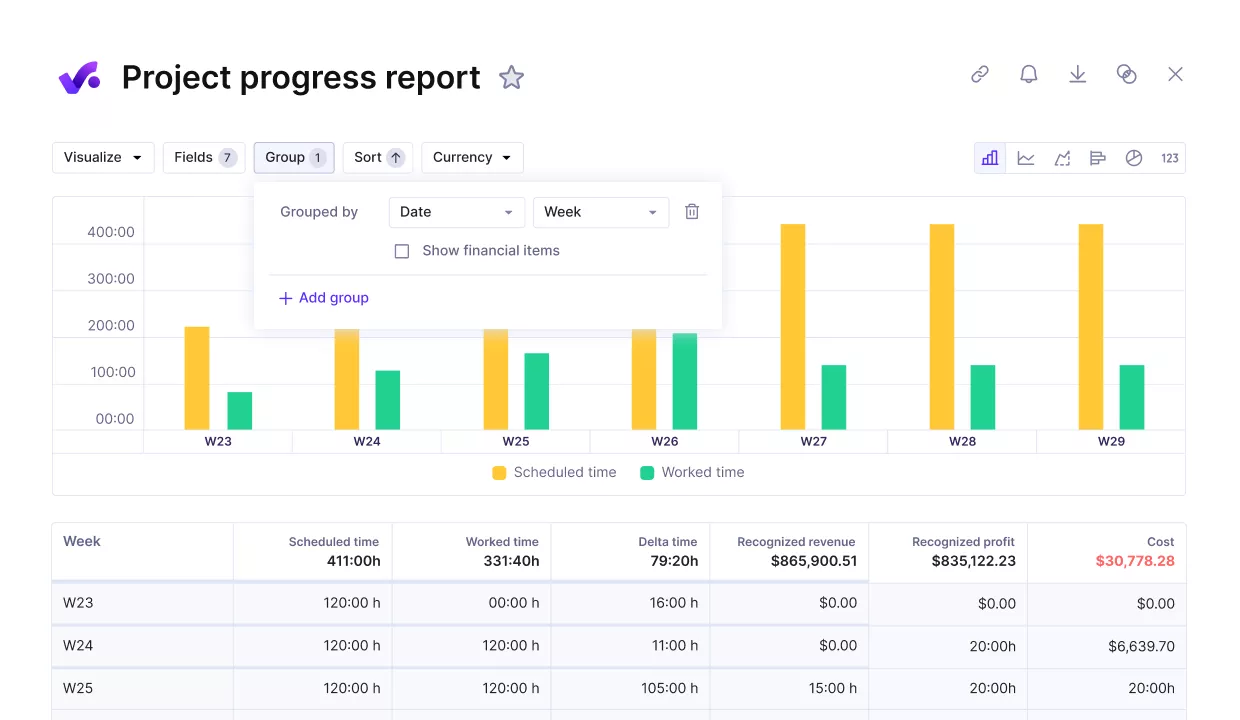
BRING PROJECTS, BUDGETS, RESOURCING, AND REPORTING INTO ONE OPERATIONAL VIEW WITH PRODUCTIVE.
Run your operations in one place with Productive
Next, let’s look at the skills needed to do the job right.
What Director Skills Are Most Important in This Role?
The director skills that matter most in this role are leadership, communication, operational planning, analytical thinking, financial awareness, decision-making, and change management.
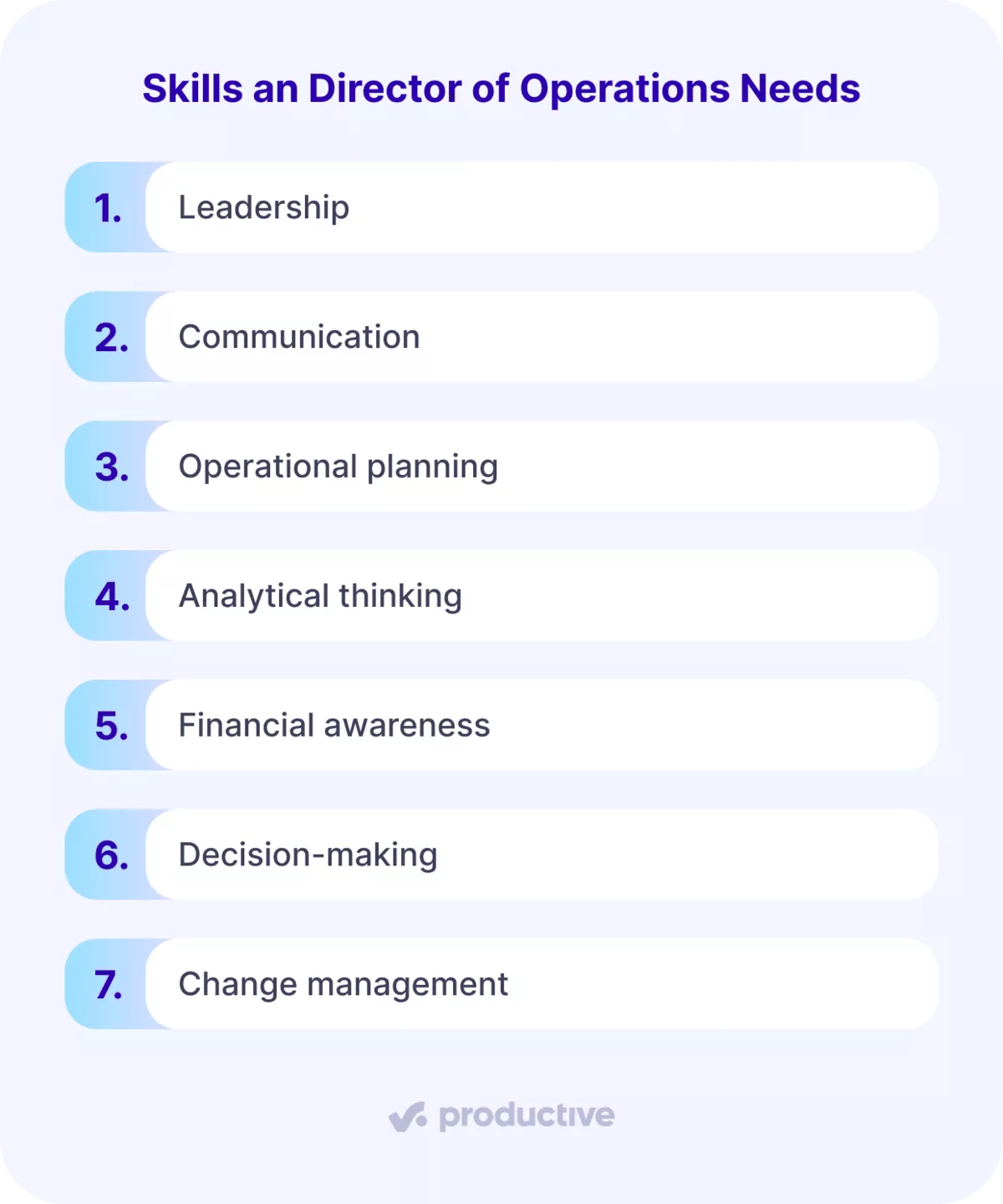
We will look at each skill in a bit more detail.
- Leadership. This role requires calm leadership skills that keep teams aligned when deadlines slip or priorities shift. It shows up in how you set direction, unblock teams, and keep people focused without micromanaging.
- Communication. Clear communication keeps delivery, finance, and leadership working from the same facts. If updates are vague, small issues turn into bigger ones fast.
- Operational planning. Strong planning helps you match work to available capacity, set realistic timelines, and adjust when scope changes. This is what stops teams from overpromising and scrambling later.
- Analytical thinking. Good directors use business analytics and data analysis to identify why a project is off track, not just that it is. They look at workload, timing, and delivery data to find the real problem.
- Financial awareness. This role needs someone who can read budgets, understand costs, and see when the margin is starting to slip. Otherwise, work can look busy and still lose money.
- Decision-making. The job often involves trade-offs among speed, quality, budget, and capacity. A good director makes the call clearly and keeps the team moving.
- Change management. New processes only help if people can actually use them. This skill matters when you roll out a new workflow, reporting habit, or planning process without disrupting delivery.
What ties these together is judgment. PwC’s 2025 Digital Trends in Operations Survey found that 82% of operations and supply chain leaders struggle to balance short-term needs with the long-term company strategy.
That’s why skills like operational planning and decision-making are so important. A strong director of operations does not chase operational excellence in theory. They simplify messy situations, make practical calls, and keep the business moving without creating unnecessary noise.
The next piece is understanding how this role compares with the ones it is most often confused with.
What Is the Difference Between a Director of Operations, a COO, and an Operations Manager?
The difference between a director of operations, a COO (Chief Operating Officer), and an operations manager lies in the scope, decision-making, and ownership each role holds.
A COO usually works at the executive level, shaping direction, structure, and broader business management priorities, often reporting directly to the chief executive. An operations director then turns that direction into consistent execution across teams, while operations managers usually focus on one team, department, or function.
That distinction matters because these roles can sound similar on paper, but in practice, they solve different problems and make decisions at different levels.
The table below shows the key differences at a glance.
Role Comparison Table
| Role | Main focus | Scope | Typical responsibilities | Seniority |
|---|---|---|---|---|
| COO | Company-wide operational strategies and leadership | Executive | Set strategic direction, shape structure, support growth, align operations with business performance goals | Executive |
| Director of Business Operations | Day-to-day operations and cross-functional execution | Operational leadership | Improve processes, oversee delivery, align teams, track performance | Senior leader |
| Operations Manager | Team or function-level execution | Department or function | Manage day-to-day work, support delivery, keep a team or department on track | Manager |
Next, let’s look at the KPIs that show how well operations are running.
Which KPIs Matter Most for Operations Management?
The KPIs (key performance indicators) that matter most for operations management are billable utilization, profit margin by client, cost performance index (CPI), and schedule performance index (SPI).
Below is a quick view of how each KPI works and why it matters.
KPI Table
| KPI | What it measures | Why it matters |
|---|---|---|
| Billable utilization | Percentage of time spent on billable work | Shows how effectively capacity turns into revenue |
| Profit margin by client | Profitability at the client level | Highlights which clients support or erode margins |
| Cost Performance Index (CPI) | Budget efficiency (value delivered vs cost spent) | Helps track whether projects stay financially on track |
| Schedule Performance Index (SPI) | Progress against planned timelines | Shows whether delivery is ahead or behind schedule |
Together, these performance metrics provide a clear, practical view of delivery, resourcing, budget efficiency, and margin; helping you assess not only what’s happening but also whether performance is sustainable.
If you want a deeper breakdown of these and other metrics, including formulas, check out our full guide of professional services KPIs.
How Does Software Support a Director of Business Operations?
Software supports a director of business operations by giving visibility into work, budgets, and team capacity, supporting resource planning and workload balancing, and connecting operations with financial performance.
We’ll look at each of these more closely.
Software Gives Visibility Into Work, Budgets, and Team Capacity
Software gives operations leaders a live view of project progress, budget usage, and team capacity, so they can spot issues while there is still time to fix them.
In practice, that means you can quickly see:
- Which projects are slipping: timelines, overdue tasks, or stalled work, before they escalate
- Where budgets are moving faster than expected: actual time or spend against plan, before the gap gets expensive
- Where delivery risks are building: small delays, scope creep, or blocked work that can throw off the whole schedule
That matters because most delivery problems do not arrive all at once. They build quietly. When everything is visible in one place, you can act early rather than fix expensive problems later.
Software Supports Resource Planning and Workload Balancing
Software supports resource planning and workload balancing by showing who is available, who is overbooked, and where staffing pressure is building before it turns into a bigger problem.
That matters because a lot of operations teams still plan work in spreadsheets or, worse, in someone’s head. It works right up until it doesn’t. One client project shifts, one person takes time off, and suddenly the plan starts wobbling.
With the right system, you can make better calls faster. You can rebalance work earlier, protect your strongest people from becoming the default fix for everything, and improve operational efficiency without relying on heroic last-minute reshuffling.
Productive’s Resource Planning shows scheduled vs available capacity per person in real time, so teams can spot overbooking, track utilization, and plan tentative work before pipeline deals even close.
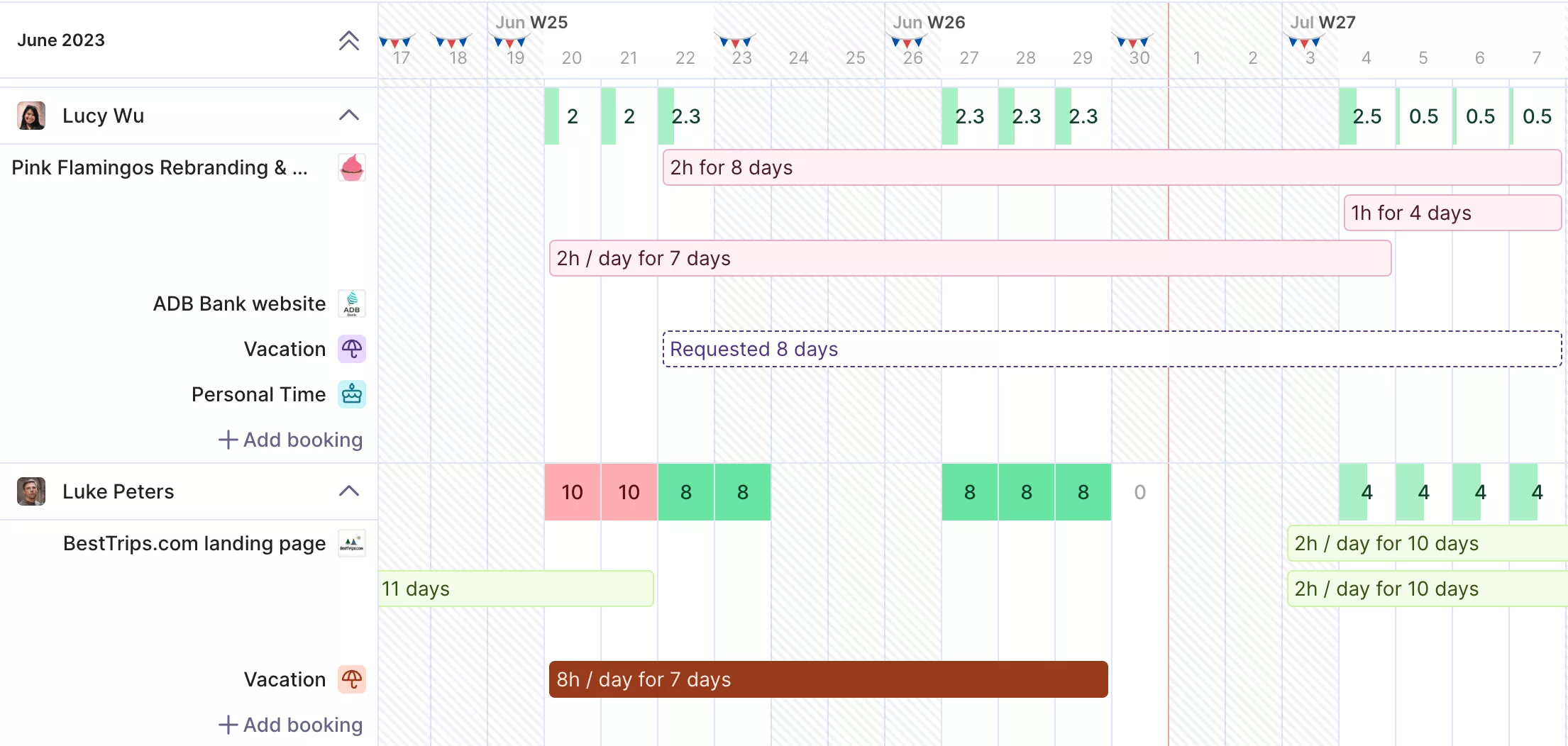
USE PRODUCTIVE’ S RESOURCE PLANNER so you can spot overbooking early and rebalance work.
It also pulls in time-off data, which makes availability much more reliable.

It allows us to plan ahead and assemble the right team for each project, based on skills, experience, and availability, while tracking performance as we go. If something changes mid-production, we can quickly reallocate resources or update timelines.
Read our full customer story to see how MONOGRID’s operations stay sharp with Productive.
Software Connects Operations With Financial Performance
Software connects operations with financial performance by showing how delivery decisions affect margin, profitability, and overall business health.
In practice, that helps you answer a few very specific questions:
- Are our projects making money? You can see which projects are profitable and which ones are busy but financially weak.
- Where is the margin starting to slip? You can spot extra hours, scope creep, or inefficient delivery before they become bigger problems.
- Which clients or services are strongest? You can see where the healthiest work is coming from and which areas need a closer look.
- How are delivery decisions affecting the numbers? You can connect everyday choices on staffing, scope, and timing to their financial impact.
That is what makes this useful. A project can look fine on the surface and still be quietly eroding margin underneath. When operational data connects delivery with financial outcomes, you can spot that earlier and make better calls before the damage is done.
If you want to check out different operations tools, you should take a look at our operations management software list.
What an Operations Director Enables in a Growing Business
An operations director enables a growing business to scale without losing control by bringing clear ownership, steady execution, and real visibility across operations. As complexity rises, this role keeps business management aligned with strategic goals, balances capacity, and maintains quality standards so customer service remains consistent even as demand increases.
This is also where software becomes critical. When delivery, resourcing, and financial data live in one place, teams make faster, better decisions. Productive connects projects, budgets, and capacity in real time, so you can spot risks early and act with confidence.
If you want that level of control, book a demo with Productive and see how it works in practice.
Stop stitching tools together. Run operations in one place.
Productive replaces spreadsheets and disconnected tools with one system for delivery, planning, and financial tracking, so you always know what is happening and what to fix.
