How Weidert Group Is Using Productive AI to Simplify Agency Operations and Save Hours on Project Setup
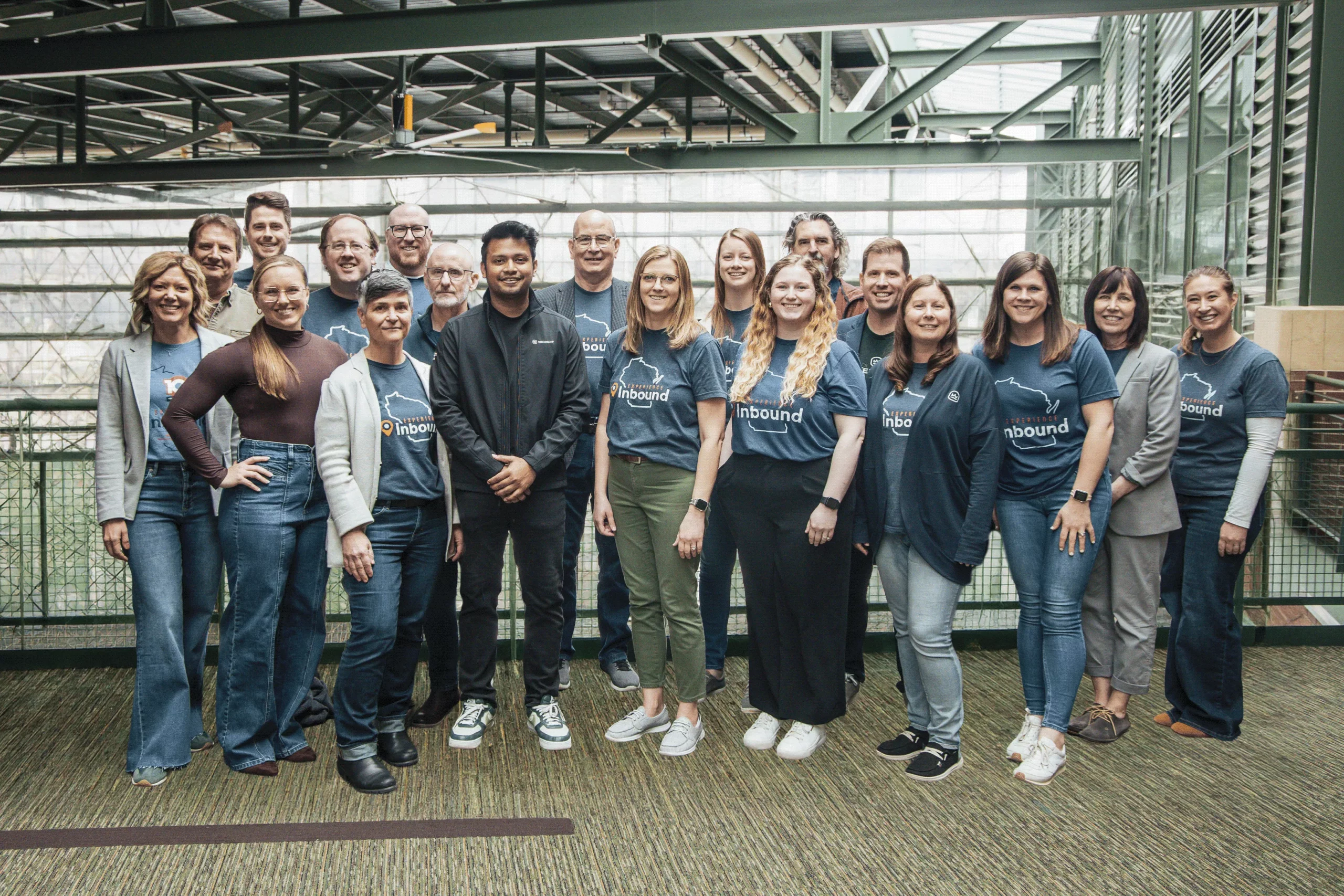
Founded in 1980, Weidert Group is a full-service HubSpot partner agency helping industrial manufacturers and other B2B companies in complex industries grow through integrated marketing and sales. From content strategy and lead generation to marketing automation, web development, and sales enablement, the agency combines decades of experience with modern technology to help clients achieve sustainable growth.
We spoke with Laura Sheptoski, Director of Operations at Weidert Group, about the agency’s transition to Productive, how its team is using AI to simplify project management and resourcing, and why they’re excited about the potential to transform everything from client meetings to proposal development.
We Help Your Agency Reach New Heights
Switch from multiple tools and spreadsheets to one scalable agency management system.
Can you tell us about Weidert Group and your journey with Productive?
Weidert Group has been around for more than 40 years, and one of the things that makes our agency special is how long people tend to stay with us. We have team members who have been here for 20 or even 25 years, which is incredible.
Of course, when you’ve been doing things a certain way for a long time, changing systems and processes can take some getting used to.
We’ve used quite a few project management platforms over the years, including Basecamp, Jira, and Accelo. We switched from Accelo to Productive in December 2025, and one thing that stood out immediately was how clean and user-friendly the interface was.
It took us about six months before everyone felt completely comfortable with the new system. Not because Productive was particularly difficult to use, but because changing the way an entire agency works takes time. Now that we’ve gotten comfortable with the fundamentals, we’re exploring how we can use Productive’s AI features to take even more manual work off our plates.
And that’s where things are getting really exciting.

How are you using Productive AI to simplify project setup?
Our agency has a very particular way of managing work. We love tasks. And when I say we love tasks, I mean we have a task for practically everything.
But there’s a reason behind it. Our projects involve many moving parts, and we’ve learned that having clearly defined tasks helps ensure nothing gets missed.
Let’s say we’re creating a webpage for a client. We need separate tasks for giving direction, completing the work, reviewing it internally, sending it to the client, making revisions, and getting final approval. And that’s just for one part of the process. We need that same sequence for copywriting, design, and development.
Now multiply that by the 20 to 40 individual deliverables we might have in a project, and you can imagine how complicated it becomes to set everything up.
Before AI, building those project structures meant manually creating tasks, subtasks, dependencies, and workflows. It was incredibly time-consuming. Now, with Productive AI, we can build that master workflow once and have AI replicate it across projects.
We can essentially tell it to create the same tasks, in the same order, with the same dependencies as another project, and it takes care of the setup. That alone is saving me at least two hours per project.
And we’re setting up projects all the time, so those hours add up quickly. It’s one of the simplest ways we’re using AI, but also one of the most immediately valuable.
How has AI changed the way you manage resources?
Resource planning is another area where we’re starting to see significant potential.
Because we have so many individual tasks, manually creating resource bookings for them can be pretty tedious.
We’ve recently started implementing Productive’s Resource Planner, and using AI alongside it has been incredibly helpful. Instead of clicking through task after task to schedule work, we can ask Productive AI to look at the tasks that need to be completed and book the appropriate people.
We can also have it review someone’s calendar to check whether those bookings are actually feasible. If there’s a scheduling conflict or someone doesn’t have the capacity, AI can help us identify that and suggest adjustments.
For us, the biggest benefit is being able to handle all of this in bulk rather than manually working through dozens of individual tasks.
We’ve also introduced an automation that helps keep our resource bookings accurate. We typically schedule tasks over at least three days, but sometimes someone finishes their work earlier than expected. Previously, that booking could still make them look unavailable, even though they’d already completed the task.
Now, when someone marks a task as complete, an automation updates its due date to the actual completion date. That automatically shortens the booking and gives us a more accurate picture of who’s available.
We’re currently using the Resource Planner primarily to manage day-to-day capacity, so that visibility is especially important. When something new comes up, we can get a much clearer answer to a question we’re constantly asking: Does this person actually have the capacity to take on more work?

I decided to record one of our client meetings using Productive’s Meeting Notetaker, and I was genuinely surprised by the result. The meeting summary it generated was actually better than what I would’ve written myself. It was more detailed, the formatting was great, and I realized I could just send it straight to the client.
What has your experience with Productive’s Notetaker been like?
This is one of the features I’m particularly excited about.
We’ve only been testing the Meeting Notetaker for a few weeks, and right now about five of us are using it pretty heavily before we introduce it to the rest of the agency.
Before that, we used Fireflies, but I still had to take notes by hand during meetings. Part of that was simply habit. It’s how I’d always done things. Then I decided to record one of our client meetings using Productive’s Meeting Notetaker, and I was genuinely surprised by the result.
The meeting summary it generated was actually better than what I would’ve written myself. It was more detailed, the formatting was great, and I realized I could just send it straight to the client.
Normally, I would’ve spent time rewriting and organizing everything into the format we were accustomed to using. But why do that when the information was already there, presented clearly?
It took practically no time to get the notes ready to share. I think that experience really highlighted something important about adopting AI. Sometimes the challenge isn’t whether the technology works. It’s being willing to change how you’ve always done something
There’s also a financial benefit for us. With Fireflies, we only had a limited number of seats because it didn’t make sense to pay for everyone. I didn’t even have my own seat because I only work directly with a couple of clients.
With Productive’s Meeting Notetaker, we have a shared pool of hours across the organization, making it much easier to give everyone access without worrying about individual licenses. Having that functionality built directly into the platform we’re already using is a huge plus.
How are you planning to use AI to turn meetings into actionable work?
This is where I think we’re going to see some of our biggest improvements.
We have several recurring internal meetings, including monthly staff meetings and biweekly leadership meetings. Because these meetings follow relatively consistent structures, we’re exploring how to use AI Skills to automate the subsequent steps. For example, I’d love to have a skill that automatically identifies action items from a meeting and assigns them to the appropriate people.
We’re also looking at ways to make time tracking easier for people who attend those meetings, whether that’s through reminders or automatically logging the time.
But the use case I’m most excited about involves our client roadmap meetings. Every three or four months, we sit down with our clients to plan what we’ll work on over the next few months. Those meetings involve a lot of brainstorming, discussing opportunities, and figuring out which services and deliverables make the most sense for each client’s goals and budget.
And because we’re often planning 20, 30, or even 40 individual deliverables, turning those conversations into actual proposals and projects is a massive undertaking. Right now, the entire process can take at least four weeks. When you consider that we’re planning work in three-month cycles, spending four weeks preparing the next round of work is a significant amount of time.
That’s exactly the kind of process we want AI to help us transform.
What would an AI-powered client roadmap process look like?
Our goal is to connect the entire process, from the initial client conversation through to project creation.
We’ve developed an internal application that includes our Solutions Directory, essentially a catalog of all the services and deliverables we offer.
Our pricing model is a little different from some agencies. We don’t charge different hourly rates for design, development, or other services, and we don’t generally sell work on a time-and-materials basis. Instead, we sell specific deliverables with value-based pricing.
That means building proposals involves looking at what the client needs, matching those needs to the right solutions, and making sure everything fits within their budget. We’re working toward a process in which Productive AI can take the transcript from a client roadmap meeting, identify everything we discussed, and cross-reference it against our Solutions Directory.
From there, it could help recommend the right deliverables, consider the client’s budget, and start putting together a proposal. It could also create the tasks and action items that arise from that conversation.
Rather than having someone manually review meeting notes, look up services, organize a proposal, and eventually create the project, we want that information to flow much more naturally from one step to the next.
We’ve already been testing different parts of this process, and we’re excited about what it could mean once everything is connected. The potential time savings are enormous.
But there’s another benefit that’s just as important. Right now, by the time we’re ready to kick off a project, weeks might have passed since that original client conversation. Sometimes you find yourself looking back at an idea and wondering why you decided to approach something a particular way.
When AI can capture the original conversation and carry that context into the proposal and project, we’re not relying on people to remember everything weeks later. We’re hoping to dramatically shorten the time between planning the work and actually starting it.
And ultimately, that should mean delivering work to our clients faster, too.
Instead of relying on me to interpret their reporting needs, everyone can get the information that’s most useful to them. And I think that’s a really important part of what makes AI valuable. It doesn’t just make existing processes faster. It gives people the ability to do things they previously needed someone else’s help with.
Has Productive AI made reporting easier for your team?
Absolutely, and this is probably one of the most straightforward ways AI has made my life easier.
We have an executive leadership team made up of a President and four VPs, and they all have slightly different ways of thinking about data. One person might want to see a report organized one way, while someone else wants to look at the same information from a completely different perspective.
In the past, they would come to me and explain what they wanted. I’d try to interpret the request, pull the appropriate data, and build something that was as close as possible to what they had in mind. But sometimes it wasn’t quite right, because translating what someone is picturing into a report isn’t always easy.
Now they can simply ask Productive AI for exactly what they want to see. They can describe the information they need, how they want it presented, and generate a report themselves. That’s been a huge burden off my shoulders, but it’s also empowering for the rest of our team.
Instead of relying on me to interpret their reporting needs, everyone can get the information that’s most useful to them. And I think that’s a really important part of what makes AI valuable. It doesn’t just make existing processes faster. It gives people the ability to do things they previously needed someone else’s help with.
How has AI changed your role as Director of Operations?
One of the biggest changes has been how much less time I spend handling small, repetitive requests.
People used to come to me all the time asking me to add a task list to a project or set up a particular workflow. And of course, I could do that. But now I’m trying to help everyone understand that they can do those things themselves, especially with Productive AI.
If someone needs a particular task structure, they can ask AI to create it. If they’re unsure how to set something up, they can use the assistant to help them figure it out. I’m spending more time showing people how to use AI to solve those problems rather than stepping in and doing everything for them.
The time savings are great, but sometimes I think the reduction in headaches is an even bigger win.
We’re removing a lot of those little interruptions and manual steps that add up throughout the day.
And because our team has worked in certain ways for a long time, it’s also encouraging people to think differently about how work gets done. That’s probably one of the most valuable things we’re getting out of it.
What makes Productive different from the other platforms you’ve used?
We’ve been through quite a few platforms over the years, and I can genuinely say I’ve never seen a system or a company iterate as quickly as Productive does.
Even before we started using AI heavily, we were already big fans of the platform. The interface is clean, everything is together in one place, and it’s easy to understand what’s going on.
But what I appreciate most, especially as someone working in operations, is how quickly the product evolves. With some of the platforms we used in the past, people would come to me with questions about why something worked a certain way or why a feature wasn’t available.
And I didn’t really have an answer. There might have been a place to submit feature requests, but you never really knew whether anyone was listening. With Productive, it’s completely different.
We can see what’s on the roadmap, we get regular updates about new functionality, and when we submit feedback, we can actually see that someone has acknowledged it and responded. That’s incredibly valuable when you’re responsible for helping an entire agency work more efficiently.
And the AI functionality has taken that experience even further. We were already happy with Productive when features like the Meeting Notetaker came along, and I found myself thinking, “I didn’t even realize I was missing this, and now it’s right here.”
That constant improvement makes a real difference.
What’s next for Weidert Group and Productive AI?
I think we’re still at the beginning of what we can accomplish with AI.
We’ve already seen tangible improvements in project setup, resourcing, and reporting, and we’re starting to experiment with more advanced use cases involving meeting transcripts, Skills, and integrations with other tools.
The biggest opportunity for us is connecting all those pieces. Imagine having a client meeting, automatically capturing everything discussed, turning those ideas into a proposal, and having the project and all its associated tasks ready to go.
That’s the direction we’re heading. We’re being deliberate about how we roll things out. We want to test everything, ensure it works with our processes, and then introduce it more broadly across the agency. But from what we’ve seen so far, I’m incredibly optimistic.
The real value of AI isn’t just saving a couple of hours here and there. It’s removing the manual work and unnecessary complexity that slow people down.
If we can give our team more time to focus on delivering great work for our clients, rather than managing all the administrative steps around that work, that’s a huge win.
And with Productive continuing to evolve so quickly, I’m excited to see where we can take it next.
Achieve Your Agency’s True Potential
Switch from multiple tools and spreadsheets to one scalable agency management system.


